Extreme wealth preserves its own stability by shifting costs onto everyone else. Captain Fractal explores why even billionaires cannot escape the physics of their own existence.

Extreme wealth preserves its own stability by shifting costs onto everyone else. Captain Fractal explores why even billionaires cannot escape the physics of their own existence.

The flying car illustrates the peculiar absurdity of developing increasingly sophisticated means of getting somewhere while losing collective control over where we are going.
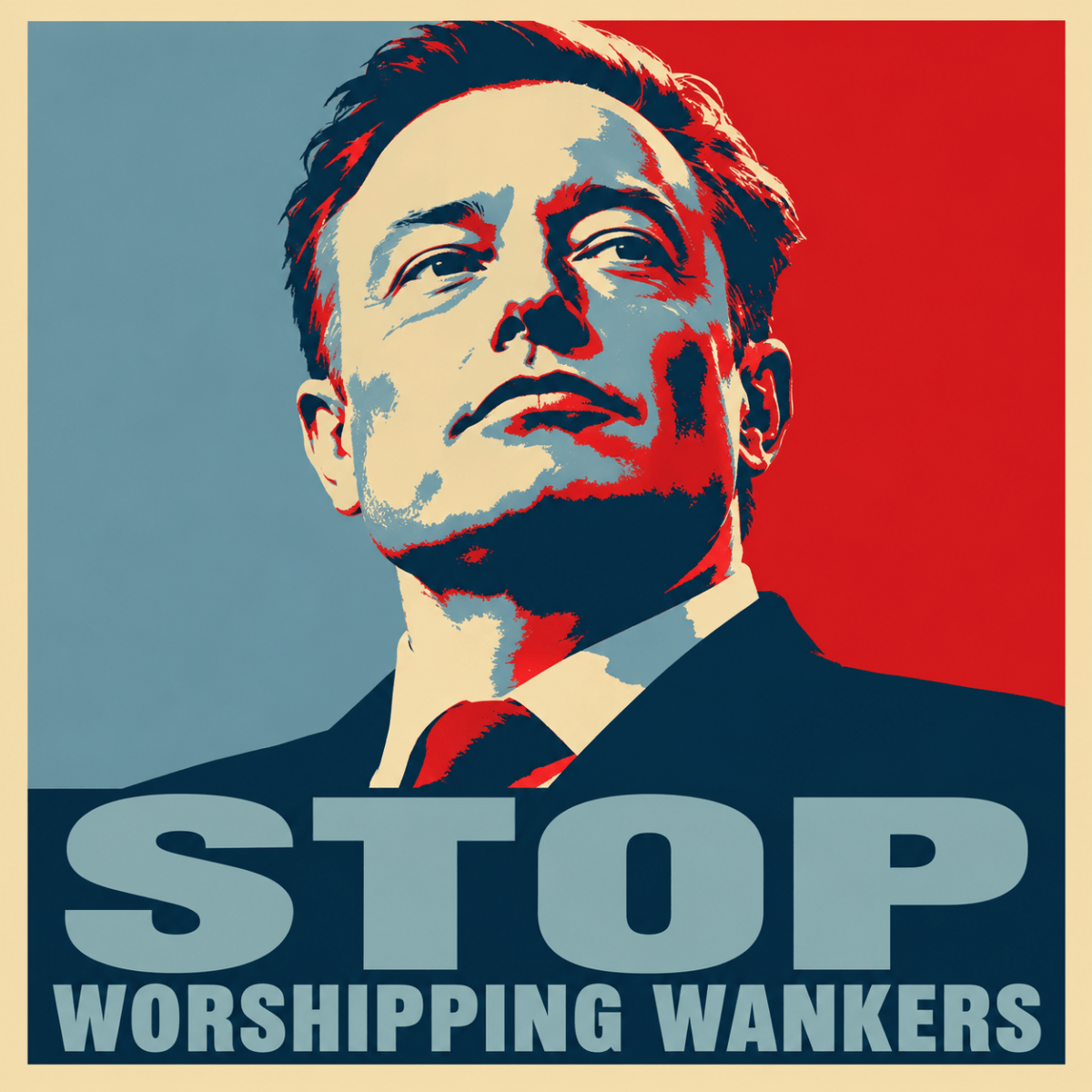
We mistake extreme wealth for extraordinary human worth, celebrating billionaires as visionaries while overlooking the collective labour, public investment and institutional power behind their fortunes. It’s time to stop confusing wealth with wisdom.

The question is whether what we currently reward actually assists the capacity of civilisation to persist, adapt, repair itself, and create meaningful futures.
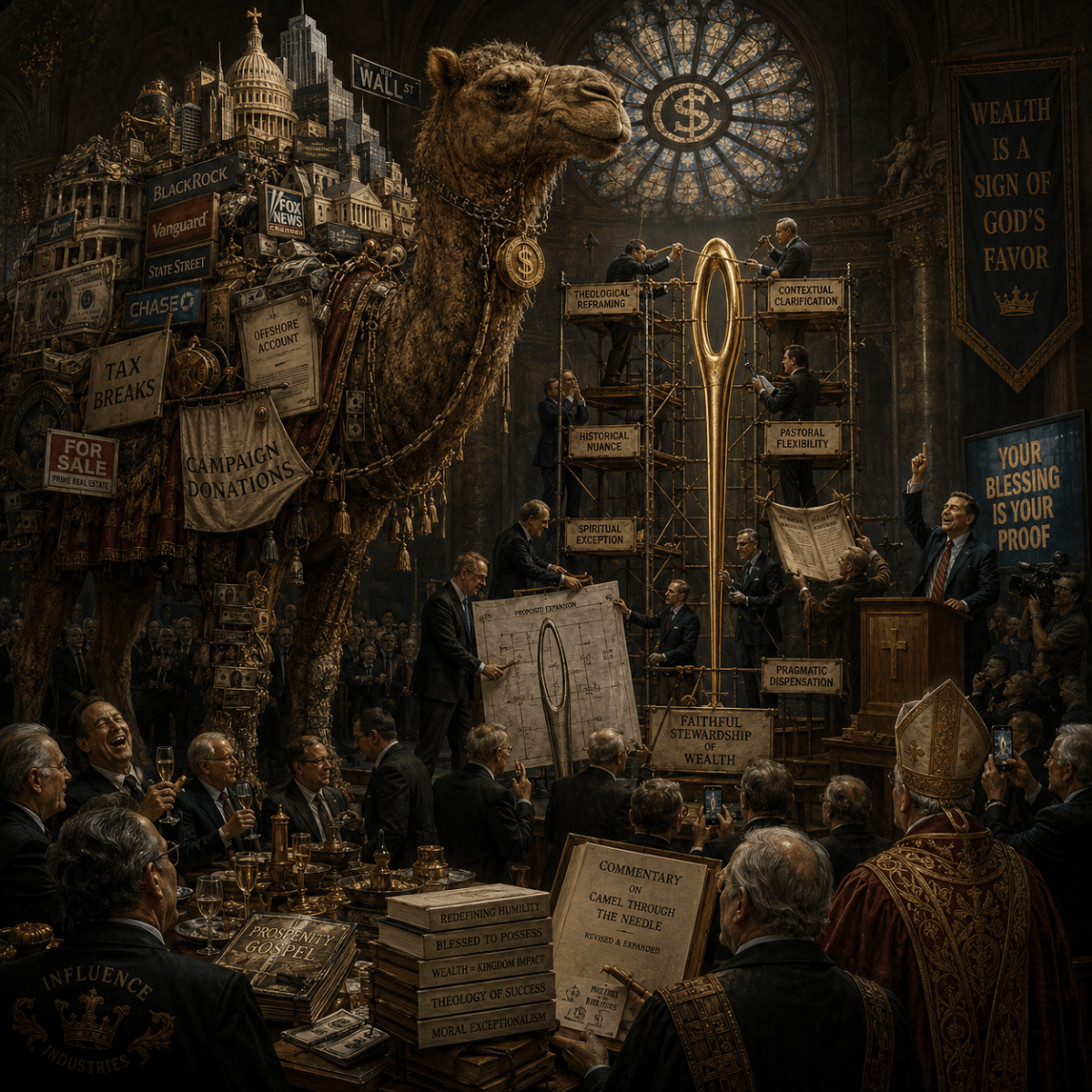
Power does not erase wisdom’s serial warnings about the corruption and cruelty that often accompanies extreme wealth; it orchestrates and sustains an institutional matrix to demonstrate why the warning applies to someone else.
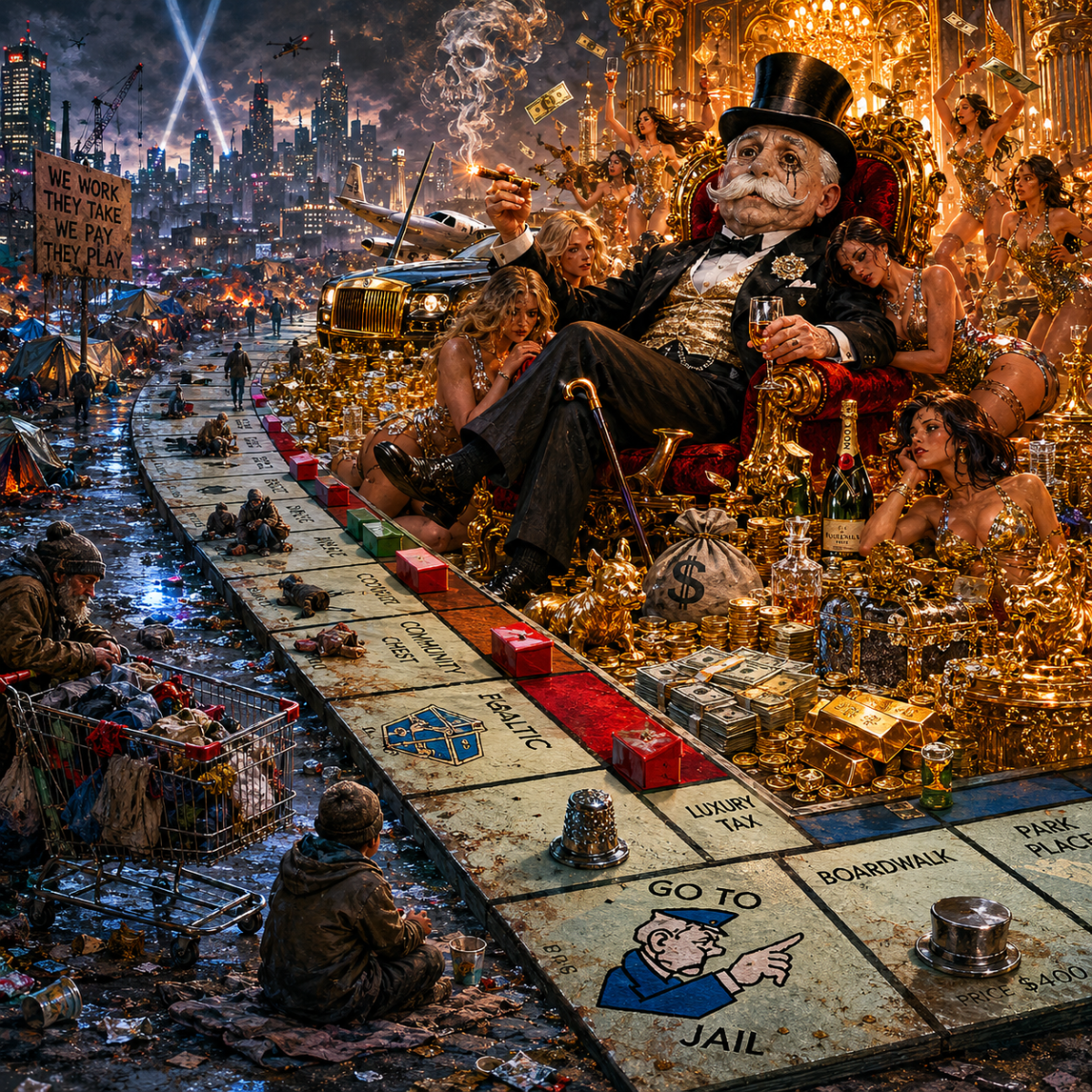
There is, at present, a strange cultural requirement to pretend that billionaires are evidence of societal success rather than evidence of systemic imbalance.

In physics and complex systems science, local order is never self-originating and never free. It is produced by energy throughput, maintained by boundaries, and stabilised by exporting disorder beyond the region whose coherence is being preserved. This is not conjecture but a general consequence of thermodynamics, open-system dynamics, and basic control logic. Organisms preserve internal […]

Entropy, and only entropy, is king. Highly ordered information systems do not rest on harmony. They are grounded in dissonance, volatility, and conflict, just as is extreme wealth sustained by the presence of its antithesis, the incoherent becoming, and always having been, the transmission medium of its inverse. This is not metaphor. It is structural. […]

No, Elon, empathy is not the weakness of civilisation. Kindness, compassion, and mutual care are the conditions that make civilisation possible at all. Large-scale cooperation, cultural continuity, and institutional complexity do not emerge from fear, dominance, or competition. They emerge from trust, reciprocity, and the slow accumulation of relational stability. Without these, society collapses back […]

No complex system is complete, and none ever settles into final coherence. It persists by operating near its own failure modes, always collapsing toward equilibrium without arriving there. This condition is not exceptional; it is constitutive. Collapse is not what ends systems, but what allows them to reproduce themselves. Systems endure by continuously redistributing error, […]

We are repeatedly assured—quietly, implicitly—that technology is beneficial, inevitable, and continuous. Accepting this assurance has become a mark of sophistication, a moral alibi that aligns seamlessly—and not accidentally—with reverence for wealth and the wealthy. What enriches those at the top is treated as evidence of correctness. Profit becomes a proxy for proof. Wealth no longer […]

Across the United States, and increasingly across comparable political systems, authoritarian grift has consolidated with remarkable speed. It is disproportionately financed, protected, and normalised by extreme concentrations of wealth. The alignment is not driven by ideological sophistication, intelligence, or long-term strategy. It is driven by extraction. Ultra-rich actors pursue deregulation, tax minimisation, labour suppression, and […]
Have a WordPress.com account? Log in now.

