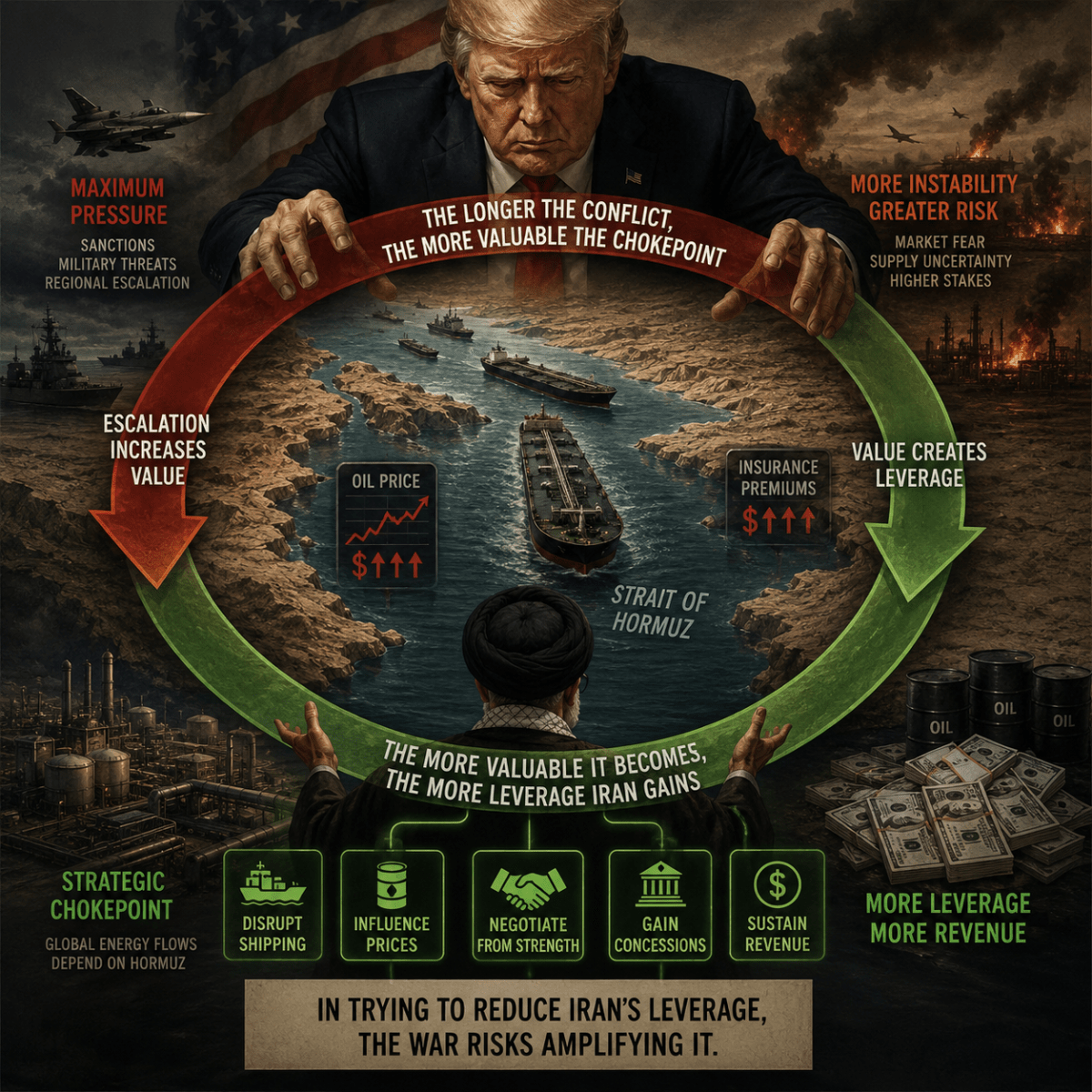
The more instability surrounds the Strait of Hormuz, the more valuable it becomes. The paradox is that a prolonged conflict may be increasing the strategic importance of one of Iran’s most powerful sources of leverage.
- Tags applied field logic, エネルギー安全保障 호르무즈 해협, システム理論, フィードバックループ, complex systems, conflict economics, cybernetics, 系統理論, 系统理论, 美国 霍爾木茲海峽, diplomacy, Donald Trump, геополитика, обратная связь, emergence, energy geopolitics, energy security, escalation dynamics, 能源安全, 能源安全 ホルムズ海峡, 霍尔木兹海峡, feedback loops, field logic, geopolitical risk, geopolitics, global shipping, global trade, international relations, Iran, 시스템 이론, 피드백 루프, 에너지 안보 Гормузский пролив, 지정학, leverage creation, market instability, Middle East, military strategy, negotiation, системная теория, энергетическая безопасность تنگه هرمز, oil markets, Persian Gulf, political feedback, power dynamics, prohibition effect, recursive amplification, relational value, sanctions, security studies, Strait of Hormuz, strategic chokepoints, strategic leverage, strategic paradox, systems theory, systems thinking, unintended consequences, United States, نظرية النظم, نظریه سامانهها, ژئوپلیتیک, war and economics, 反馈回路, 回饋迴路, 地緣政治, 地缘政治, 地政学, 海峡封锁, 伊朗, أمن الطاقة, الجغرافيا السياسية, امنیت انرژی مضيق هرمز, حلقه بازخورد, حلقات التغذية الراجعة

