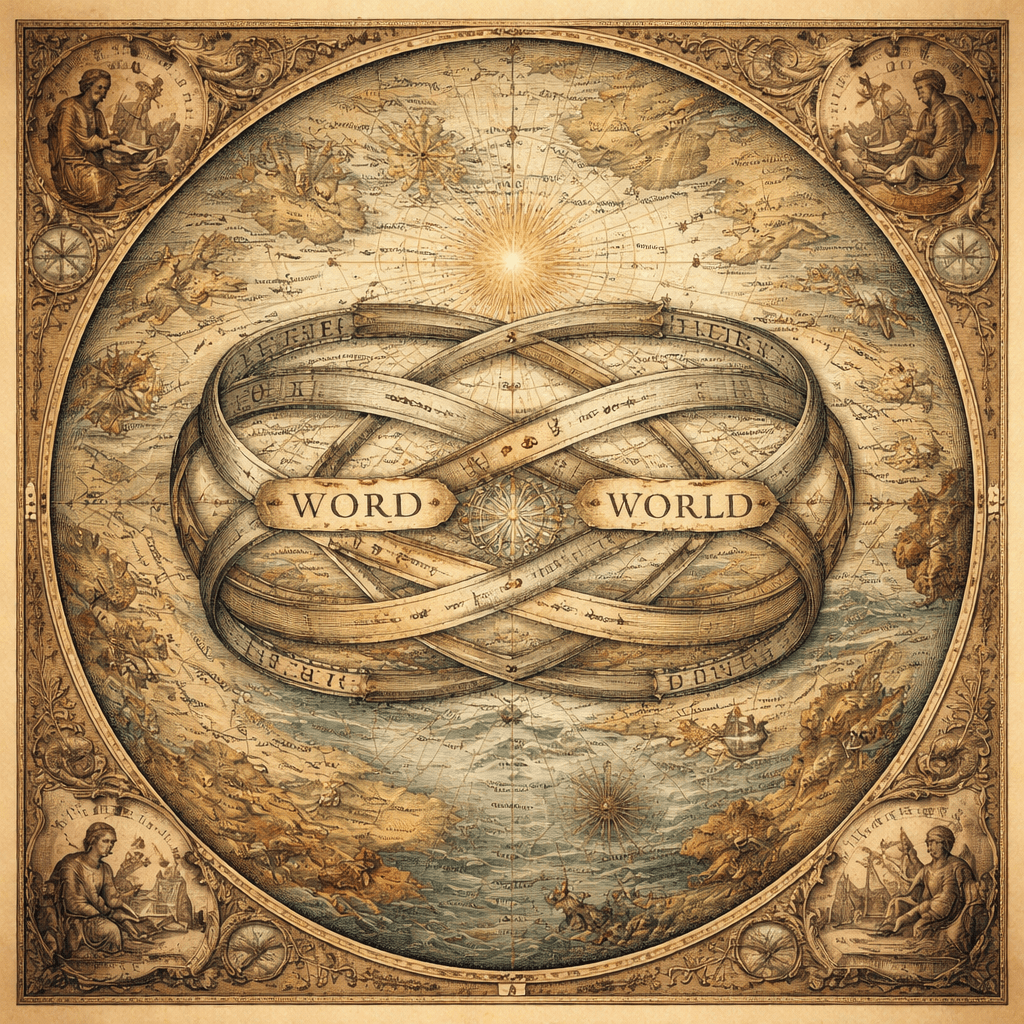
Language does not simply describe the world we inhabit. It arranges the conditions under which that world becomes intelligible, and in doing so we gradually reorganise experience into forms that can be named, remembered, and exchanged. Perception, memory, and social coordination all lean on this process. Human environments therefore become saturated with symbolic scaffolding: categories, […]
Categories
Limits of Language
- Post author By G
- Post date Mar 5, 2026
- No Comments on Limits of Language
- Tags cognition and language, communicative systems, complexity and communication, description versus reality, epistemic limits, interpretation and knowledge, language and experience, language and perception, language and reality, language and social coordination, limits of articulation, limits of description, linguistic construction of reality, linguistic mediation, linguistic structures of thought, meaning and interpretation, meaning as relational tension, orbit of description and reality, perception and naming, phase lag in language, philosophy of language, philosophy of meaning, representation and reality, semantic drift, semantic fields, semantics and ontology, symbolic scaffolding, symbolic systems, Wittgenstein language limits


 Daedelus Kite