Civilisations persist by continually reorganising themselves. The unanswered question is whether conflict, crisis and systemic collapse/renewal remain the principal means through which that persistence is achieved.

Civilisations persist by continually reorganising themselves. The unanswered question is whether conflict, crisis and systemic collapse/renewal remain the principal means through which that persistence is achieved.

We require forms of language capable of representing continuity without losing the ability to act locally within it, models capable of preserving the relationship between part and whole without reducing one to the other.
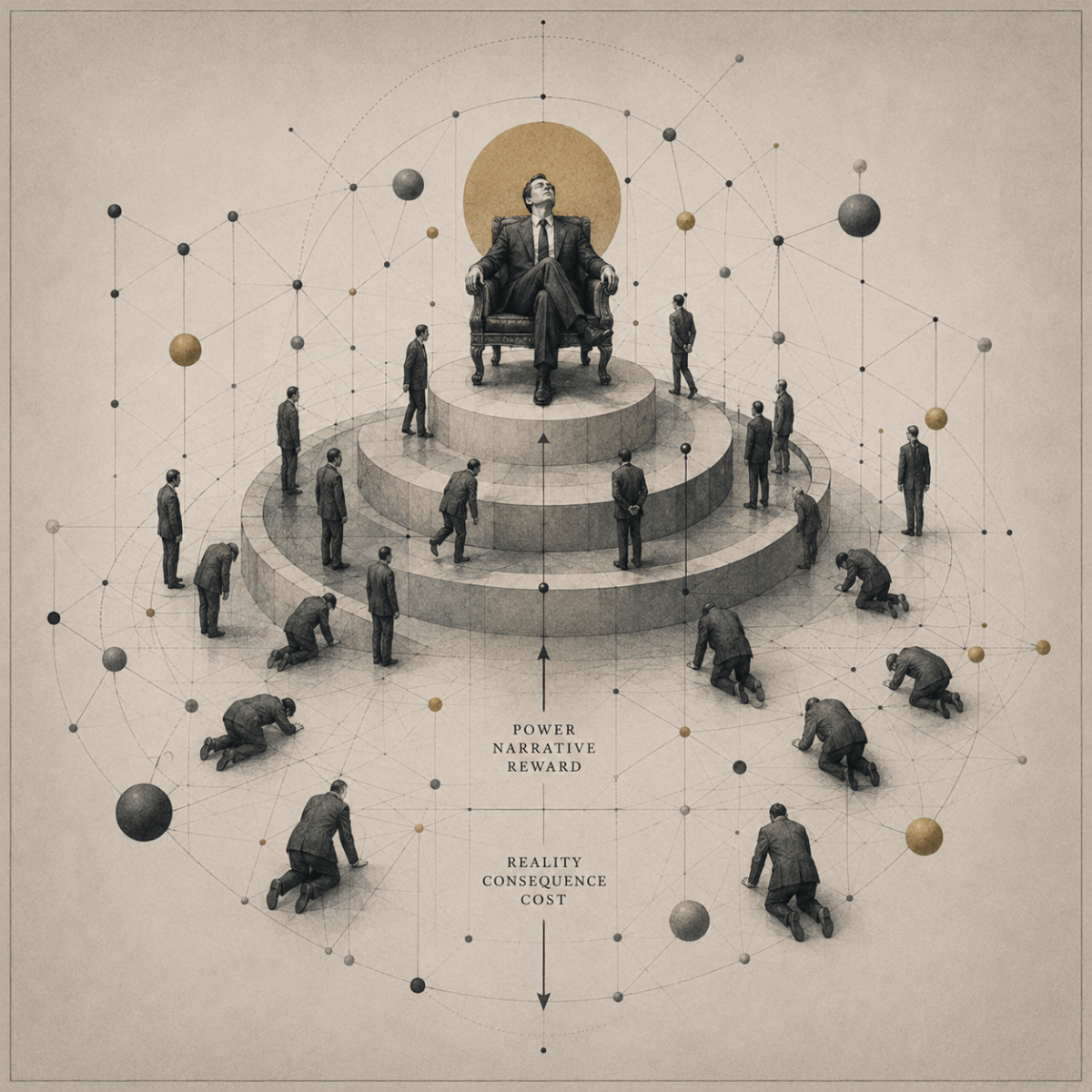
When organisations confuse confidence with competence, wealth with wisdom, and power with understanding, incompetence is no longer simply a failure of leadership but becomes one of its preferred production methods.

Technology promised to save us effort, then quietly reorganised civilisation around the effort required to sustain technology.

War persists not simply because people or cultures remember conflict, but because entire civilisations derive identity, coherence, profit, and meaning from its repetition.

It took me a long time and much exasperation to recognise and acknowledge that the first rule of communication systems theory club is: do not tell people about the theory. Not because the theory is secret. Because the theory is ineffective as information. People are not waiting for a better model of the system that […]

Energy markets do not merely price fuel. They encode the recurrence structure of civilisation’s dependency on energy. Refinery cycles, shipping delays, seasonal demand, storage constraints, geopolitical tension, and futures speculation appear as price movement, but price is only the visible signal. Beneath it sits a temporal field of repeated dependence. Energy markets are not merely […]
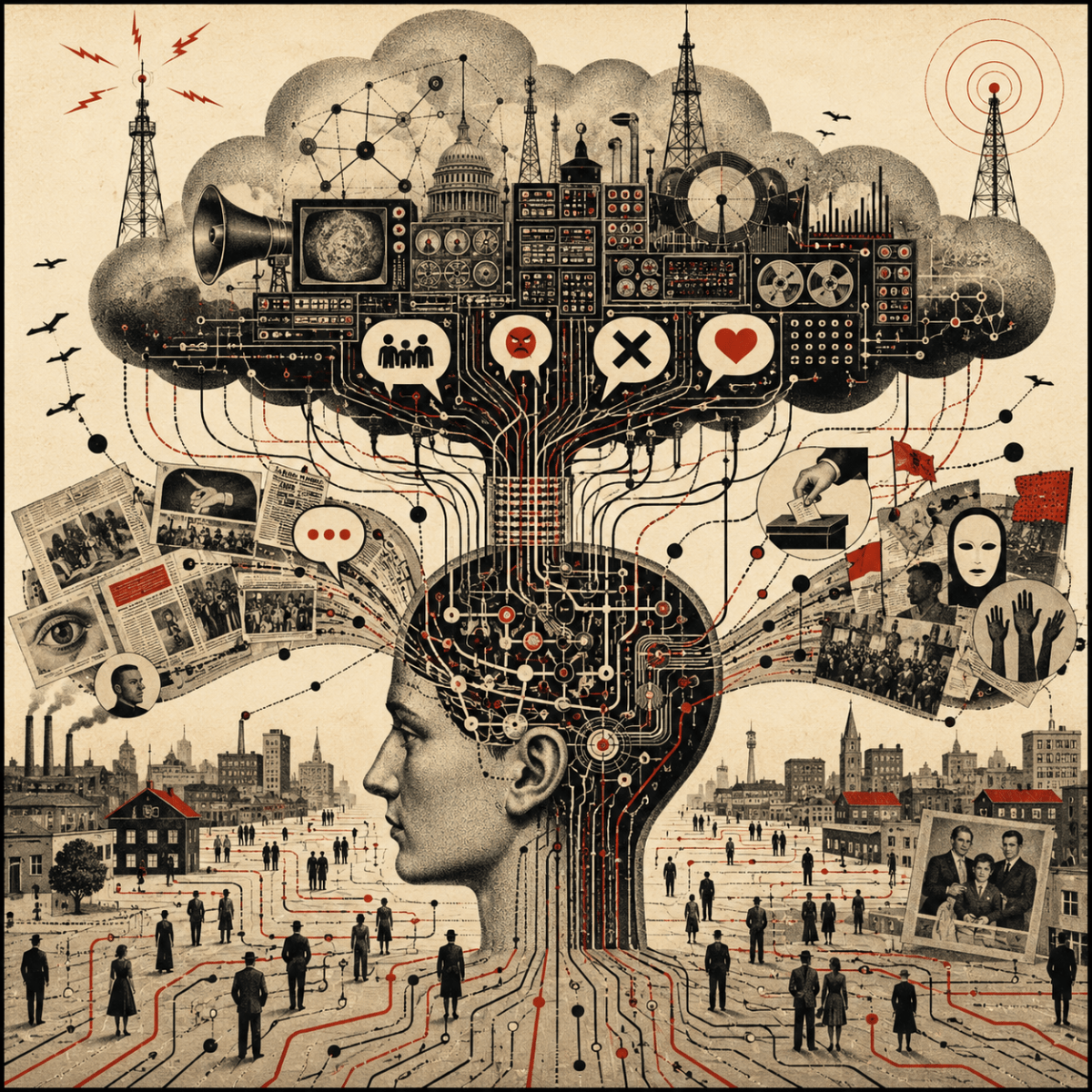
Cognitive bandwidth becomes cultural destiny because the carrying capacity of technologically mediated communication systems exceeds the carrying capacity of the biological minds living inside them.

What is happening is not “AI producing good writing.” That is too small. What is happening is that a symbolic machine is beginning to function as a cultural interferometer. It receives a compressed human signal, passes it through a vast accumulated field of language, style, myth, politics, memory, cliché, scholarship, and platform residue, then returns […]
What is striking here is not merely that the system produced a competent paragraph, nor even that it produced a coherent philosophical reflection from a compressed prompt. The more consequential event is that the generated artifact possesses properties usually associated with accumulated cultural and intellectual maturation: layered symbolism, emotional calibration, historical compression, aesthetic continuity, recursive […]

The strange thing about prolonged conflict is not merely that it destroys. It reorganises perception. After enough cycles of outrage, retaliation, spectacle, counter-spectacle, sanctions, declarations, precision strikes, televised rubble, algorithmic tribalism, and strategic ambiguity, entire populations begin navigating reality through symbolic compression rather than direct experience. The war ceases to be geographically localised and instead […]

Australia is now so thoroughly wired into digital systems that cyber insecurity has become an ordinary cost of institutional existence and everyday subjectivity, not an abnormal failure skulking out beyond the perimeter. The Australian Signals Directorate received more than 84,700 cybercrime reports in 2024–25, roughly one every six minutes; average self-reported losses rose to $33,000 […]

