Why Deception Is Irreducible in Communication

Why Deception Is Irreducible in Communication

Language, like all communication systems, holds together not despite displacement, delay and uncertainty, but because of them.
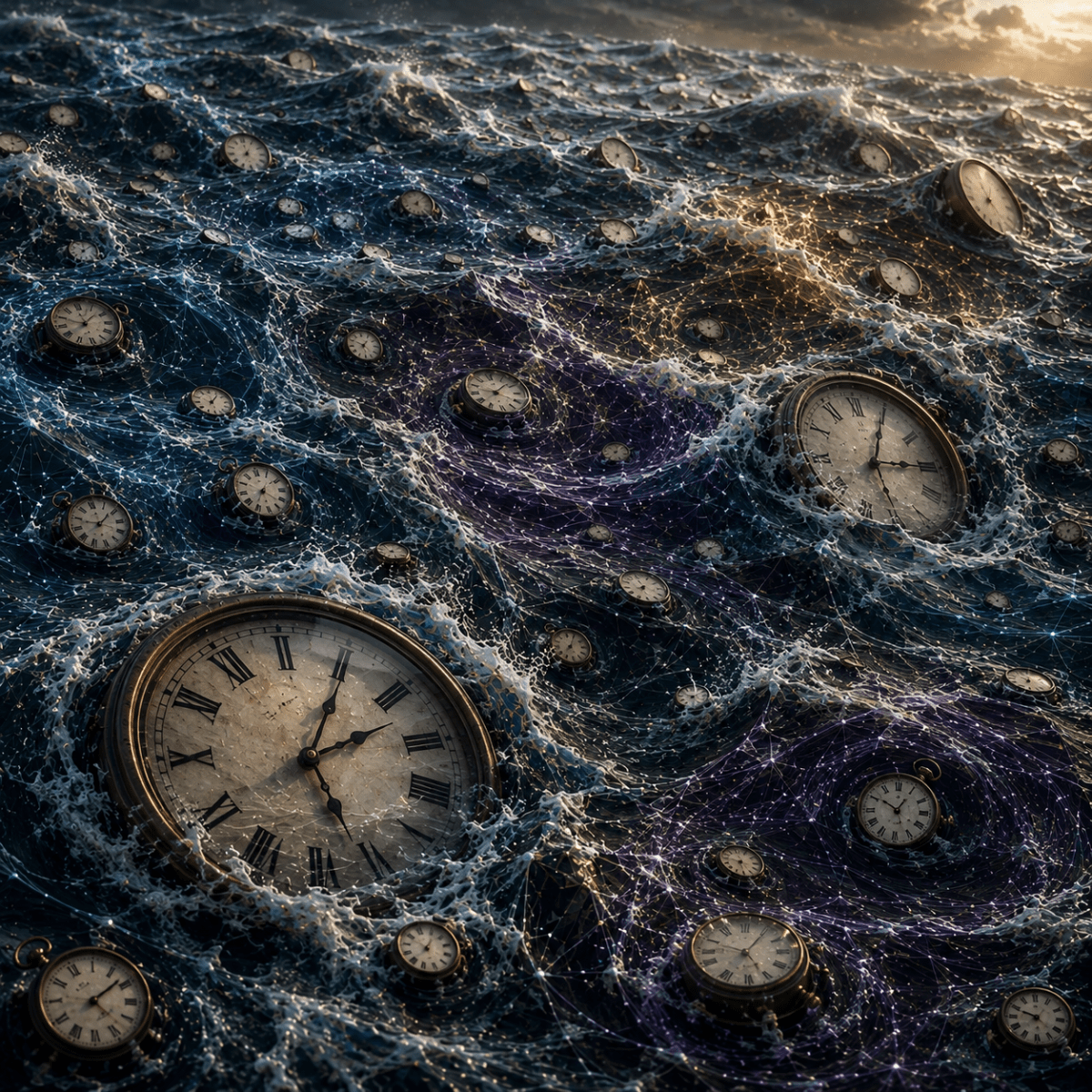
The present is not where possibility ends. It is where an immeasurably larger field of possible futures acquires one local history.

Knowledge takes form at the boundary between what can be articulated and what cannot yet, or perhaps cannot ever, be fully known. Hubris remains evanescent.
00-DD

Every explanation of reality becomes another part of the reality left to explain:
E(R) ∈ R → E(R) ≠ R.

Populism is not an opinion. It is a phase dynamic.

Disinformation is not the opposite of information, but one of the ways communication organises uncertainty into meaning. Its deeper structure belongs less to politics than to the philosophical problem of how truth, coherence, and identity emerge at all.

This is how a system built to produce knowledge becomes a system for reproducing the conditions under which its existing knowledge remains authoritative.
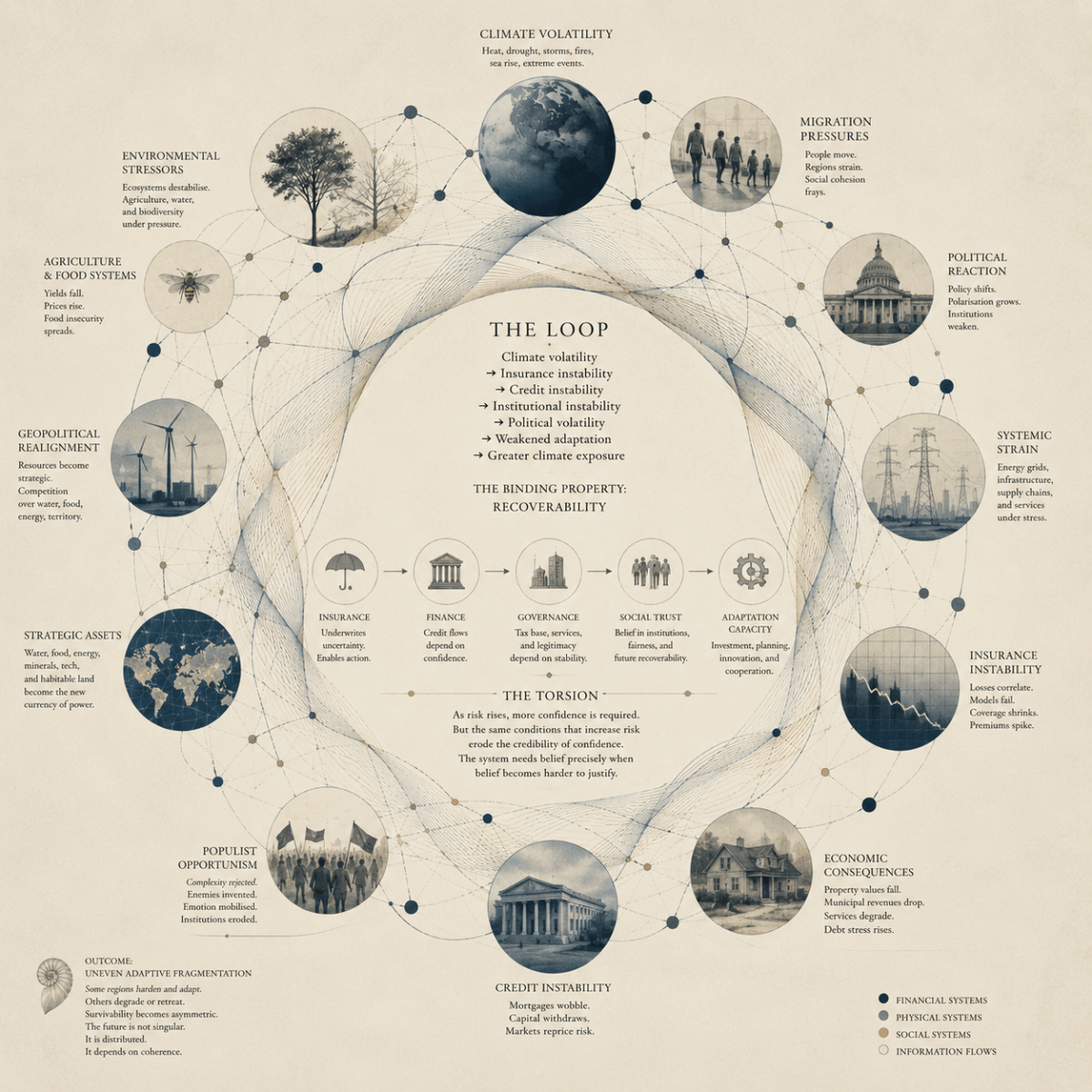
Climate change becomes civilisational risk when insurance can no longer translate catastrophe into recoverable cost.

Energy markets do not merely price fuel. They encode the recurrence structure of civilisation’s dependency on energy. Refinery cycles, shipping delays, seasonal demand, storage constraints, geopolitical tension, and futures speculation appear as price movement, but price is only the visible signal. Beneath it sits a temporal field of repeated dependence. Energy markets are not merely […]

Fear of others is not finally fear of difference, but fear of the gap through which the self discovers it was never solid, never alone, and never entirely its own.

