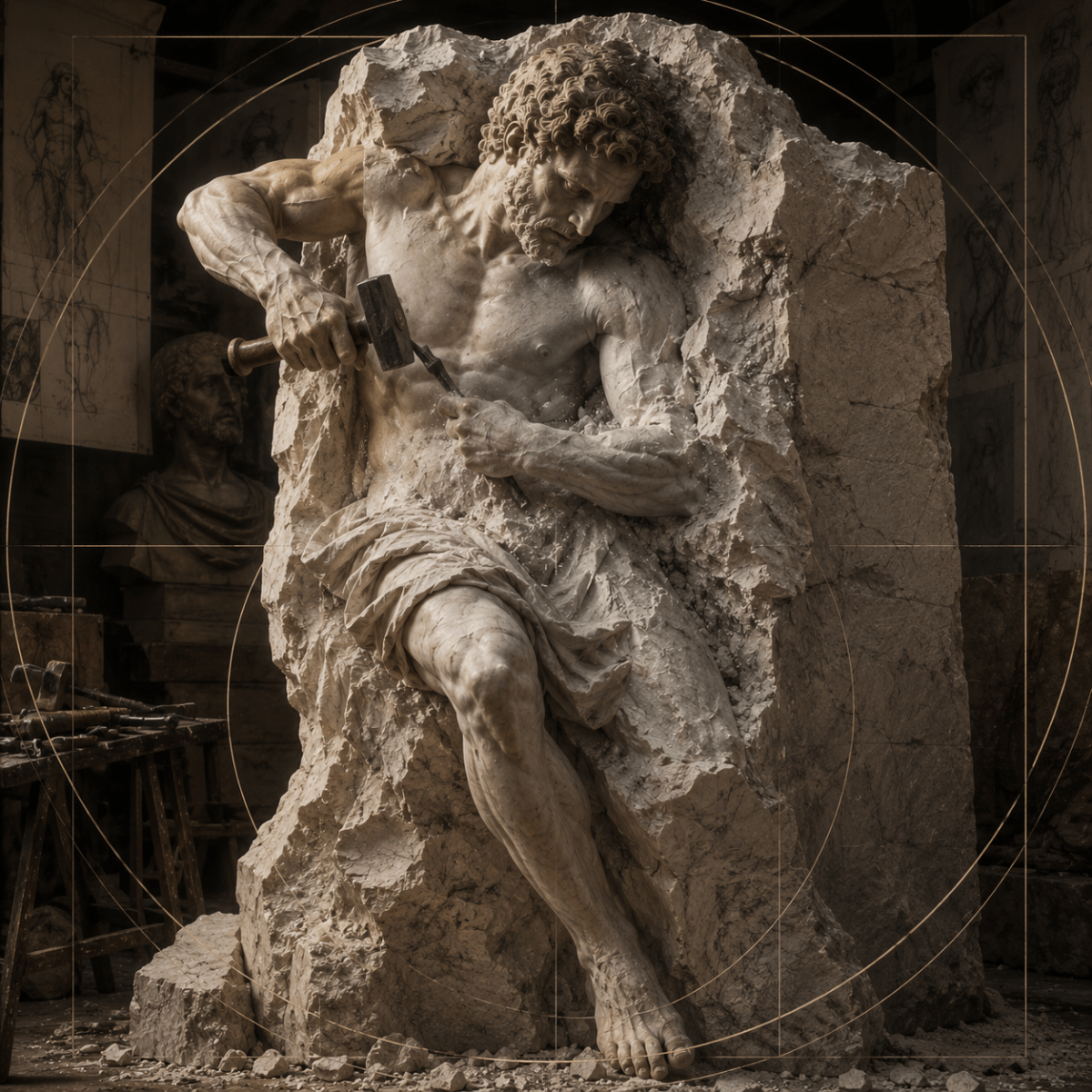
The interesting thing about autocracy is that it is rarely planned in the way people imagine. We tend to picture a villain with a map, a manifesto, and a secret meeting full of cigar smoke. Reality is usually less theatrical and considerably more dangerous. Autocracy emerges through the aggregation of incentives. The final form is discovered rather than designed. Much as writing is often not the transcription of a fully formed thought but the process through which the thought itself is generated, societies frequently create political realities through countless local actions whose collective destination remains invisible until the structure has already begun to emerge.
If wealth represents stored economic energy, then institutions represent stored political energy. Laws, regulations, media organisations, lobbying networks, ownership structures, and political parties accumulate decisions across time in much the same way a text accumulates meaning across sentences and paragraphs. The influence contained within them is latent. It exists as potential. A newspaper does not exercise power merely by existing. A fortune does not alter society by sitting quietly in an account. The stored potential becomes active when it shapes choices, narratives, incentives, and beliefs. What appears as sudden political change is often the release of pressures accumulated over decades.
This is why the concentration of wealth matters. Not because billionaires are uniquely evil, nor because they secretly control every outcome, but because concentrated resources acquire a disproportionate ability to shape the environment within which future outcomes are generated. Wealth purchases visibility. Visibility influences belief. Belief influences institutions. Institutions influence the future distribution of wealth. The system recursively writes itself. The billionaire is not outside the story. They are one of the most influential authors.
Australia now finds itself participating in a broader pattern visible across much of the democratic world. Economic insecurity, housing stress, fragmented media, declining institutional trust, and perpetual algorithmic agitation have created fertile conditions for political simplification. Complex explanations struggle to compete with emotionally satisfying ones. Democratic governance is intrinsically messy because reality is intrinsically messy. The promise of certainty therefore acquires a strange attractiveness precisely when uncertainty is increasing.
The danger is not simply that wealthy interests support political movements favourable to their interests. That has always happened. The danger emerges when enough communicative, economic, and institutional structures begin reinforcing one another. Media concentration supports political concentration. Political concentration supports economic concentration. Economic concentration expands communicative influence. The resulting structure develops its own momentum. Like a complex text revealing meanings that were not fully present at the beginning of composition, a society can gradually discover that it has authored something none of its participants consciously intended.
Perhaps that is the most unsettling aspect of the problem. Democracies do not generally fail because people wake up wanting autocracy. They fail because millions of ordinary decisions aggregate towards attractor states that nobody adequately recognised while they were forming. The structure emerges from the process. The statue was already hidden in the stone. The question is whether we notice what we are sculpting before it begins sculpting us.
Categories
corruption
Corruption is not what happens when a healthy system breaks; it is what emerges when enough incentives, privileges, dependencies, and concentrations of power quietly align, turning private advantage into public infrastructure.