The madness of America is not an isolated national pathology. It reveals how communication synchronises ordinary human vulnerabilities, reproducing antagonism, institutional authority and collective irrationality.

The madness of America is not an isolated national pathology. It reveals how communication synchronises ordinary human vulnerabilities, reproducing antagonism, institutional authority and collective irrationality.

Why institutions, political movements and intellectual communities reproduce the same patterns of identity, conformity and exclusion while insisting on their differences.

Education stabilises knowledge long enough to transmit it, even as the machinery through which knowledge is produced and interpreted accelerates the movement of the epistemic attractor itself.

Exploring how relation and difference generate the structures we experience as reality.

We do not simply use language. We participate in its continual reconstruction, and through that reconstruction language continually participates in ours.
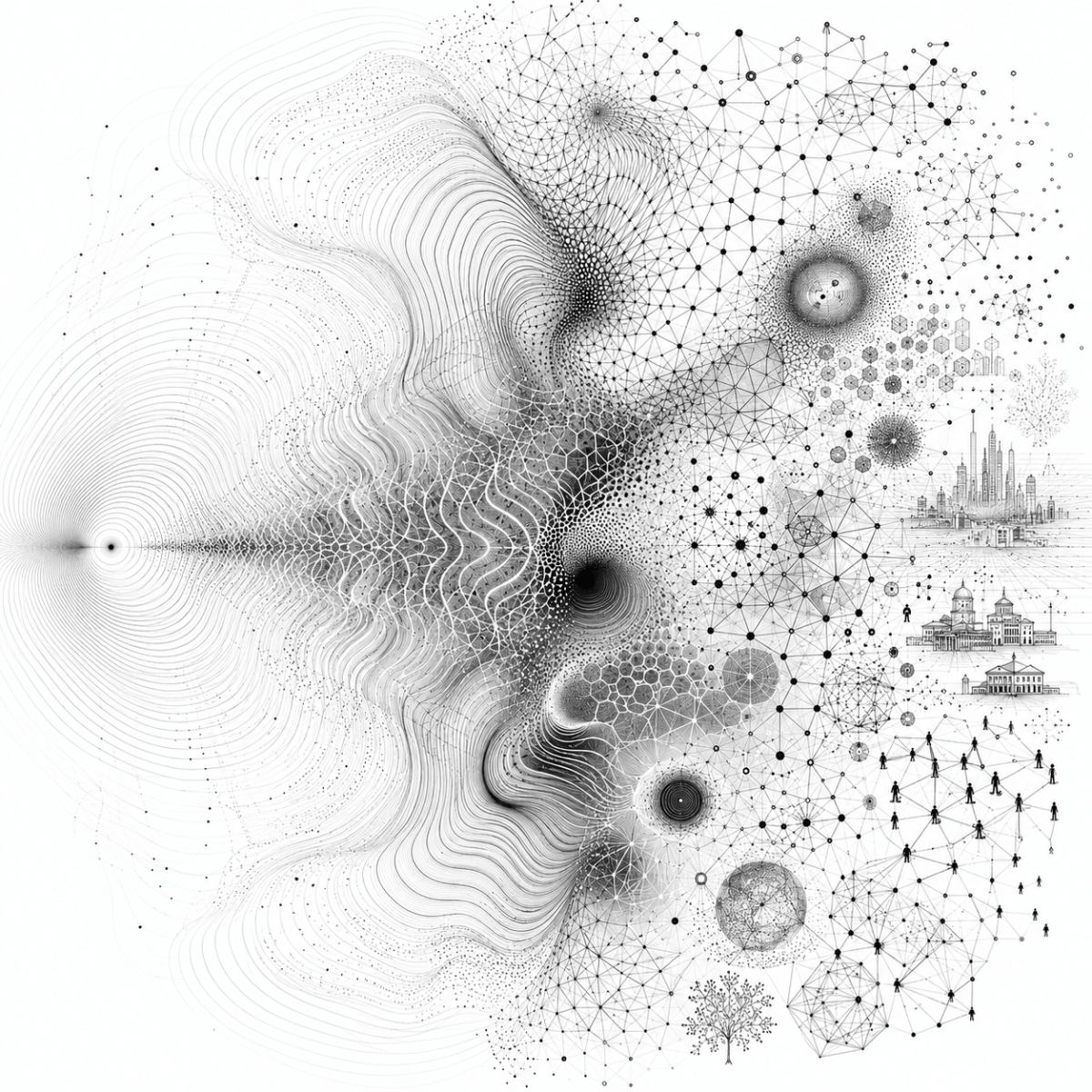
Influence is the capacity of a communicative form to alter the probability distribution of future communication.

Corruption is not what happens when a healthy system breaks; it is what emerges when enough incentives, privileges, dependencies, and concentrations of power quietly align, turning private advantage into public infrastructure.
Have a WordPress.com account? Log in now.

