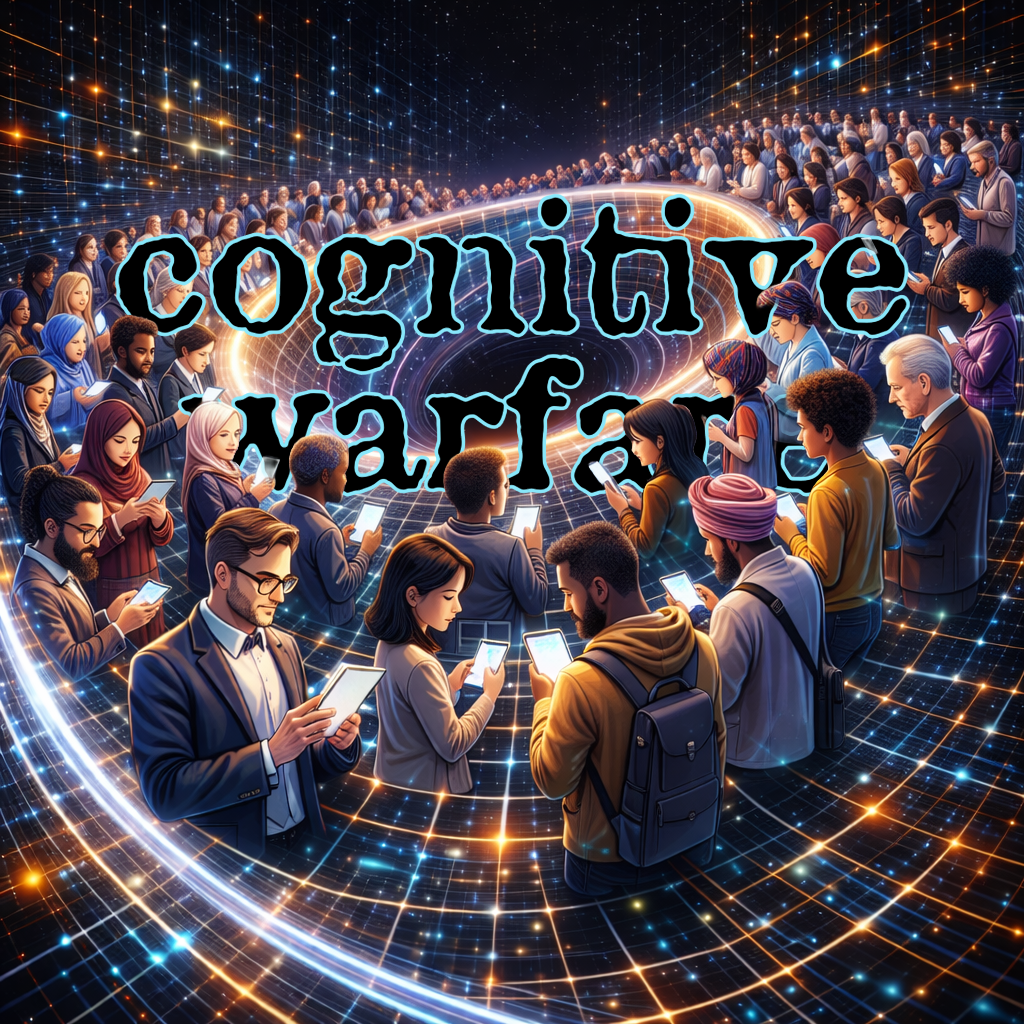
A cognitive war is not simply about what you think. It is a war over how you think, because once the structure, code, and cadence of thought, of language, of behaviour are altered, the content becomes easy to steer. Some of these biases are ancient, natural, even necessary: shortcuts of perception, habits of inferential prediction, […]
Categories
Inside the Cognitive War
- Post author By G
- Post date Jan 29, 2026
- 1 Comment on Inside the Cognitive War
- Tags ai and society, AI ethics, algorithmic control, algorithmic influence, Artificial Intelligence, attention economy, behavioral engineering, cognitive war, collective intelligence, communication systems, complex systems, computational systems, corporate power, critical theory, cultural control, cybernetics, digital-power, disinformation, emergence and complexity, entropy and complexity, Global Systems, human cognition, human condition, identity and power, information age, information warfare, media ecology, misinformation, modern civilization, philosophy of culture, philosophy of mind, philosophy of technology, platform capitalism, political manipulation, political psychology, propaganda, psychological warfare, social media influence, societal change, surveillance capitalism, systemic risk, systems theory, systems thinking, tech power, technological mediation, technology and politics


 Daedelus Kite