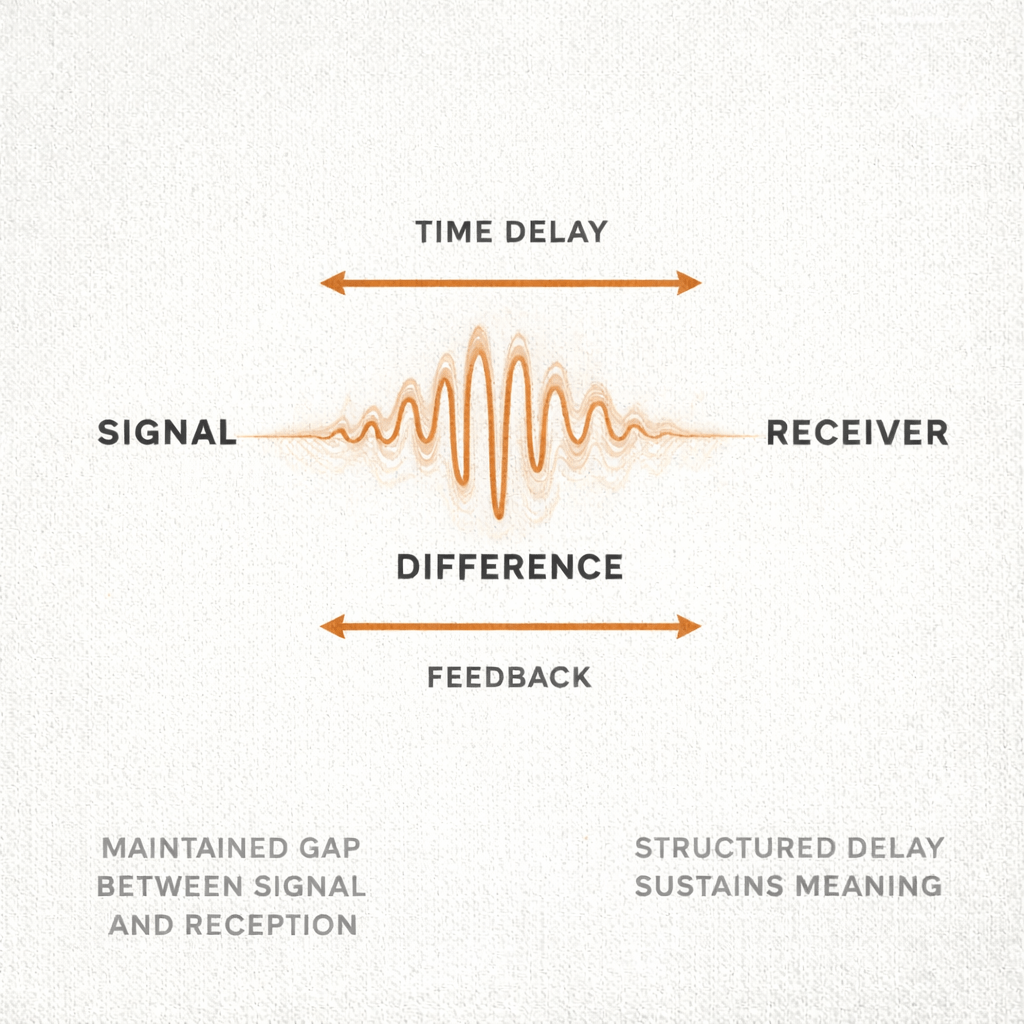
Across many countries, the current wave of populism looks like a political shift. It is, but it is also something deeper: a change in how communication systems select and stabilise meaning. Large, networked media environments now operate at high speed, uneven timing, and massive scale. In those conditions, not every idea travels equally. Some forms—short, […]
Categories
It is not about politics
- Post author By G
- Post date Mar 18, 2026
- 8 Comments on It is not about politics

- Tags algorithmic amplification, attention economy, cognitive dynamics, collective behaviour, communication architecture, communication networks, communication systems, communication theory, complex systems, cultural dynamics, cybernetics, digital media, digital society, distributed systems, emergent behaviour, feedback loops, governance systems, information ecosystems, information flow, information integrity, information overload, information propagation, institutional-lag, mass communication, media dynamics, media influence, media theory, modern media ecology, narrative dynamics, network dynamics, networked communication, phase delay, political communication, political complexity, political systems, populism, public discourse, relational systems, semantic compression, signal transmission, signal vs noise, social complexity, social media effects, socio political systems, structural dynamics, system theory, systemic risk, systems thinking, temporal dynamics, temporal misalignment, timing and delay


 Daedelus Kite