How lawfare converts institutional status and financial power into pressure that silences criticism and makes public disagreement prohibitively expensive.

How lawfare converts institutional status and financial power into pressure that silences criticism and makes public disagreement prohibitively expensive.
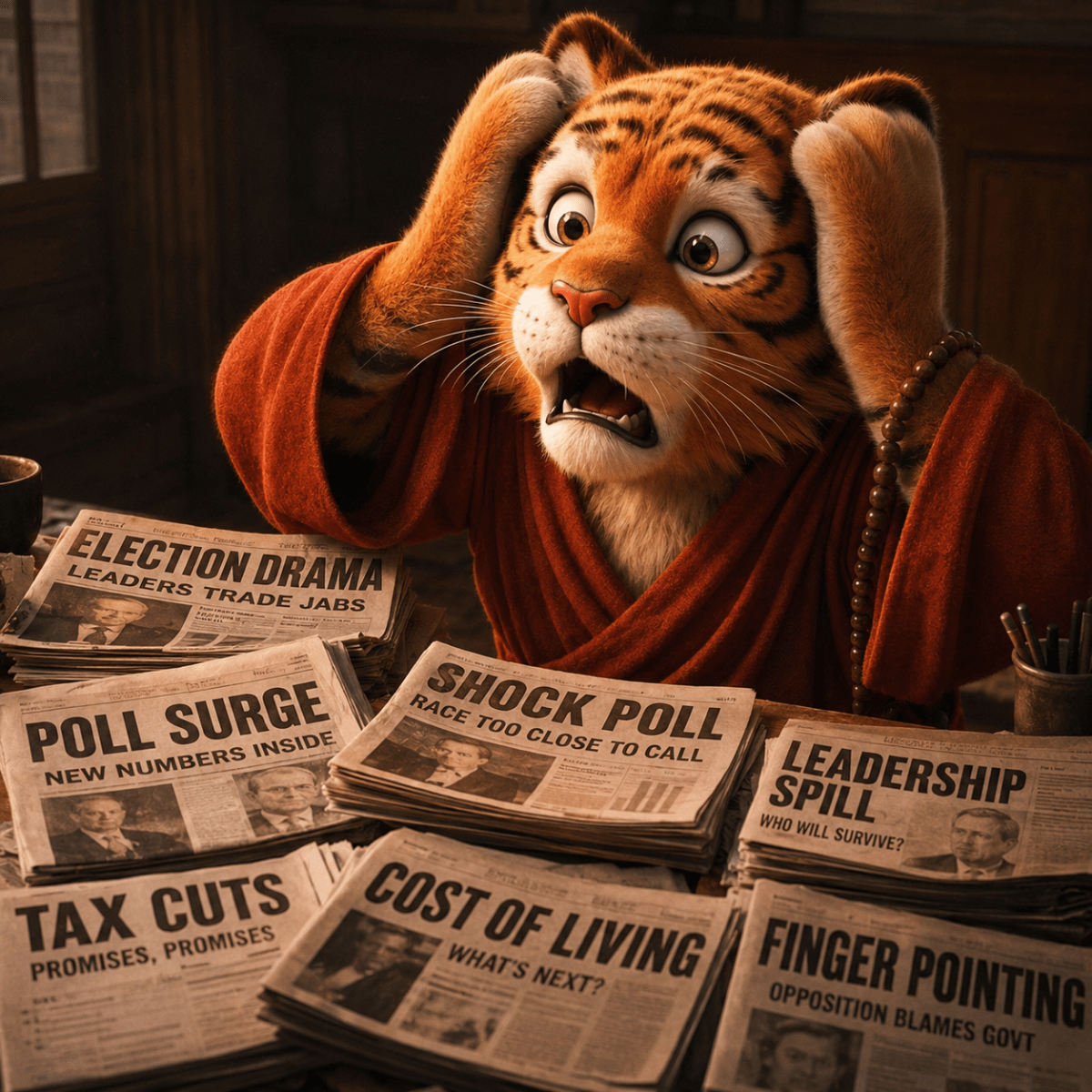
Theirs is a role play of analysis, simply and unwittingly giftwrapping populist-adjacent themes for broad public consumption; little on insight, big on performative role play.

A system can become so effective at measuring, managing, and reproducing its own internal assumptions that it gradually loses the ability to perceive the external reality those assumptions were originally created to address.

Technology at scale preferentially industrialises the parts of human nature that are easiest to measure, repeat, monetise, automate, and weaponise. Those parts are rarely our best ones.

Technologically mediated democracies are invoking remedial, simplified political coherence faster than they are generating the intelligence and/or aptitude required to govern the accelerating complexity of contemporary socioeconomic experience.

A technologically-mediated civilisation has built planetary systems of prediction and control around biological reflexes still calibrated for tribe, threat, status, and symbolic belonging.
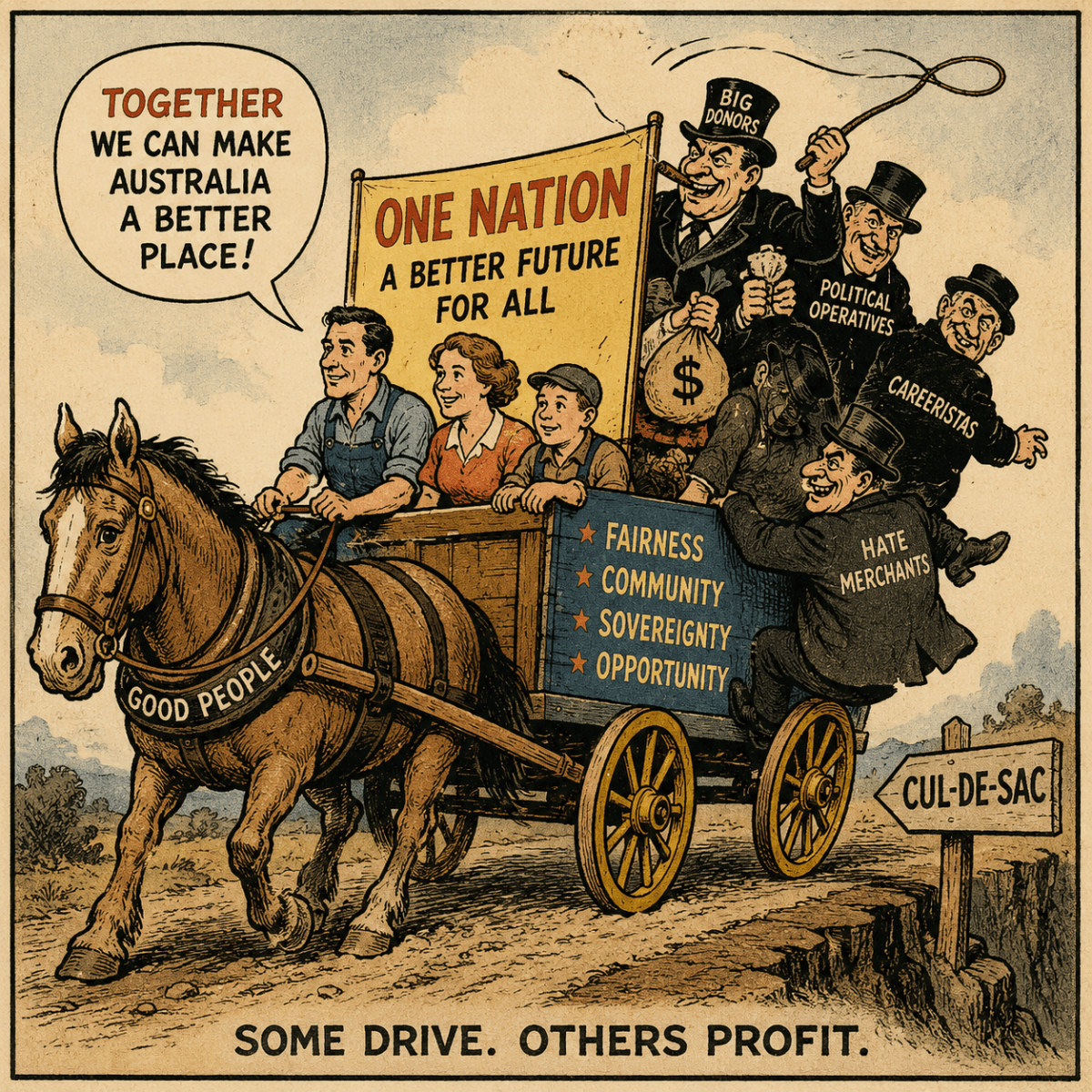
They paint themselves into a hyper-simplistic corner because simplified narratives feel stabilising during periods of systemic uncertainty. But once political language collapses into slogans, binaries, and permanent outrage, the capacity to think strategically about complex realities begins to erode. The rhetoric that initially appears empowering gradually becomes constraining. Every new problem must be forced through […]
What is happening is not “AI producing good writing.” That is too small. What is happening is that a symbolic machine is beginning to function as a cultural interferometer. It receives a compressed human signal, passes it through a vast accumulated field of language, style, myth, politics, memory, cliché, scholarship, and platform residue, then returns […]

Reports today have drawn attention to remarks by Barnaby Joyce comparing immigration flows to livestock management, a framing criticised for both its tone and its implications. Whatever the intent, language of that kind lands heavily in a moment already charged around migration, borders, and identity. It reduces a complex human process to something blunt, and […]

Across many countries, the current wave of populism looks like a political shift. It is, but it is also something deeper: a change in how communication systems select and stabilise meaning.

Endless conflict persists not because it is healthy, just, or sustainable, but because fear is highly efficient at moving through uncertain human systems. What spreads easily is not always what nourishes. Fear can be structurally effective while being psychologically corrosive and socially disastrous. That distinction matters. Signals that bind attention quickly can still produce damaged […]

I found myself in conversation with another commuter on public transport today. They mentioned not completing high school in regards to their education, and the conversation drifted toward my interest in language and communication. I explained that vocabulary is never a reliable proxy for intelligence. A small vocabulary used precisely often reveals more intellect than […]

