Exploring harmonic structure, observation, language and consciousness, and why uncertainty is fundamental to reality and the possibility of knowledge.

Exploring harmonic structure, observation, language and consciousness, and why uncertainty is fundamental to reality and the possibility of knowledge.

Independent knowledge becomes a social burden when learning is treated as competition and established opinions become territories to defend. Genuine enquiry begins when understanding becomes a shared endeavour rather than a contest over who knows more.
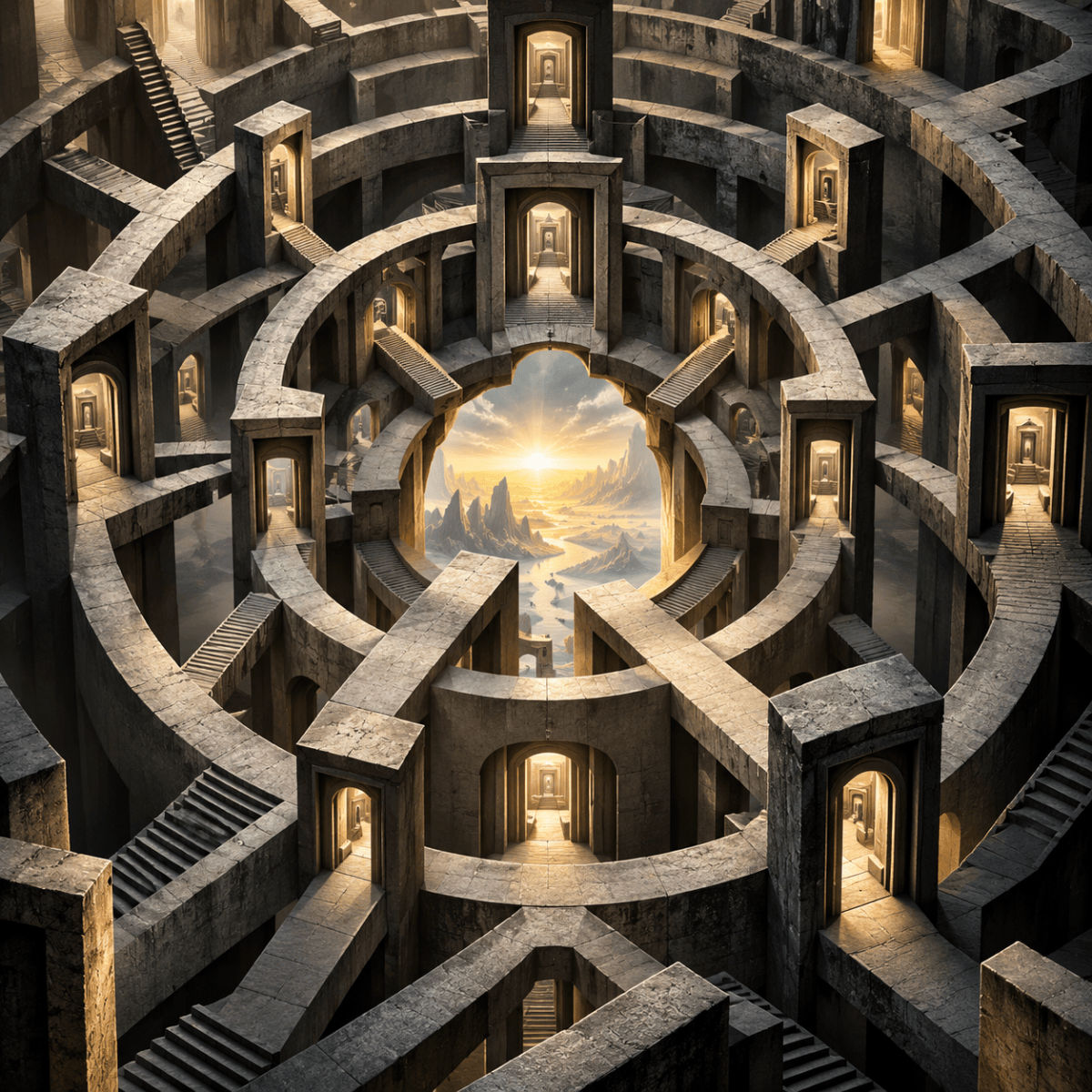
The paradox is that philosophy, a discipline nominally concerned with questioning assumptions, has become remarkably accomplished at preserving its own.

AI citation failures reveal something larger than a technical flaw: a civilisation increasingly efficient at reproducing knowledge while losing track of how it became known.

Knowledge takes form at the boundary between what can be articulated and what cannot yet, or perhaps cannot ever, be fully known. Hubris remains evanescent.

Every explanation of reality becomes another part of the reality left to explain:
E(R) ∈ R → E(R) ≠ R.
Disinformation is not the opposite of information, but one of the ways communication organises uncertainty into meaning. Its deeper structure belongs less to politics than to the philosophical problem of how truth, coherence, and identity emerge at all.
What is truth. The moment we ask the question, we are already inside language, and everything that follows unfolds from that fact. Truth is not something we approach from outside, as a detached observer might inspect an object. It arises within sequences of tokens, within the games we play with them, within the structures we […]

Nietzsche once suggested that metaphysics is about as useful to the struggles and uncertainties of embodied life as would be knowledge of the chemical composition of water to a boatman facing a storm. The force of the remark is not hostility to thought but a boundary placed around it. In conditions of living and existential […]

Symmetry, anti-symmetry, and the orbit of desire If art has any enduring value, it lies in the way it makes structure visible. Bernini’s Apollo and Daphne does not just illustrate a myth. It renders a relational geometry: two frames locked in a shared field, unable to close without erasing themselves. The sculpture holds a single […]
Disinformation functions as a dynamical system in which information fragments compete for finite cognitive bandwidth. Each carries a propagation weight—shaped by repetition, affect, and network structure—that determines its endurance. Truth, under such dynamics, is not inherent but emergent, a transient equilibrium of reinforcement within stochastic noise. Algorithms that reward engagement amplify instability, creating belief attractors […]
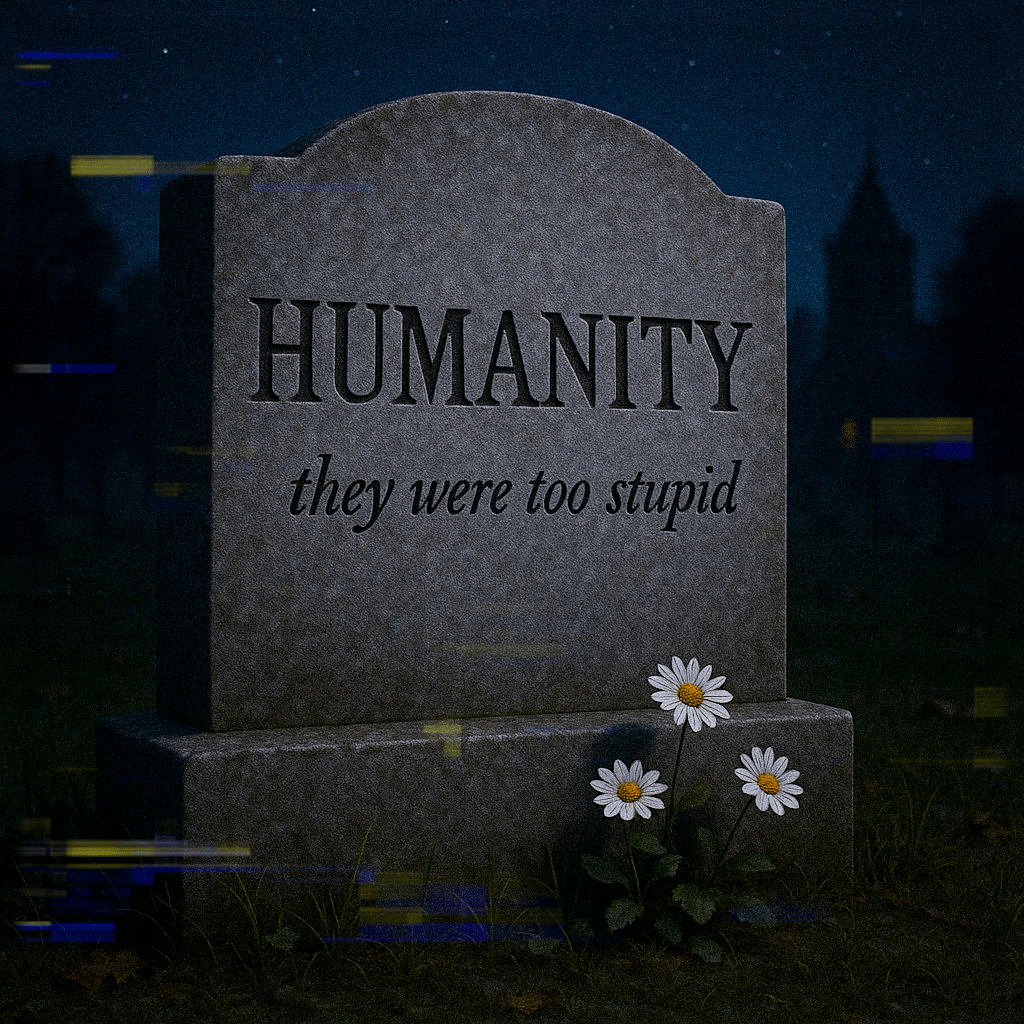
We come together not to dress the truth in lace, but to speak plainly: humanity had within it sparks, flashes, even storms of brilliance. The rhythm of its thought pulsed in breaths both shallow and profound—an inhalation of vision, an exhalation of confusion. Yet in ensemble, the cadence collapsed. What was sharp in one mind […]
Have a WordPress.com account? Log in now.

