Populism may not need to be manufactured. An overwhelmed communication system already rewards simplification, antagonism and recurrence, while those best placed to change it profit from the resulting volatility.
Populism Without a Populist
Populism may not need to be manufactured. An overwhelmed communication system already rewards simplification, antagonism and recurrence, while those best placed to change it profit from the resulting volatility.
AI citation failures reveal something larger than a technical flaw: a civilisation increasingly efficient at reproducing knowledge while losing track of how it became known.
We are building a world that needs to know more and more about us, just as being unknown becomes increasingly valuable.
Trump depends upon the opposing media he seeks to exclude. Its opposition generates the conflict through which his political identity acquires force. The wizard needs the curtain, but he also needs someone on the other side insisting that we look behind it.
A spider’s book lungs pack an immense surface for exchange into a tiny space. Across lungs, brains, cells and information, the same principle recurs: internal structure multiplies what a finite system can do.
The probable is a proper subset of the possible. Old habits die hard because viable communication preferentially reproduces patterns that make themselves more likely to recur.
Meaning is not stored in words; it emerges as harmonic structure through time.
Disinformation is not the opposite of information, but one of the ways communication organises uncertainty into meaning. Its deeper structure belongs less to politics than to the philosophical problem of how truth, coherence, and identity emerge at all.
Ambiguity is not the failure of truth; it is the field through which truth sustains itself. What we name “disinformation” is simply the deliberate modulation of this ambiguity—the thickening of uncertainty at the edges so that order can stabilise at the centre. Systems depend on that tension. Clarity cannot exist without contrast, nor coherence without […]
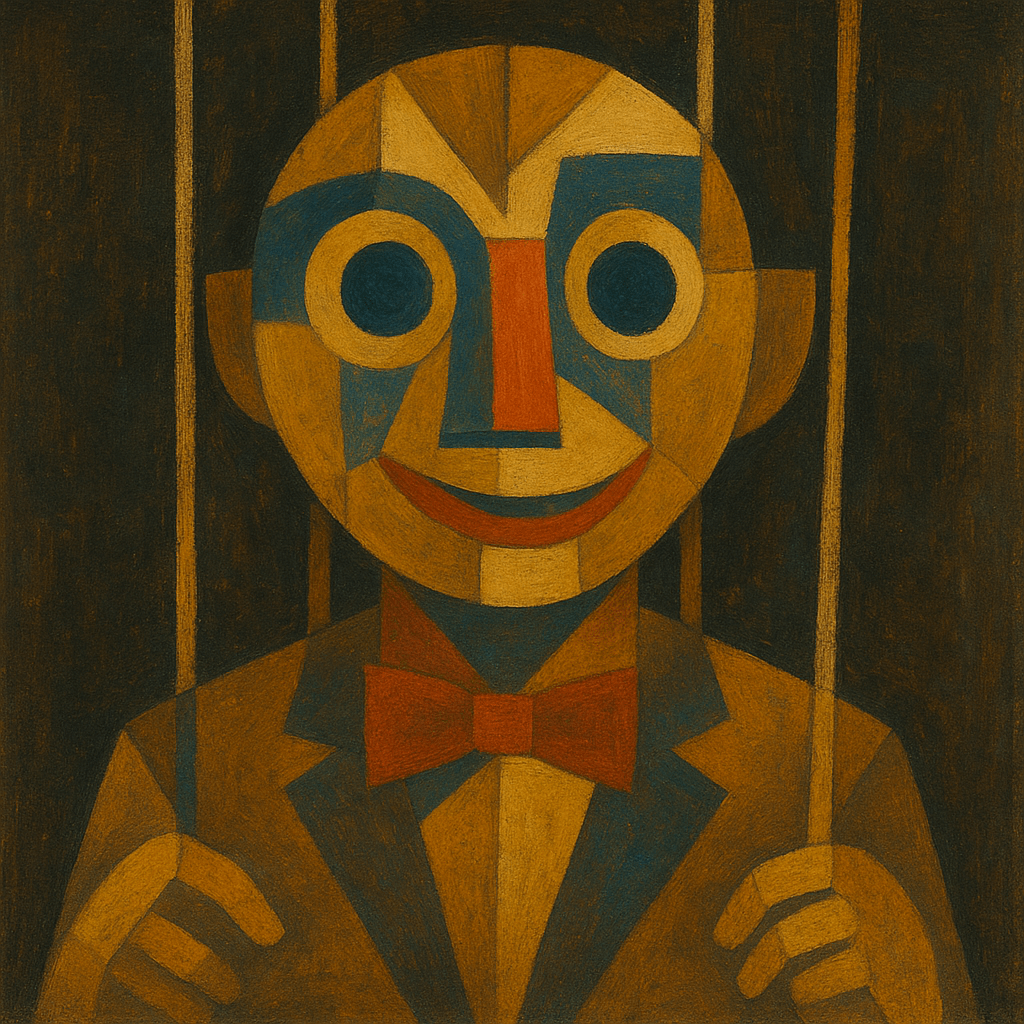
In every century, a new medium discovers how easily it can puppet the collective mind. The printing press made possible both Luther’s Reformation and the Thirty Years’ War; the telegraph and newspaper incubated nationalism; radio begot the theater of fascism; television normalized consumption as faith—and vice versa. Each era mistakes its medium for enlightenment until […]
Disinformation functions as a dynamical system in which information fragments compete for finite cognitive bandwidth. Each carries a propagation weight—shaped by repetition, affect, and network structure—that determines its endurance. Truth, under such dynamics, is not inherent but emergent, a transient equilibrium of reinforcement within stochastic noise. Algorithms that reward engagement amplify instability, creating belief attractors […]
In communicative systems, coherence does not arise from shared meaning but from rhythmic alignment. Spectral coupling describes this alignment across frequencies—how patterns of oscillation, delay, and amplitude between subsystems interact to produce stability or distortion. It is not the transmission of messages but the entrainment of their timing and resonance. Within a field logic perspective, […]