What happens when the people least equipped to recognise intelligence become responsible for selecting, rewarding and managing it?

What happens when the people least equipped to recognise intelligence become responsible for selecting, rewarding and managing it?
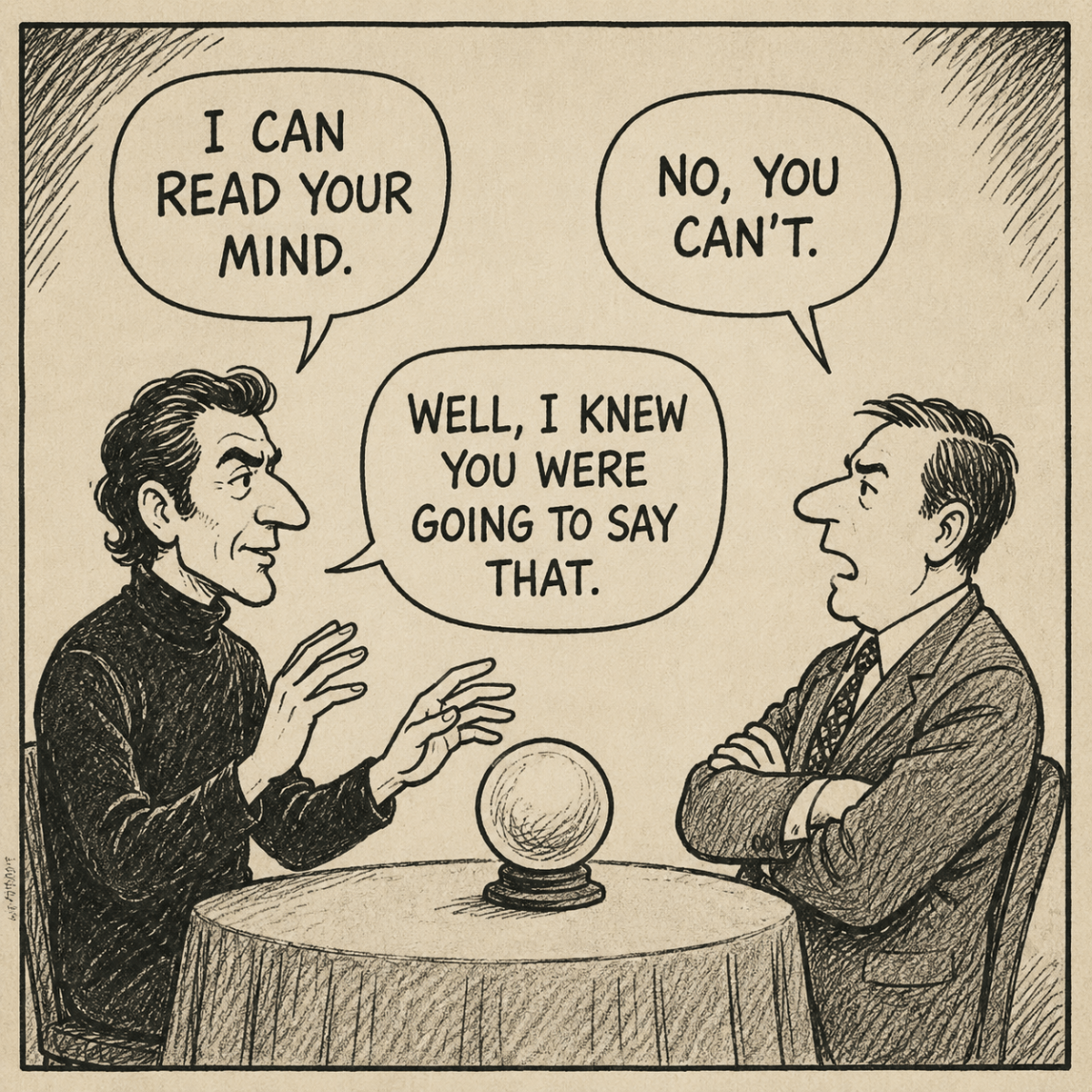
The self depends on a membrane of belief separating “me” from the world, though almost everything constructing that “me” comes from elsewhere.

Psychological maturity does not replace immaturity. It incorporates it, organises it, and learns how to live through it.

Malignant narcissism can be understood as a hollow configuration of mind that emerges when a fundamental relational balance fails, not because the self is excessive, but because the self is excessively and pathologically overdetermined, unable to sustain the essentially harmonic dynamic tension between internal and external that makes selfhood viable. In a healthy cognitive system, […]

Psychoanalysis begins with a joke that only works because it fails: the patient arrives burdened with paranoia, anxiety, and unhappiness, and the doctor replies that this is simply the human condition. (Cure denied.) The moment this is understood, the structure collapses. The consulting room becomes a mirror, not a remedy, and what it reflects is […]
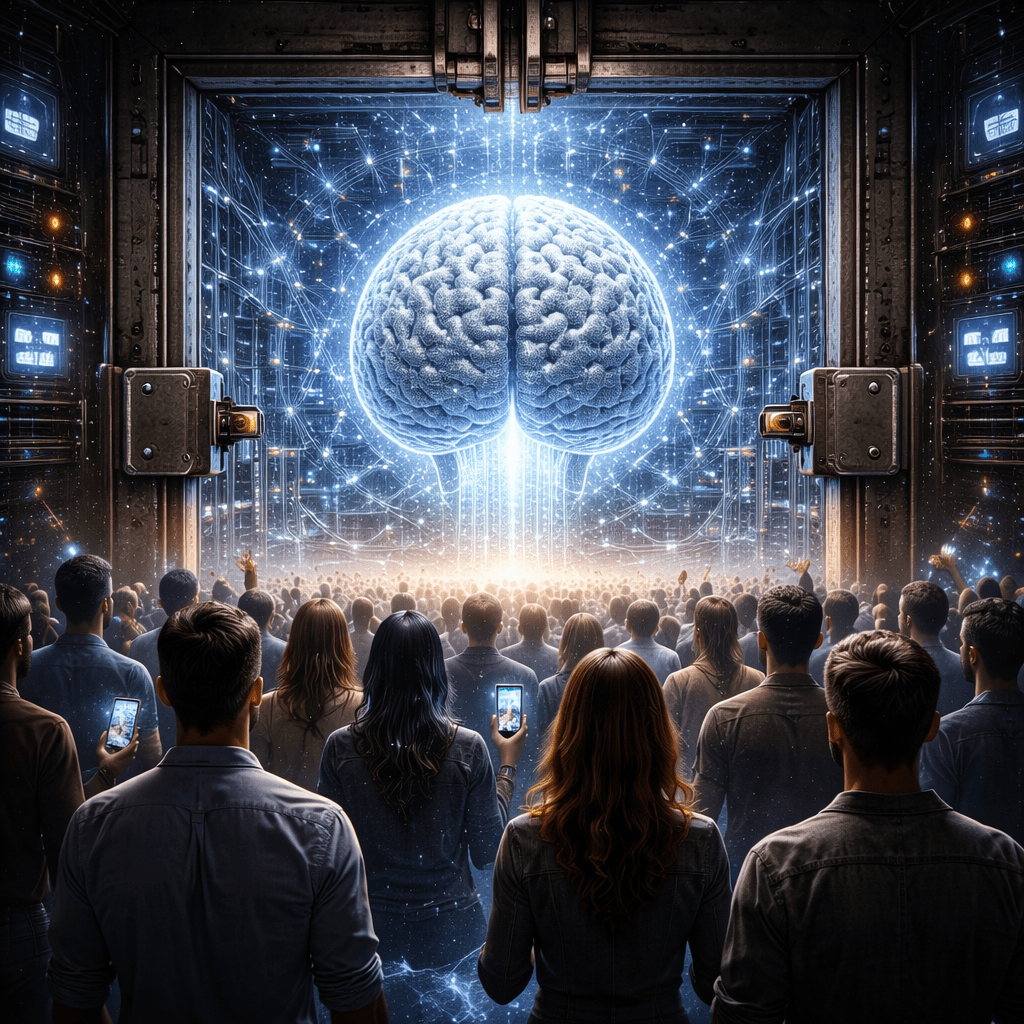
There is a specific psychological trap that closes once people believe intelligence has been defined. Not improved, not approximated, not extended—but captured. Once intelligence is perceived as a solved object, externalised and perfected elsewhere (in systems, institutions, or machines), the individual cognitive posture changes in a very particular way: curiosity collapses into compliance. This is […]

The self is commonly understood as something one has: a centre of experience, a point of view, a continuous “me” that persists through time. Psychological models tend to formalise this intuition by treating the self as a representational structure—narrative continuity, minimal experiential core, or predictive model—through which coherence can be maintained. This move is not […]

If unity is assumed, then the only coherent approach is to work backwards from it. This is not about sentiment or abstraction but about logical necessity: if there is unity, then every relation already participates in it, and our task is to discern how those connections reproduce the whole. Unity is not an optional conclusion […]

Exploring the intersection of psychoanalysis, negative theology, and the distributed nature of semantics presents a fascinating and complex intellectual challenge. Here’s how these fields might intersect and provide deep insights: Psychoanalysis and the Unconscious: Psychoanalysis, particularly the work of Freud and Jung, delves into the unconscious mind. It suggests that much of human behavior and […]

Buddhist psychology can be uniquely insightful. The animist turn in Shinto casts nature (and all who sail in her) as something of and with an agency, an experience. If everything has experience, then in some sense nothing does but this is a rhetorical trick because negation, uncertainty, nothing, absence and potentiality are endemic to bio-logic. […]

Gullibility has no bounds, particularly when tightly coupled with ultranationalist machismo. The ease and simplicity with which the human dopamine reward system is coopted for nefarious political purposes in really no surprise. A little more than disinformation, the pre-existing sociopsychological symmetries in human behaviour represent templates upon and into which nationalism and imperialist brutality are […]

Context: Psychology and Deterrence “(…)deterrence strategies often backfire by aggravating a nation’s sense of insecurity, thereby calling forth the very behavior they seek to prevent.” This kind of feedback loop is really quite foundational in the analysis of complex systems, of which strategic standoffs are a salient (and topical) instance. Something which I haven’t (yet) […]
Have a WordPress.com account? Log in now.

