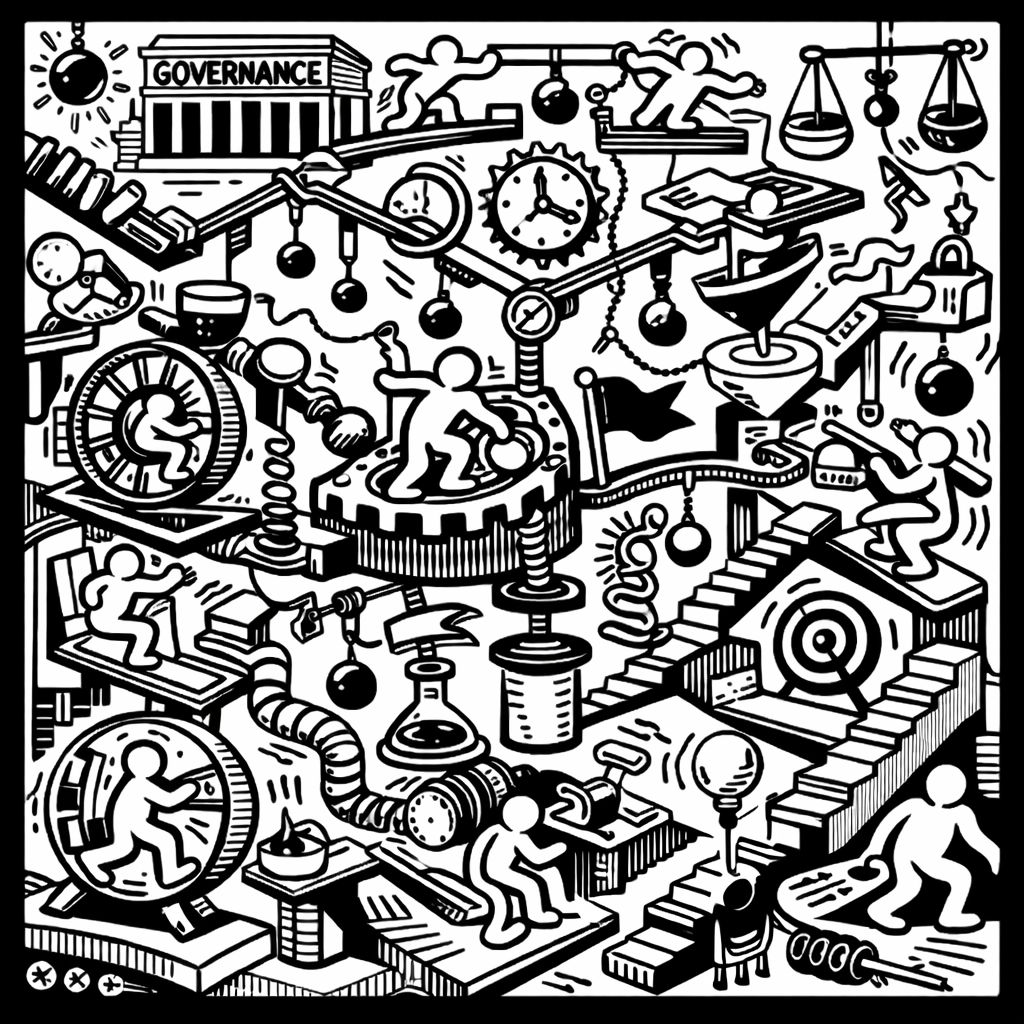
Executive summary Delay is not a flaw to be engineered away. It is the control parameter that sets a system’s operating frequency. Most complex organisational and institutional service delivery systems tend to fail when their timing is misaligned with the realities they are intended to regulate. That misalignment is rarely visible as a single “slow […]
Categories
Service Delivery: Delay Is the Control Parameter
- Post author By G
- Post date Jan 1, 2026
- 1 Comment on Service Delivery: Delay Is the Control Parameter

- Tags adaptive-systems, burnout, change management, complex systems, complexity management, control theory, cybernetics, decision-making under uncertainty, delay, delay management, digital operations, emergency services, enterprise IT, error propagation, escalation loops, escalation management, feedback delay, feedback loops, frequency domain, frontline operations, governance design, healthcare systems, human factors, incident management, institutional failure, institutional trust, IT help desk, IT service management, itsm, KPIs, operational efficiency, operational excellence, operational resilience, operational risk, organisational behaviour, organisational debt, organisational design, organisational learning, organisational systems, performance metrics, phase lag, problem management, public sector services, queue dynamics, queueing theory, resilience engineering, rework, service delivery, service delivery management, service desk operations, service reliability, SLA design, socio-technical systems, system failure modes, system stability, systems control, systems theory, systems thinking, technical debt, throughput vs quality, workflow design, workload management