A practical introduction to Field Logic: a relational framework for exploring complex systems, generating new possibilities and navigating change. Think of it as an ontological skeleton key.

A practical introduction to Field Logic: a relational framework for exploring complex systems, generating new possibilities and navigating change. Think of it as an ontological skeleton key.

Climate change is not occurring inside a stable planetary system. It is altering the persistent structure of relations among climatic states, variables and phases, changing the conditions under which subsequent states become possible and probable.

Conflict builds technology, technology reorganises conflict, and somewhere inside the loop every new problem becomes someone’s next investment opportunity.

Ideology is what happens when a way of seeing the world becomes part of the world itself, shaping not only what we believe, but what becomes easier to believe next.

A system persists not by preserving what it is, but by continually reorganising the probabilities of what it can become.
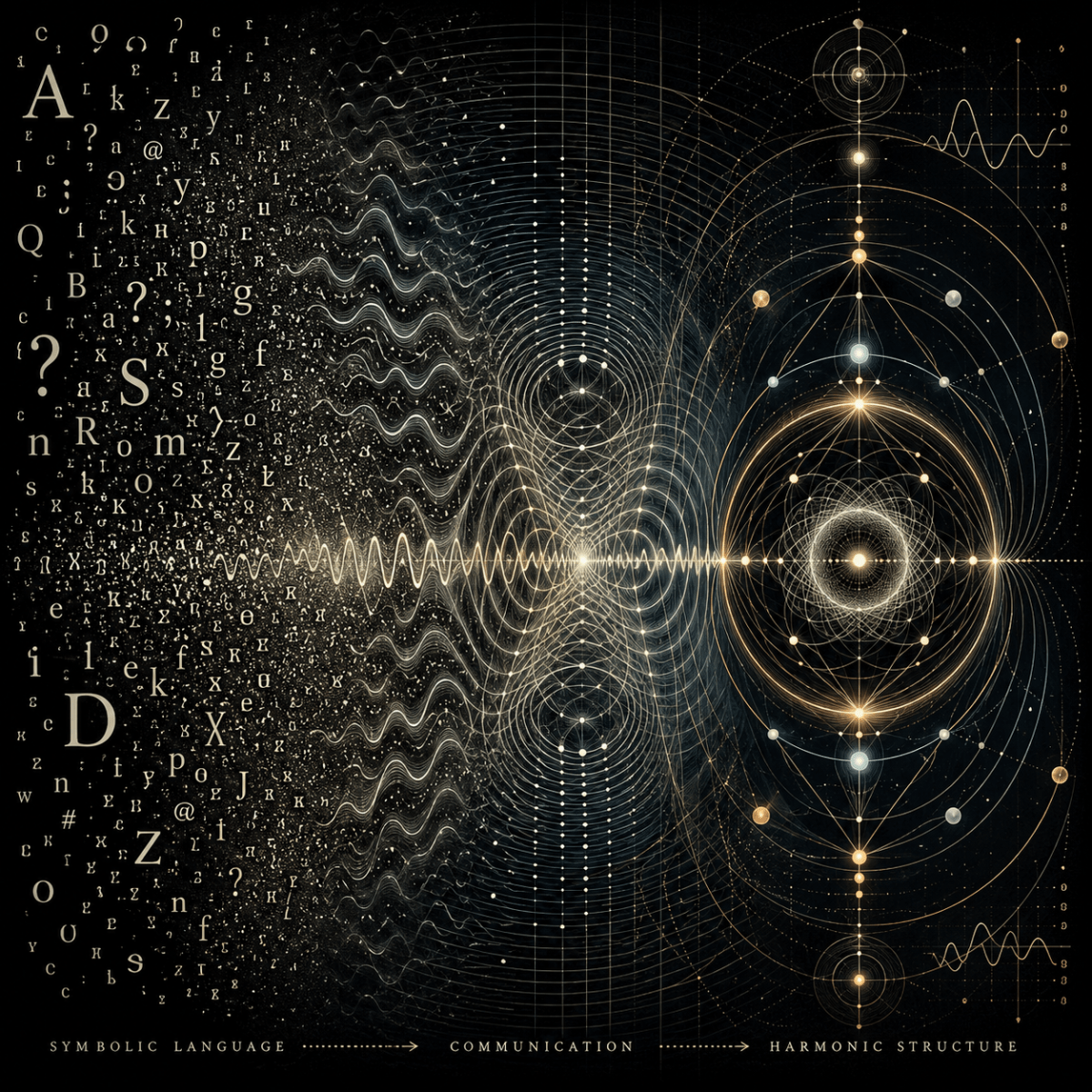
Systems do not merely occupy space. They persist through timing, resonance, and the self-organising rhythms that sustain differential complexity.
Applied Field Logic proposes that persistence is not found in things, but in maintained relationships. This paper develops the mathematical foundations of that claim.

How do distinct identities emerge and persist through transformation when everything exists within a continuous field of changing relationships?

The unconscious is not a hidden chamber beneath awareness, nor a secondary mind running in parallel. It is the emergent interior of dynamical, adaptive, relational complexity itself. It is what complex systems feel like from the inside. Any system capable of learning, anticipation, coordination, and self-regulation must generate internal structure that cannot be fully present […]
The self never settles because the world never settles. Your body changes. Neural chemistry fluctuates. Memory edits itself. Relationships move. Context rearranges. Words drift. Culture turns. New facts arrive, old certainties decay, and the feedback never stops. So the self is not rewritten because it is faulty, but because it is embedded in conditions that […]

Formal Abstract This document presents a formal, process-based theory of language, information, and dynamic meaning systems. Communication, cognition, identity, legitimacy, and truth are treated not as static entities but as temporally constituted processes sustained through repetition, coupling, and feedback within distributed fields. A minimal axiom set grounded in acts, timing, coupling, recursion, variation, and emergent […]

The notion (articulated in the video) that the homeostatic process by which quasicriticality is maintained in the brain may have an essentially cybernetic explanation. In Jeff Hawkins’ “A Thousand Brains” he references neurophysiologist Vernon Mountcastle’s belief in the existence of an underlying (as unifying) organisational principle in the brain. I wouldn’t be at all surprised […]
Have a WordPress.com account? Log in now.

