Meaning is not stored in words; it emerges as harmonic structure through time.
Categories
language as harmonic structure
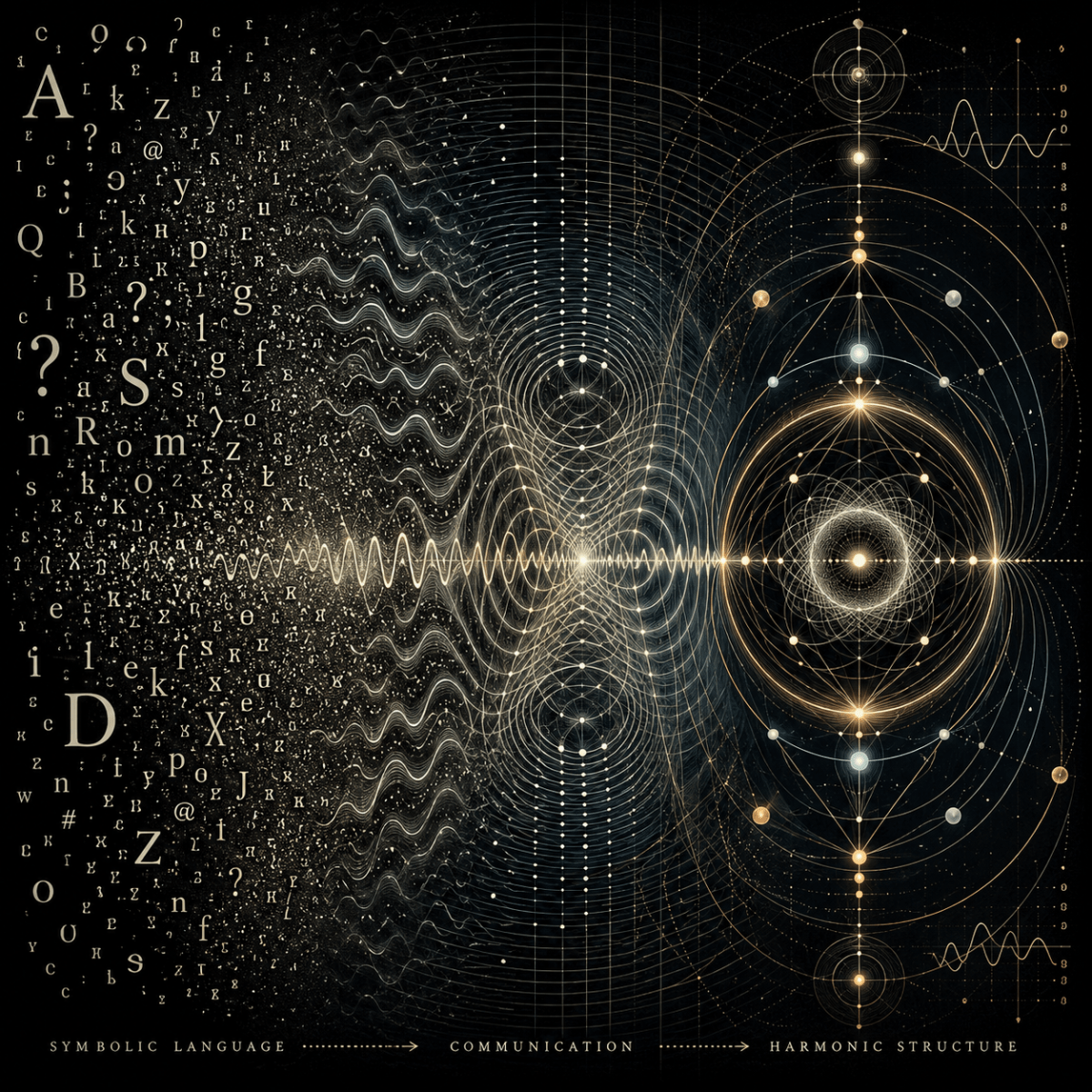
Meaning is not stored in words; it emerges as harmonic structure through time.

Authenticity is not destroyed by media so much as converted into an interface problem: a carefully arranged background, a handful of familiar signals, and the strange little theatre by which the network teaches the self how to appear real.

At precisely the moment technology allowed us to express our own thoughts with unprecedented speed, ease, and fluency, people began switching off from the flood of language-model-mediated self-expression that followed.
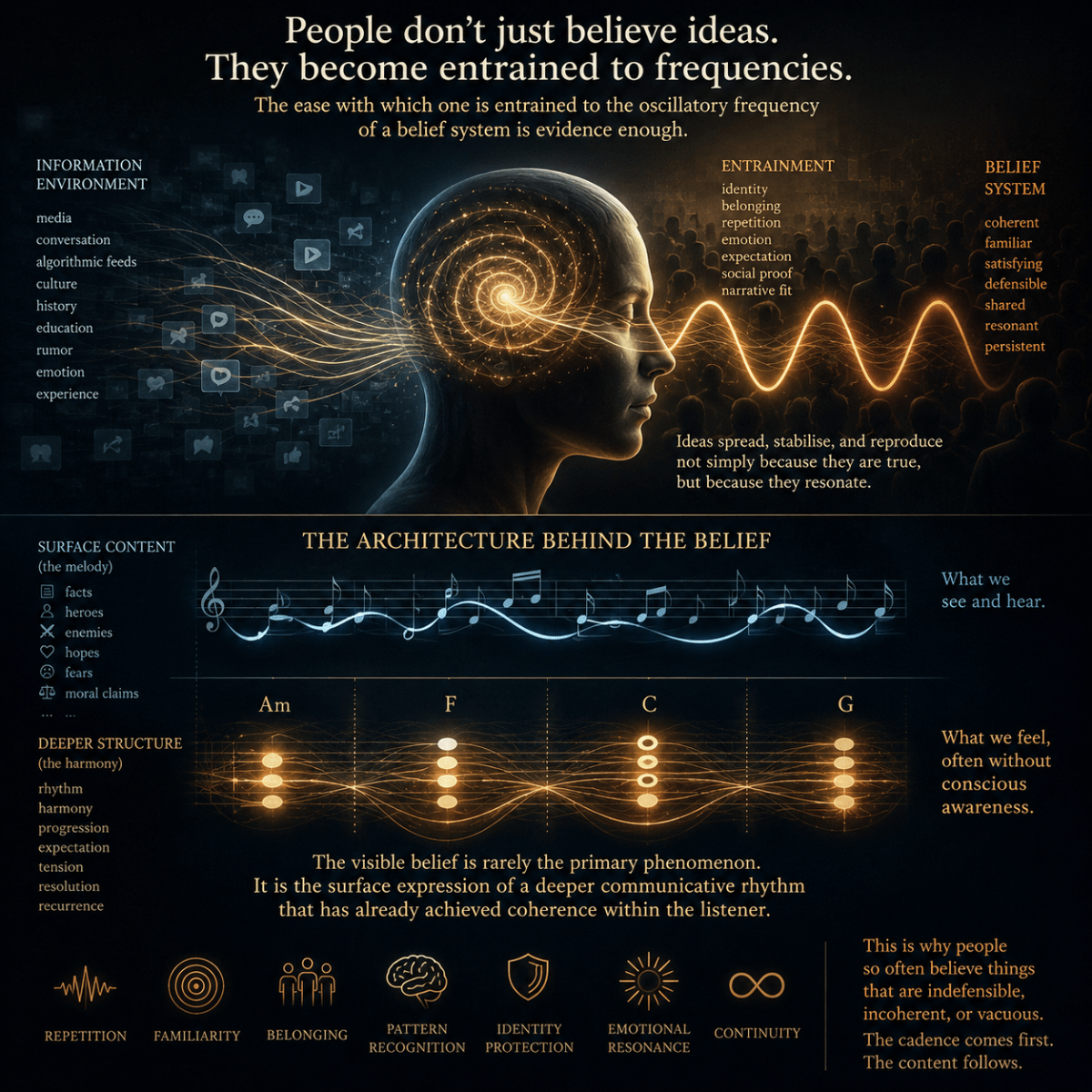
Beliefs persist less because they are true than because they provide the transient continuity of narrative as semantic coherence.
Disinformation is not the opposite of information, but one of the ways communication organises uncertainty into meaning. Its deeper structure belongs less to politics than to the philosophical problem of how truth, coherence, and identity emerge at all.
The strangest thing about meaning is that it does not arise from certainty but from its absence. Language works because something always escapes complete description. What remains unsaid is not a failure of communication. It is the condition that makes communication possible.

Technology cannot solve itself, because the introspective incompleteness that limits it is a function of the same combinatorial unboundedness that makes it at all possible; spoiler: we humans are similarly and simultaneously bound by identical logic.
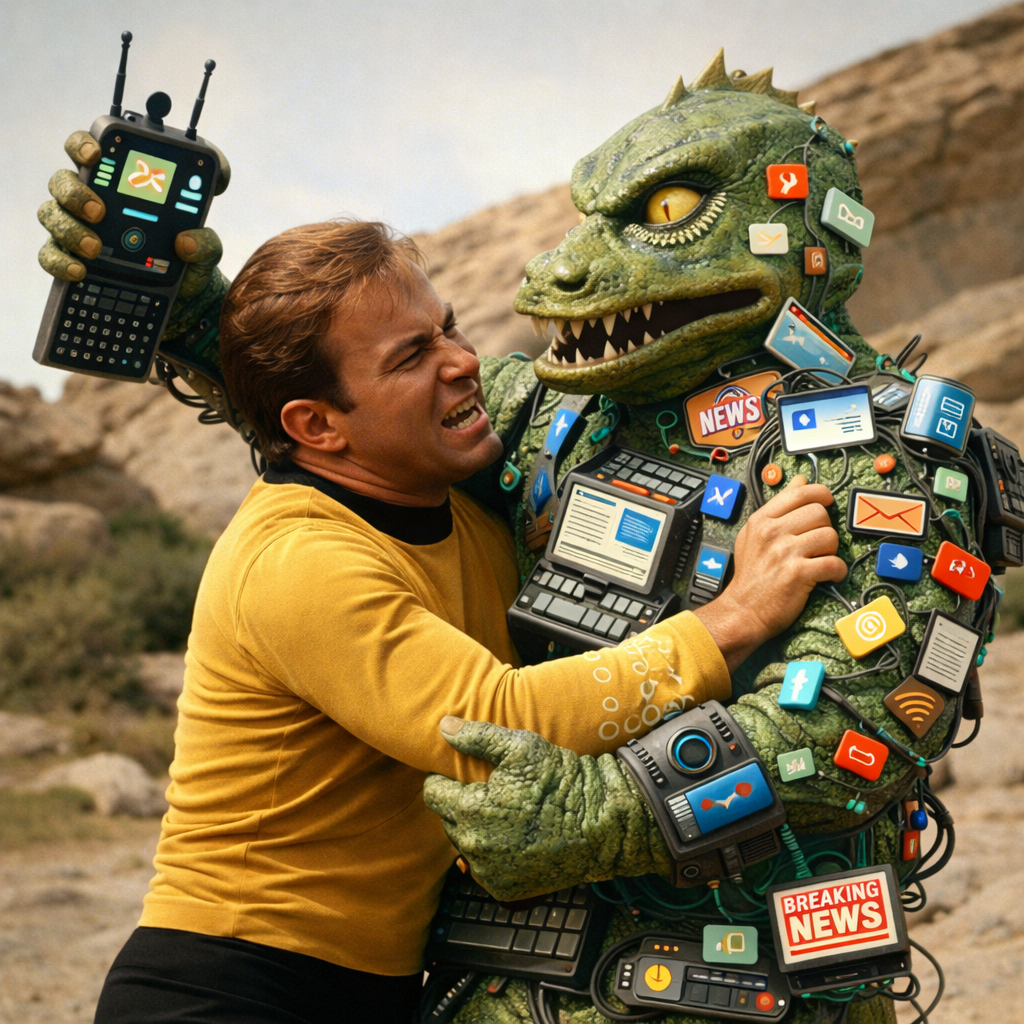
It took me a long time and much exasperation to recognise and acknowledge that the first rule of communication systems theory club is: do not tell people about the theory. Not because the theory is secret. Because the theory is ineffective as information. People are not waiting for a better model of the system that […]
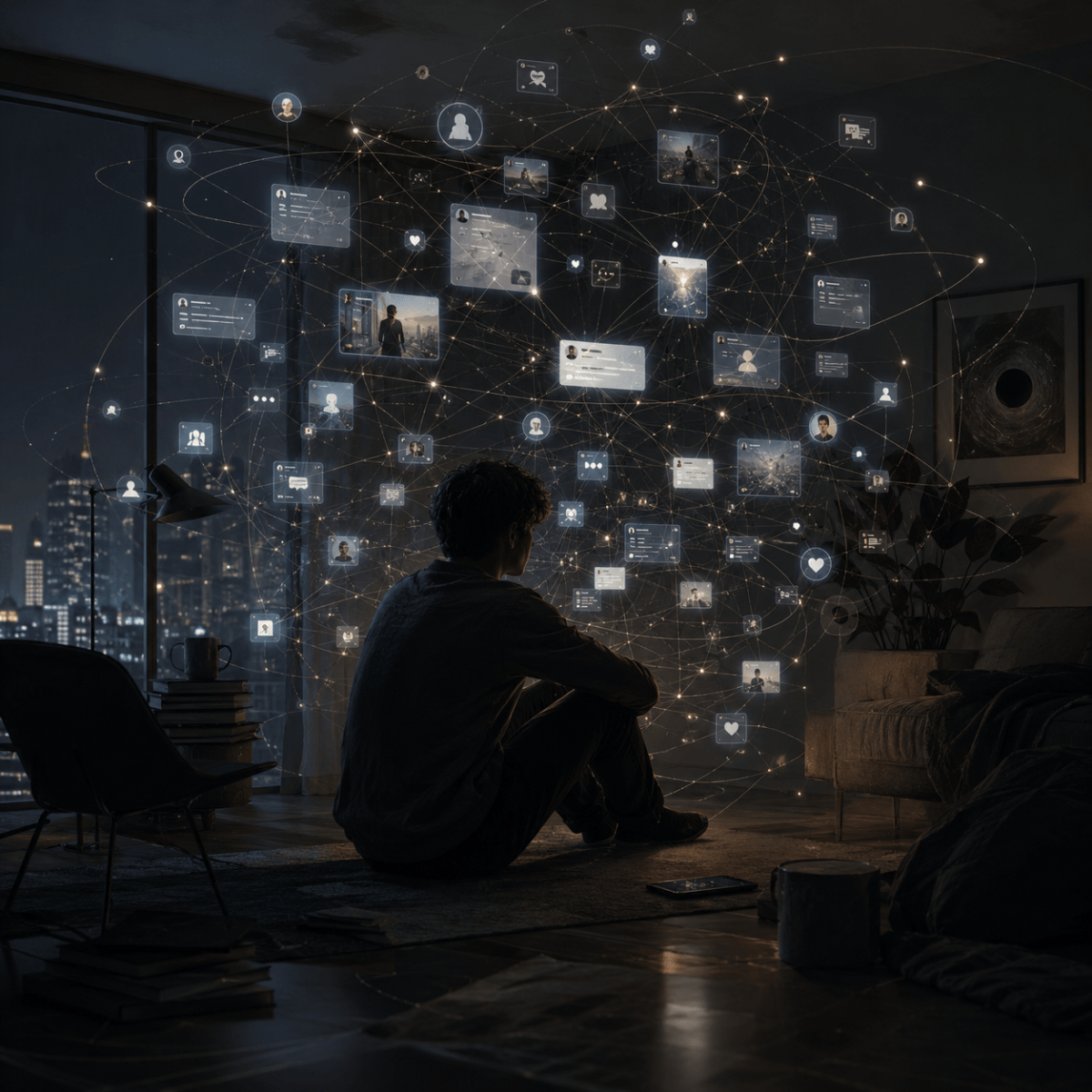
In post-industrial Western societies, relationships increasingly pass through technological and transactional systems before they pass directly between people. Friendship, intimacy, courtship, status, belonging: much of social life now moves through screens, platforms, metrics, services, and algorithmic surfaces. Distance has collapsed. Presence has become persistent. The modern person can remain linked to hundreds, even thousands, of […]
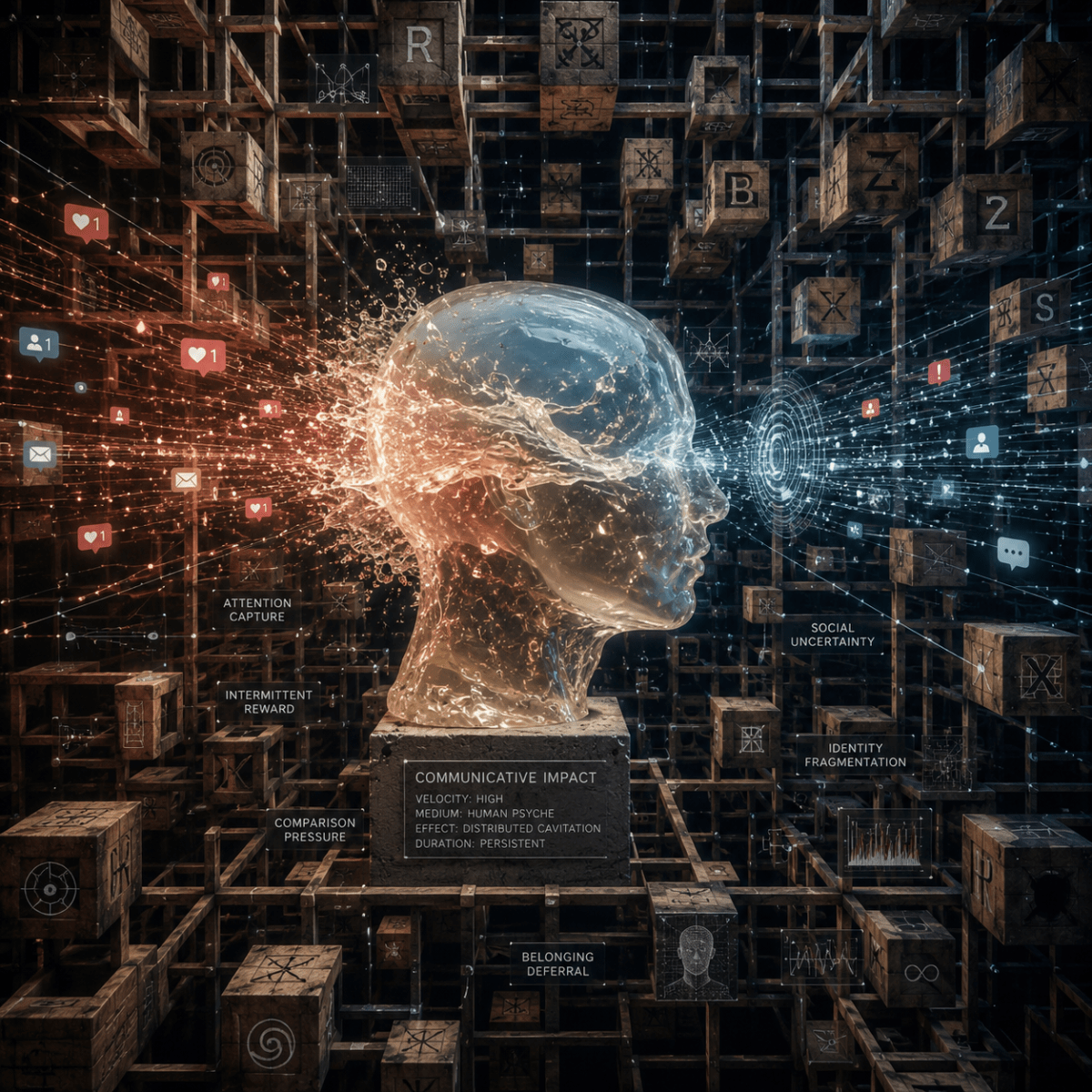
Social media platforms are usually described as communication technologies, but their deeper operational logic is closer to behavioural recurrence management. They do not optimise for resolution, understanding, repair, or psychological settlement. They optimise for continued return. That means the platform is not primarily designed to complete the user’s need, but to make the user come […]
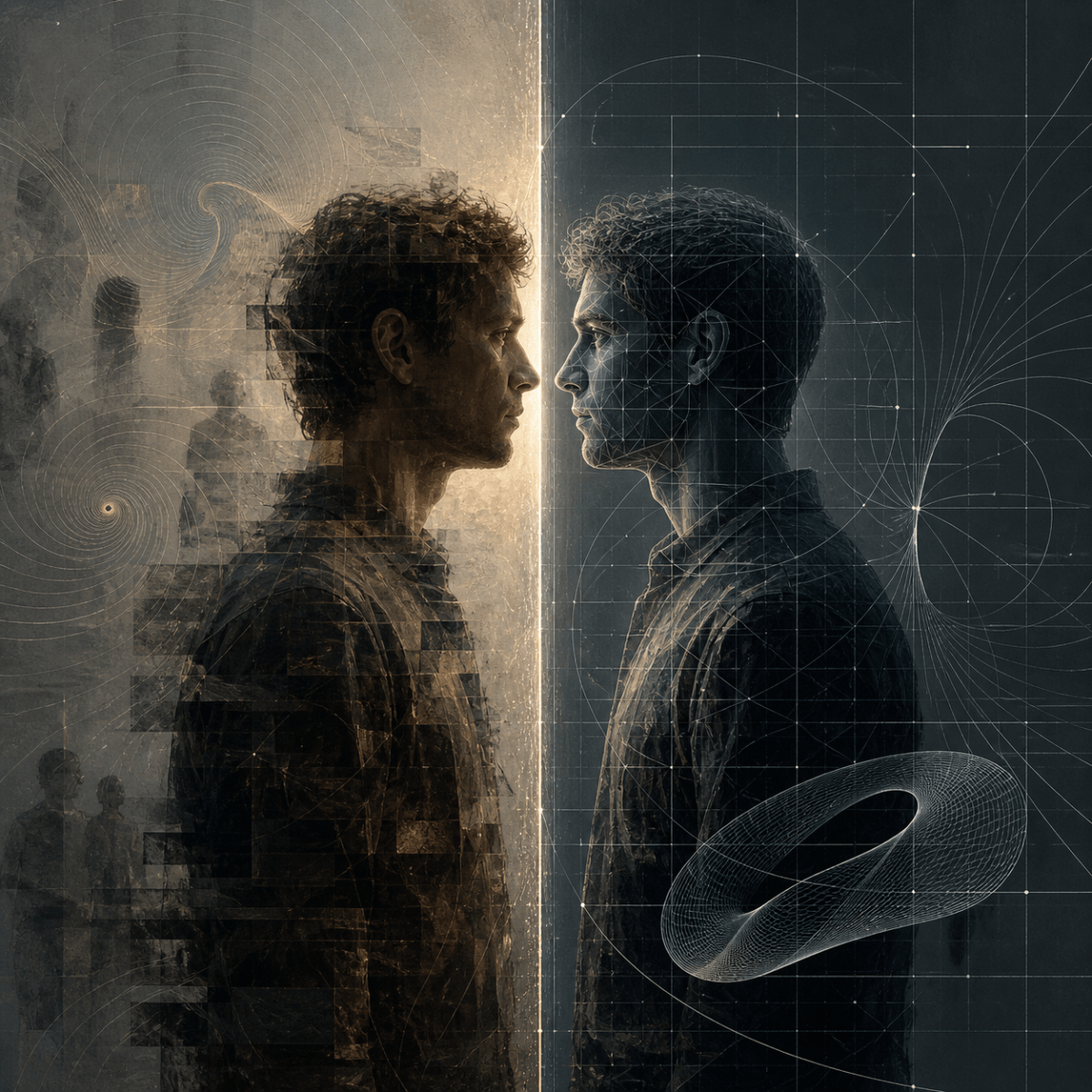
Fear of others is not finally fear of difference, but fear of the gap through which the self discovers it was never solid, never alone, and never entirely its own.

Most of us live inside small coordinate systems. That does not mean small minds or small lives. It means we only ever meet the world from where we are. Family, work, language, class, nation, memory, injury, hope, fear, money, obligation, and belonging all shape what the world appears to be. They give life direction. They […]
Have a WordPress.com account? Log in now.

