Categories
cybernetics

Navigating Global Strategic Complexity

Metabolising Turbulence in the Information Age When geopolitical shocks ripple through global communication systems, governments often default to interpreting the turbulence through the language of motive, intention, and blame. Actor-centred explanations are easier to communicate and politically actionable, even when the deeper dynamics arise from the interaction of networks, institutions, and information flows. Responsibility still […]


Categories
communication

Arguing a Point: the Cost of Partisan Differential

Contemporary political partisanship is commonly perceived as noise, conflict, or moral failure, rather than as a structural dynamic. Within that same environment, some actors benefit from it because the system rewards the conversion of difference into attention, status, or power, creating incentives for intensification. Structurally, partisanship functions less as a disagreement to be resolved than […]

Categories
cybernetics

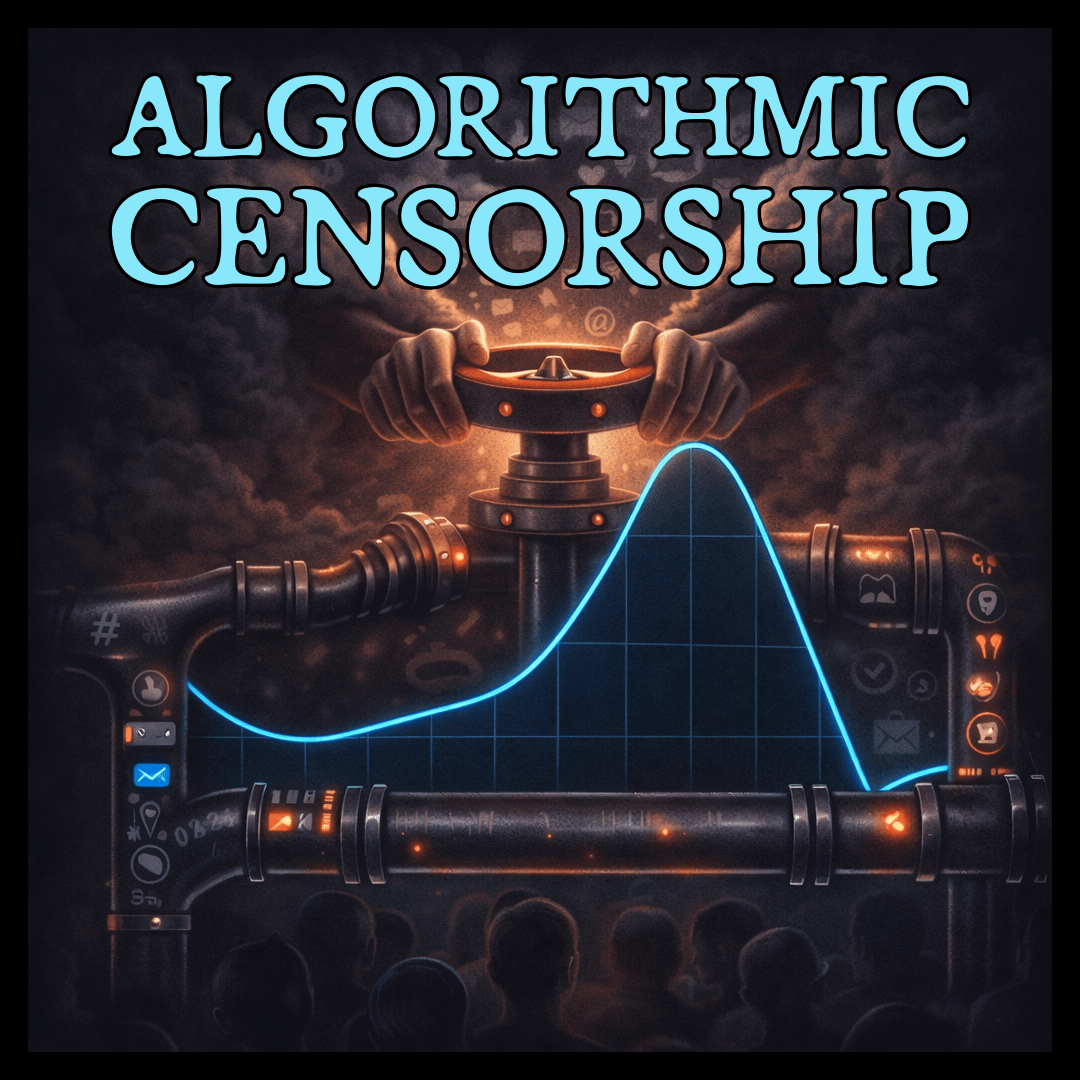
Algorithmic Censorship

Across the major platforms, something subtle but consistent is happening. Posts rise, gather momentum, then stall at almost exactly the same threshold, regardless of topic, audience, or timing. The curve flattens not because interest disappears, but because propagation is capped. This pattern repeats on LinkedIn, WordPress, X, Instagram, and beyond. Visibility has become a controlled […]

Categories
cybernetics

Conflict: Metaphysics of Non-Closure

Conflict and competitive adversarialism are not necessarily moral failures or aberrations. They are contingent, historically acquired, culturally entrained mechanisms by which complex cognitive, cultural, and communicative systems reliably differentiate, learn, and reproduce themselves over time. These mechanisms arise because complexity does not form around completeness, nor does it arise from closure, certainty, or final resolution. […]

Categories
physics

Quantum Confusion: Institutional Inertia

We are taught to treat quantum mechanics as intrinsically strange, opaque, almost hostile to intuition. The standard story is that reality itself is bizarre, and that only extreme mathematical sophistication grants partial access to it. Yet this framing quietly ignores another possibility: that many workable intuitions, partial models, and genuinely useful ways of thinking never […]