When ignorance becomes politically powerful, socially respectable and commercially profitable, independent thought becomes a liability.
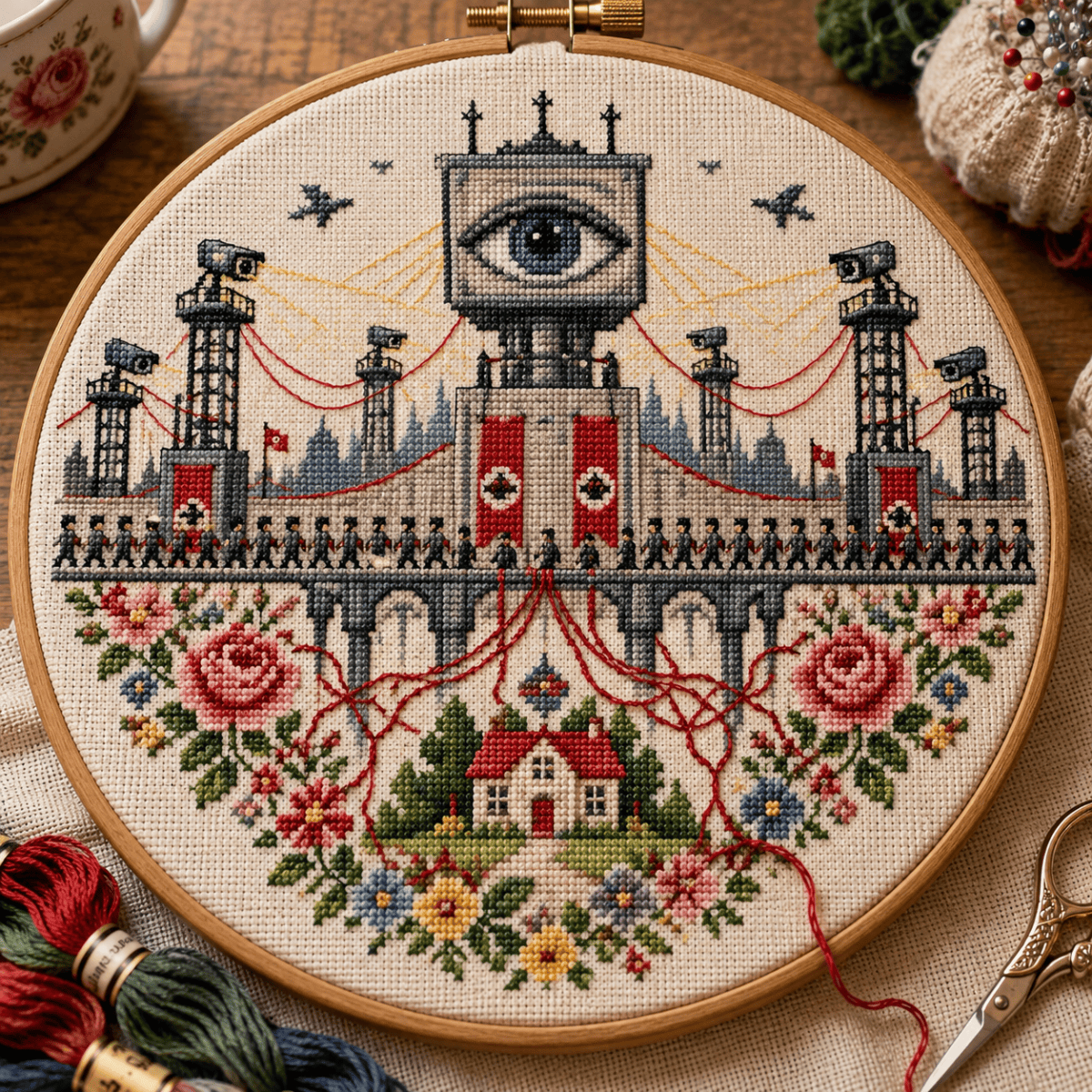
When ignorance becomes politically powerful, socially respectable and commercially profitable, independent thought becomes a liability.

A civilisation that turns its moral deterioration into public spectacle reorganises the relationships through which political power is recognised, contested and reproduced, making cruelty both a symptom of its decline and a means of perpetuating it.

Fascism does not begin with a dictator. It takes shape through recurrent patterns of threat, identity and authority, until a leader can occupy the position those patterns have made available.
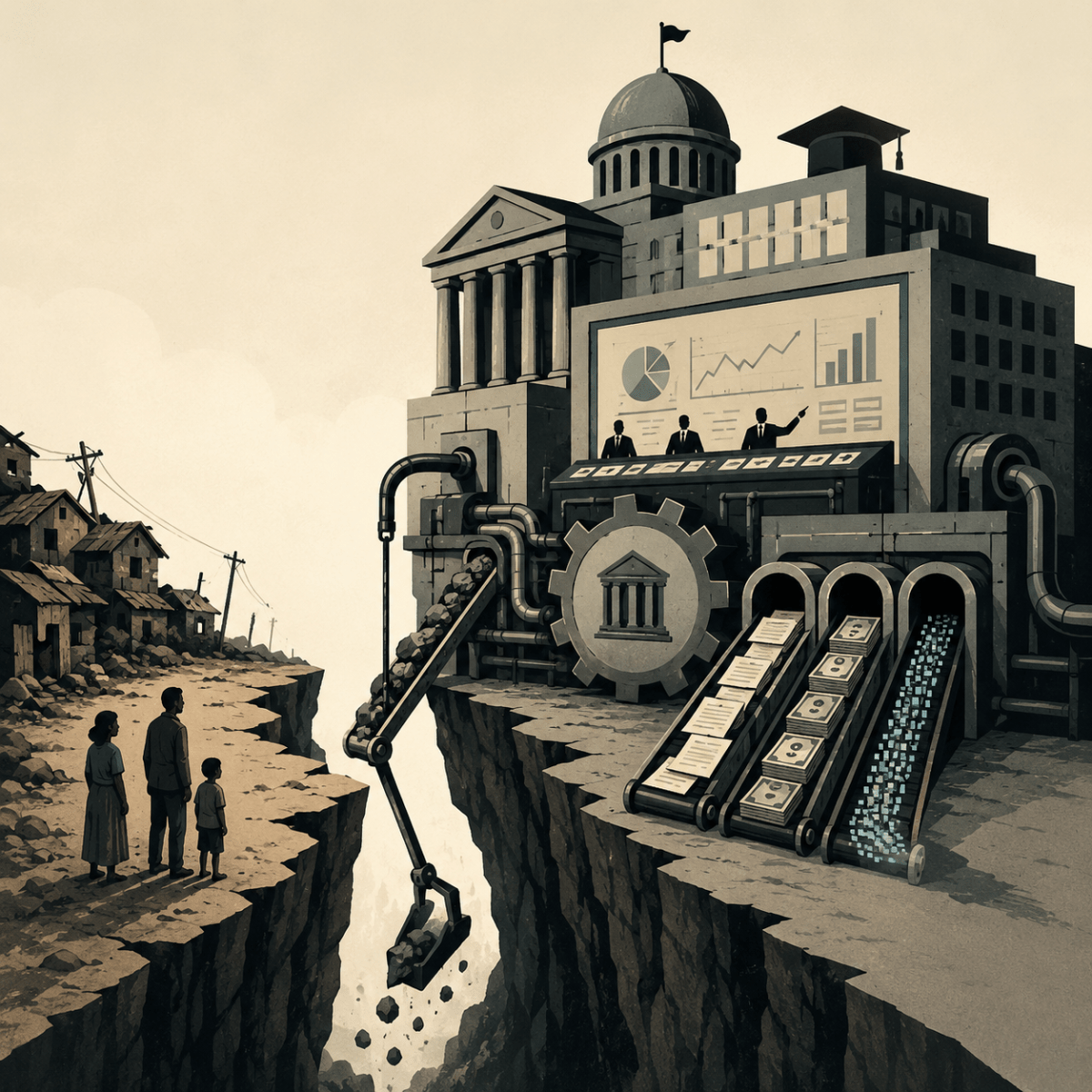
The institutions assigned to solve our deepest problems are sustained by these, the very relations they are unable and/or unwilling to question.
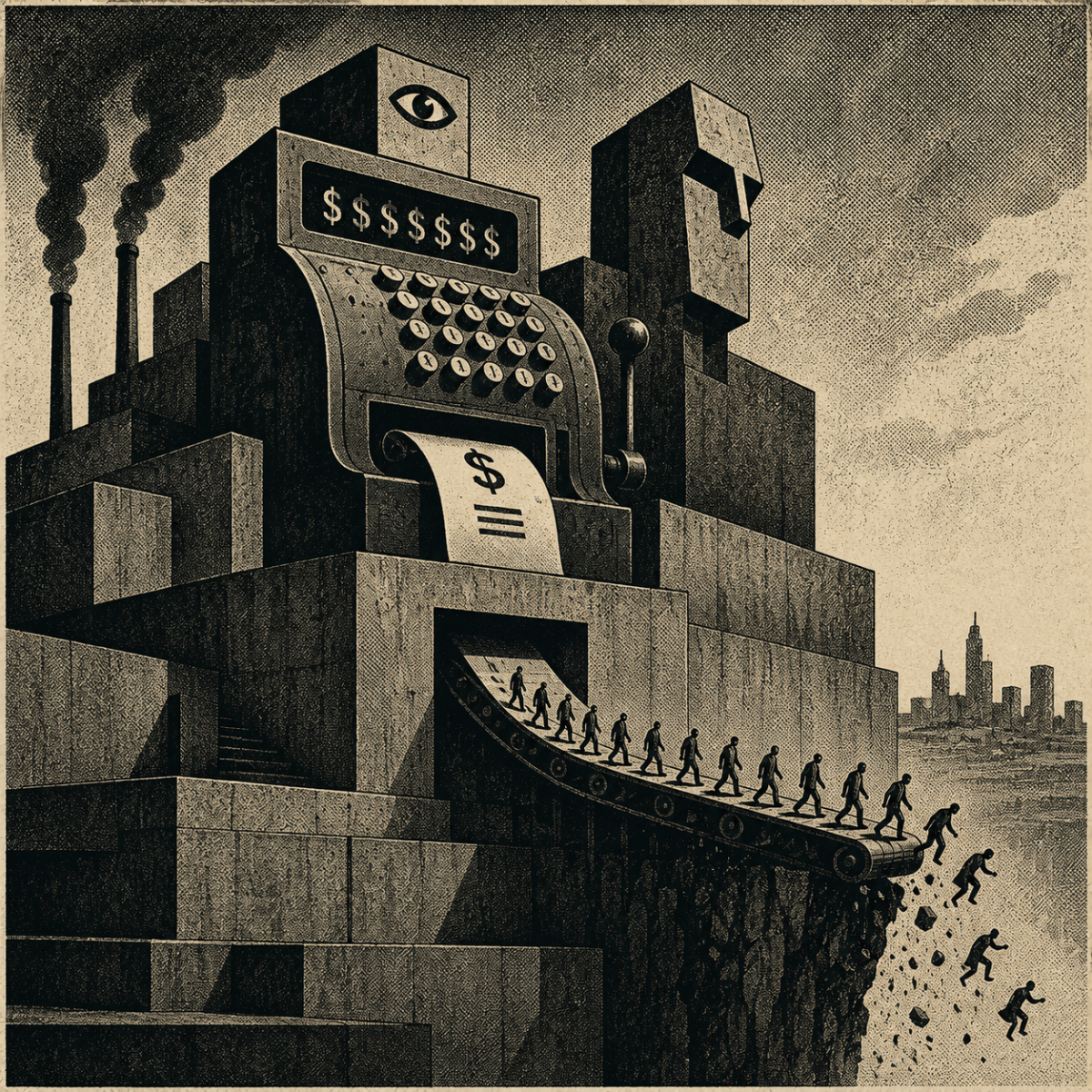
A civilisation organised around limitless acquisition on a finite planet turns systemic collapse into a KPI.
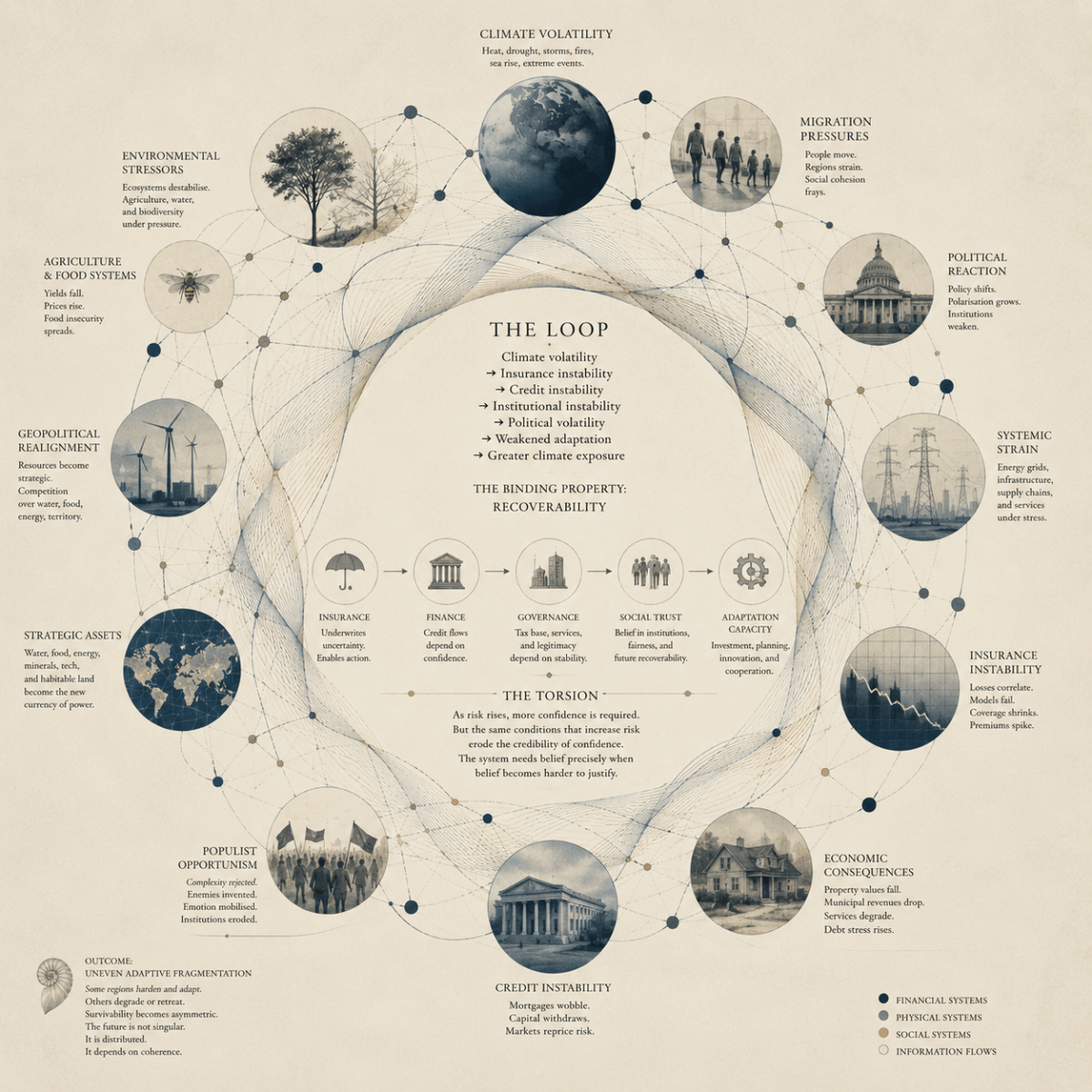
Climate change becomes civilisational risk when insurance can no longer translate catastrophe into recoverable cost.
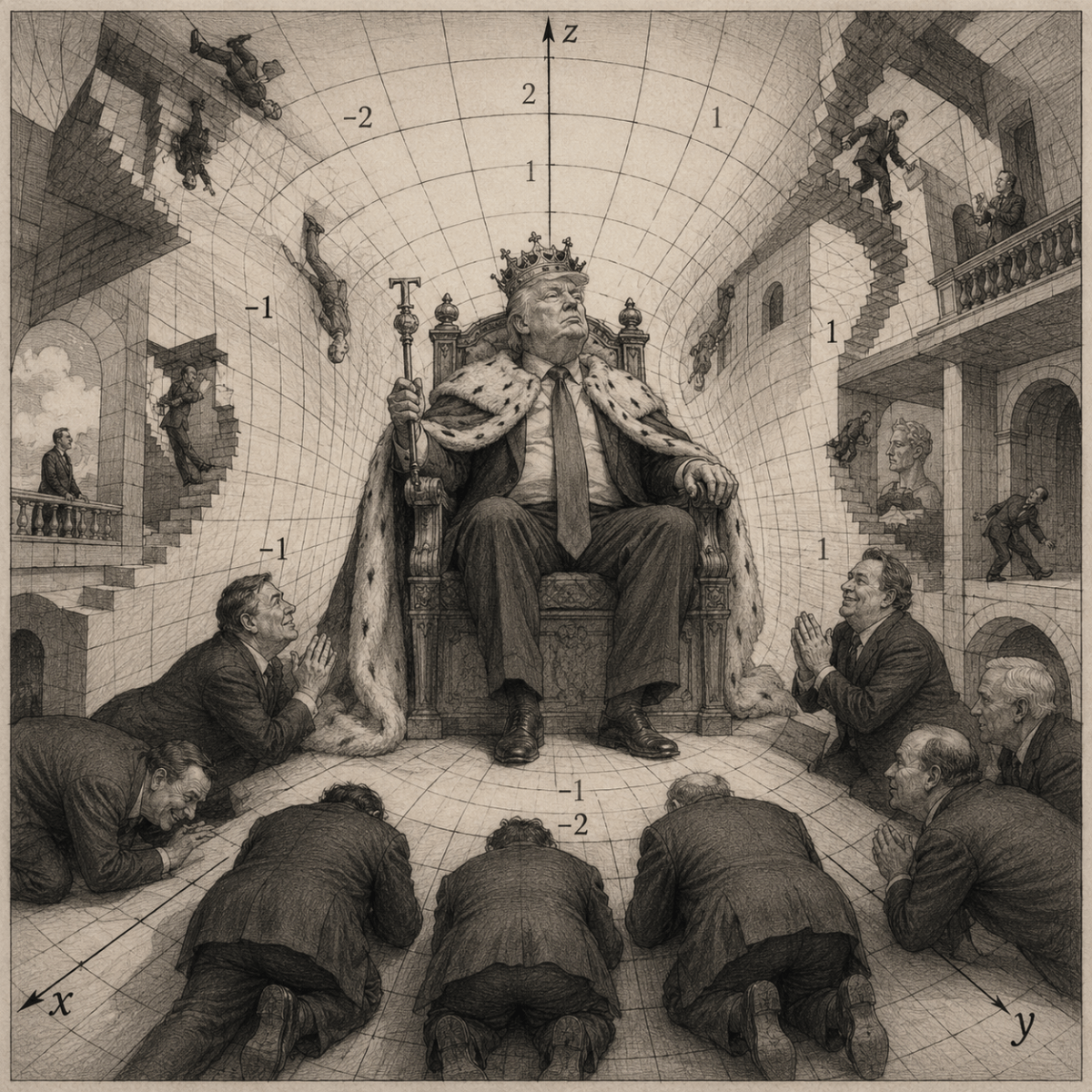
The court of red caps and lacquered smiles now finds itself chained to a king who mistakes appetite for destiny and spectacle for wisdom at precisely the historical moment requiring restraint, literacy, diplomacy, patience, and institutional coherence.

Fear of others is not finally fear of difference, but fear of the gap through which the self discovers it was never solid, never alone, and never entirely its own.

Contemporary political partisanship is commonly perceived as noise, conflict, or moral failure, rather than as a structural dynamic. Within that same environment, some actors benefit from it because the system rewards the conversion of difference into attention, status, or power, creating incentives for intensification. Structurally, partisanship functions less as a disagreement to be resolved than […]

Meaning arises and endures only because experience and symbolic encoding remain out of phase, and when technology collapses that difference into immediacy and semiotic isomorphism, thought and behaviour collapse into preordained reflex, short-circuiting cognitive voltage into volatility, simplicity, and coercive transmissibility, turning language into a direct instrument of behavioural modulation.

Australia works because it stays balanced. Its democracy is not built on simple agreement, but on the disciplined interaction between different ways of seeing the world. Labor and Liberal are not just rival teams. Together, they form the smallest political structure capable of holding a complex society together. Two sides generate debate, correction, and restraint. […]

Fragmentary politics is the largely unwitting doctrine of manufacturing and sustaining endless political and sociopsychological friction in order to self-validate. It generates adversarialism and conflict, then feeds on the consequences, mistaking turbulence for relevance and agitation for purpose. This is not strategy. It is structural incompetence: the conversion of social damage into political leverage, and […]
Have a WordPress.com account? Log in now.

