Our political and commercial systems profit from the crises they perpetuate, rendering meaningful dissent unintelligible and civilisational failure commercially indispensable.

Our political and commercial systems profit from the crises they perpetuate, rendering meaningful dissent unintelligible and civilisational failure commercially indispensable.

I went to a School of Cybernetics hoping to develop ideas about how systems organise and reproduce themselves. My experience instead prompted an unexpected examination of institutional authority, intellectual exclusion and the patterns through which institutions reproduce themselves.

An institution’s measure is not how successfully it preserves itself or claims success, but whether it continues to serve its human purpose.

Administrative systems fail when they become better at preserving their own procedures than understanding or remediating the human realities those procedures were intended to address.

In a world that has deeply and intractably commercialised the concept and experience of individuality, the very last thing actually required of us is to be different. We are sorted and we voluntarily self-sort into labels and categories, compressing ourselves into neat, data-ready boxes that serve as containers for self-managed subscription into vast machines of […]
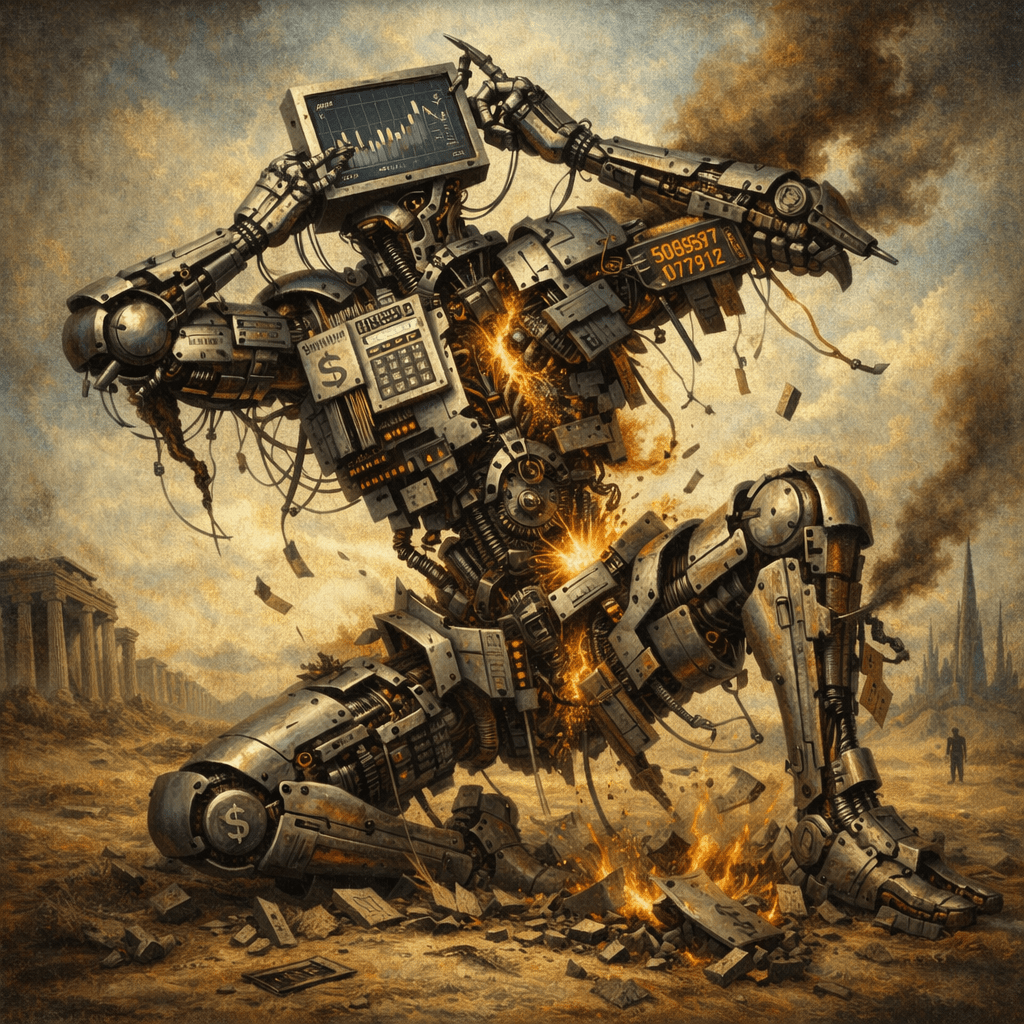
Systems of governance and regulation, insofar as they attempt to secure social, economic, and existential continuity, are structurally compromised. Their primary function is not effective service delivery, but the preservation of administrative and status hierarchies. Continuity of role, office, and influence comes first; the public good follows, if at all. Politics becomes theatre. Institutions become […]

