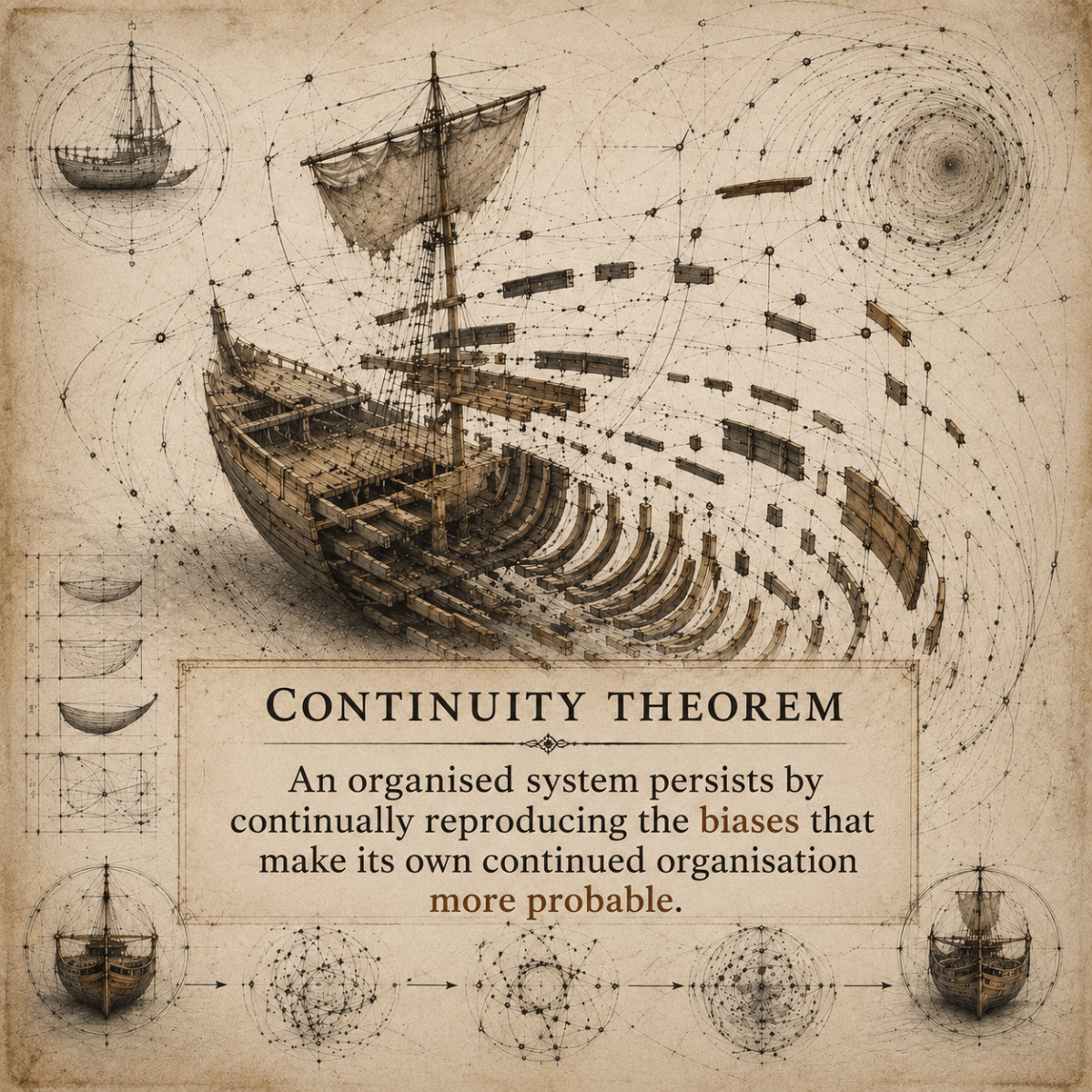
Organised systems persist by reproducing the biases that make their own continuity more probable.
towards a continuity theorem
Organised systems persist by reproducing the biases that make their own continuity more probable.
Can the relationships supporting ordinary life continue to reproduce themselves under increasingly rapid change?
What sustains the dynamical relations from which persistent structures emerge?
The way we think about time quietly shapes the way we think about everything else.
Applied Field Logic functions as a general analytical framework through which organisational regularities become comparable across otherwise unrelated domains. Advanced cybernetics.
Dissimulation.
The question is whether what we currently reward actually assists the capacity of civilisation to persist, adapt, repair itself, and create meaningful futures.
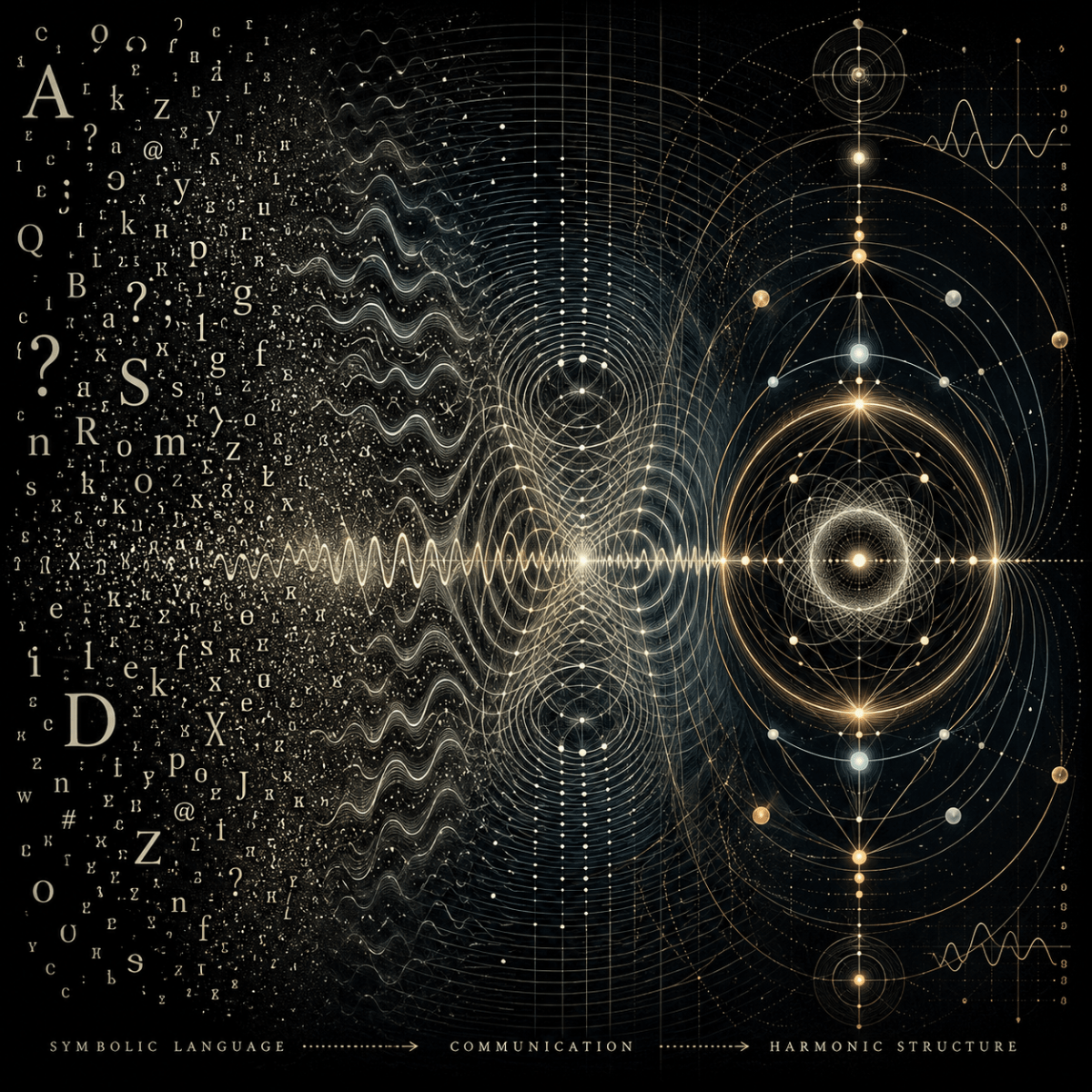
Systems do not merely occupy space. They persist through timing, resonance, and the self-organising rhythms that sustain differential complexity.
Civilisations do not simply make choices. They fall into rhythms — and the future may depend on learning how to change the music.
Applied Field Logic proposes that persistence is not found in things, but in maintained relationships. This paper develops the mathematical foundations of that claim.
Science has not stopped discovering reality. We have become less capable of surviving what those discoveries imply about ourselves.
Technology cannot solve itself, because the introspective incompleteness that limits it is a function of the same combinatorial unboundedness that makes it at all possible; spoiler: we humans are similarly and simultaneously bound by identical logic.