Two encounters with academia, decades apart, reveal the peculiar machinery through which institutions reproduce authority, exclusion and their own necessity. A personal account of education, alienation and the questionable meaning of progress.

Two encounters with academia, decades apart, reveal the peculiar machinery through which institutions reproduce authority, exclusion and their own necessity. A personal account of education, alienation and the questionable meaning of progress.

What happens when thinking outside the box is encouraged, but opening the bloody thing is not?

Philosophy is not simply the history of what others have thought. It is the continuing activity of understanding a world that refuses to stand still. When familiar explanations cease to serve us, thinking differently may become a matter of survival.

We have built institutions that teach people how to think, then reward them for knowing when not to.

A system that discourages difference eventually undermines its own capacity to learn, adapt and survive.

Doctoral research promises original thought, but the institutional machinery that recognises and rewards knowledge systematically reproduces precisely that ignorance it exists to supersede.

The paradox is that philosophy, a discipline nominally concerned with questioning assumptions, has become remarkably accomplished at preserving its own.

I went to a School of Cybernetics hoping to develop ideas about how systems organise and reproduce themselves. My experience instead prompted an unexpected examination of institutional authority, intellectual exclusion and the patterns through which institutions reproduce themselves.

This is how a system built to produce knowledge becomes a system for reproducing the conditions under which its existing knowledge remains authoritative.
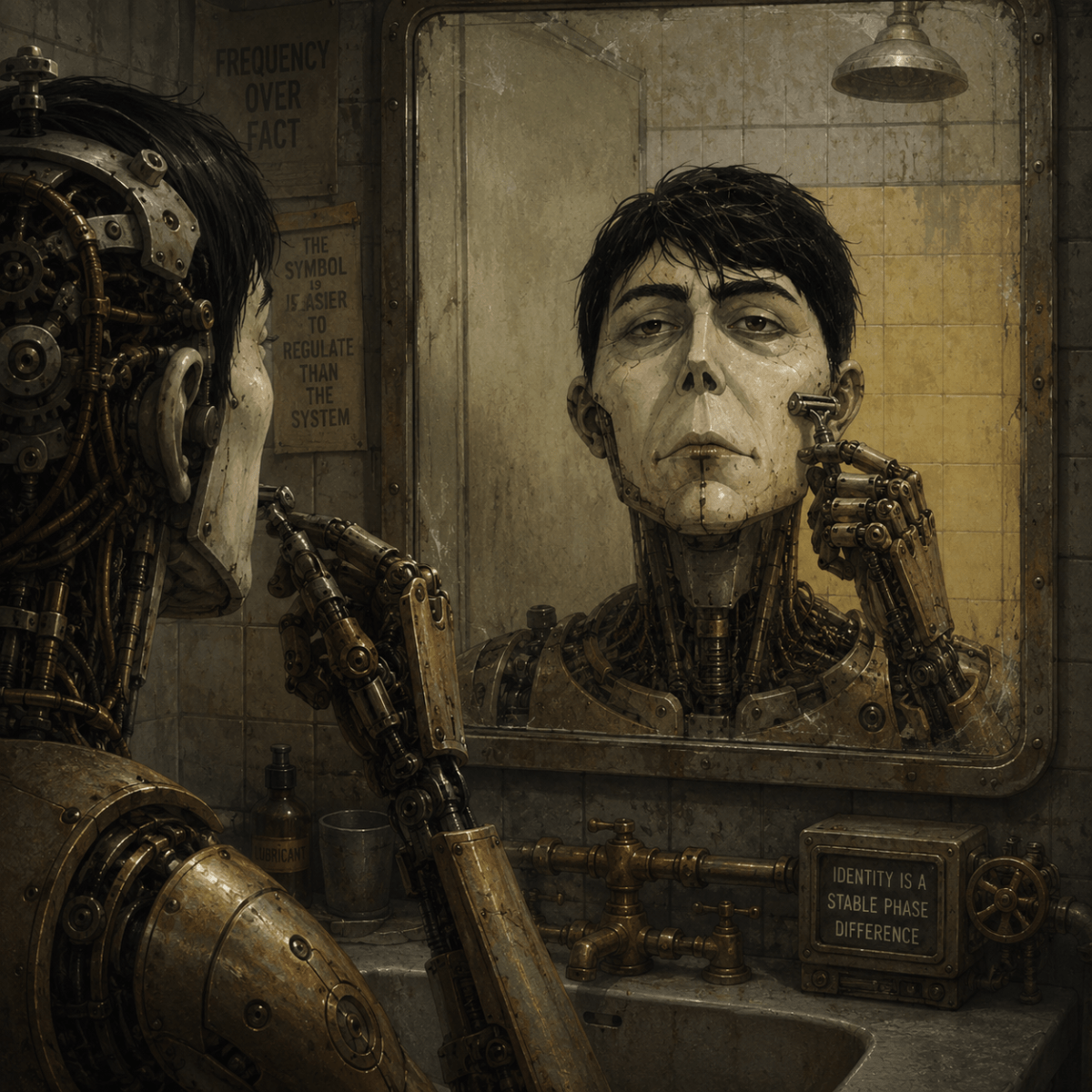
Universities still teach Socrates, but only rarely entertain the genuine institutional risk that his intellectual integrity signifies.
Have a WordPress.com account? Log in now.

