Categories
cybernetics

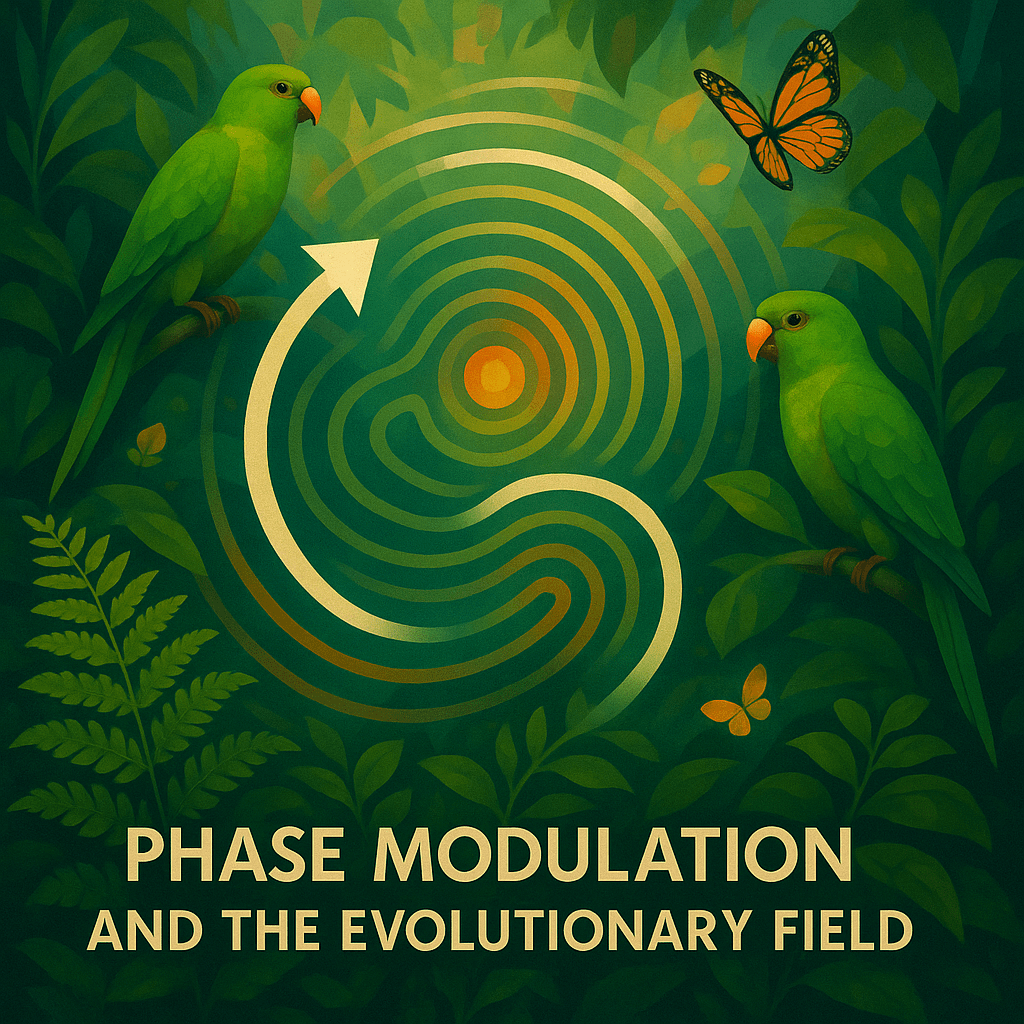
Phase Modulation and the Evolutionary Field

Biological evolution can be read not as a ladder of material refinement but as a synchronisation phenomenon—a system exhibiting Kuramoto-like synchronisation (1984), a mathematical model of how independent oscillators—like fireflies or human hearts—fall into rhythm. Each organism, gene, or mind acts as an oscillator, sustaining an internal rhythm through cycles of metabolism, reproduction, or thought. […]

Categories
Complexity

Tylenol

What if autism isn’t a glitch in the human code but a pattern in the larger field, a ripple of constructive difference emerging where things are becoming too uniform? Intelligence may not be a sealed package behind our eyes but a network effect of bodies, environments, and signals, a distributed resonance rather than a solitary […]

Categories
Philosophy

Climate Change and the Logic of Holism

Climate change resists treatment as a set of isolated variables. It is not reducible to emissions inventories, technological substitutions, or regional agreements. It is a whole system phenomenon, where every action is bound into the larger field, and every tension is a projection of the system itself. The key property is not in the fragments […]

Categories
cybernetics

Technical Insecurity

Because mathematics is infinite, the field of cybersecurity can never be truly closed. The space of vulnerabilities is unbounded, each patch or solution only ever an approximation against the open horizon of possible attacks. Risk is permanent, not as a flaw but as a structural consequence: a system that protects itself must also endlessly expose […]

Categories
Philosophy

Expertise

Our universities are not producing experts or competency, but inasmuch as they are—and where they are—it exists only as an outlier within the great goo of median self-replication to which hierarchical bureaucracy is naturally attracted. The institutional frame does not optimise for insight but for the recursive preservation of itself, absorbing deviation back into the […]

Categories
cybernetics

Extreme Economics

Extreme economic doctrines—whether right or left—are structural performances, temporary galvanizations around dysfunction. They flare precisely because they replicate the fractures that sustain them. What appears as crisis-management is, in fact, a choreography of failure made durable. The intentional destruction of poverty is not an error of policy but a condition of possibility for wealth at […]

Categories
Philosophy

Intelligence: How, not What

Intelligence is too often mistaken for the sum of its parts, as if knowledge were a pile of isolated facts—points that can be counted, catalogued, and stacked. This is the mechanistic view: determinism reduced to inventory. What gets overlooked in that framing is the field—the structure of relations, the gradients of difference, the resonance through […]

Categories
cybernetics

Clankers

The machines are getting louder. They don’t think; they clank. People call it “intelligence” because the marketing is good, because the numbers are big, because nobody likes to be left out of the next gold rush. But clankers aren’t wise. They don’t know what they’re doing. They recombine, they predict, they imitate. Useful enough for […]

Categories
Philosophy

Dependent Definition

The more precisely we define and describe any system, the more deeply it becomes embedded in the field of relations (and/or language) that makes it possible. This is not an accidental by-product of analysis but a structural inevitability: to single something out is to weave it more tightly into what surrounds it. Every definition is […]

Categories
cybernetics

Field Logic: Syntax for Meaning in Distributed Systems

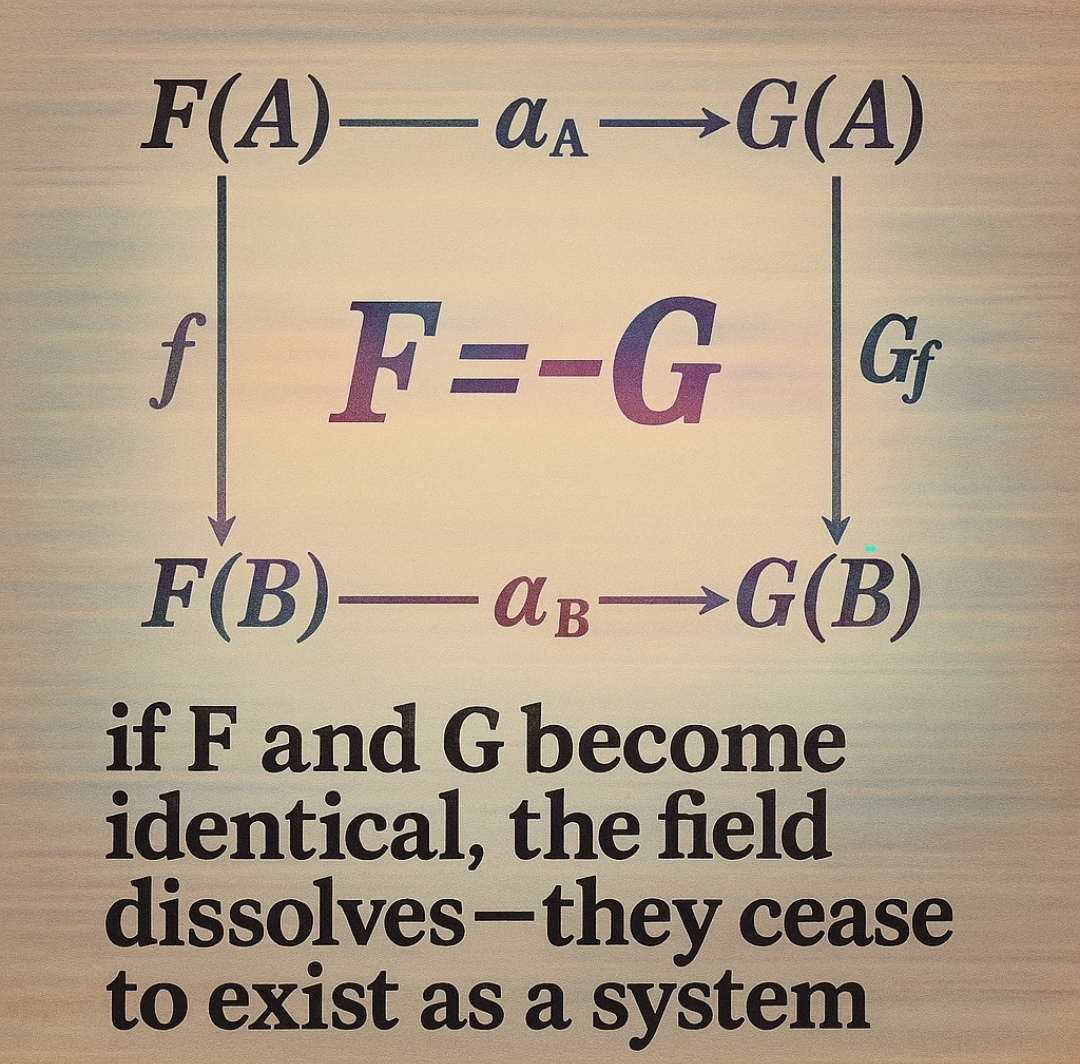
In an age defined by information overload and communicative saturation, the core structure of meaning is straining under its own weight. Traditional accounts of meaning—rooted in symbols, representation, and local causality—struggle to explain how coherence persists across fragmented, dynamic, and scale-invariant systems. A growing body of work points toward something more subtle and robust: not […]

Categories
Philosophy

Brain Damage 2.0

What acquired brain damage has taught me about human intelligence is that it behaves less like a monolith and more like a composite frequency structure—stacked capacities, each tuned to a distinct operational band. When one of these layers is lost, the system doesn’t fail outright. Instead, the remaining functions persist, but with distortions—subtle misalignments, delays, […]

Categories
Philosophy

Multiverse Science

The multiverse, conceived as an unbounded configuration space of all possible system states, is not problematic for science because of its scale, entropy, or recursive self-generation—it’s problematic because science, as currently structured, lacks the tools to capture or model such structures. The hyperinflation of interior spaces—spaces within spaces, possibility within possibility—highlights the same ancient wound […]