How engagement incentives, selective censorship and data extraction weaken cooperation, and why peace depends on changing what our communications systems reward.

How engagement incentives, selective censorship and data extraction weaken cooperation, and why peace depends on changing what our communications systems reward.
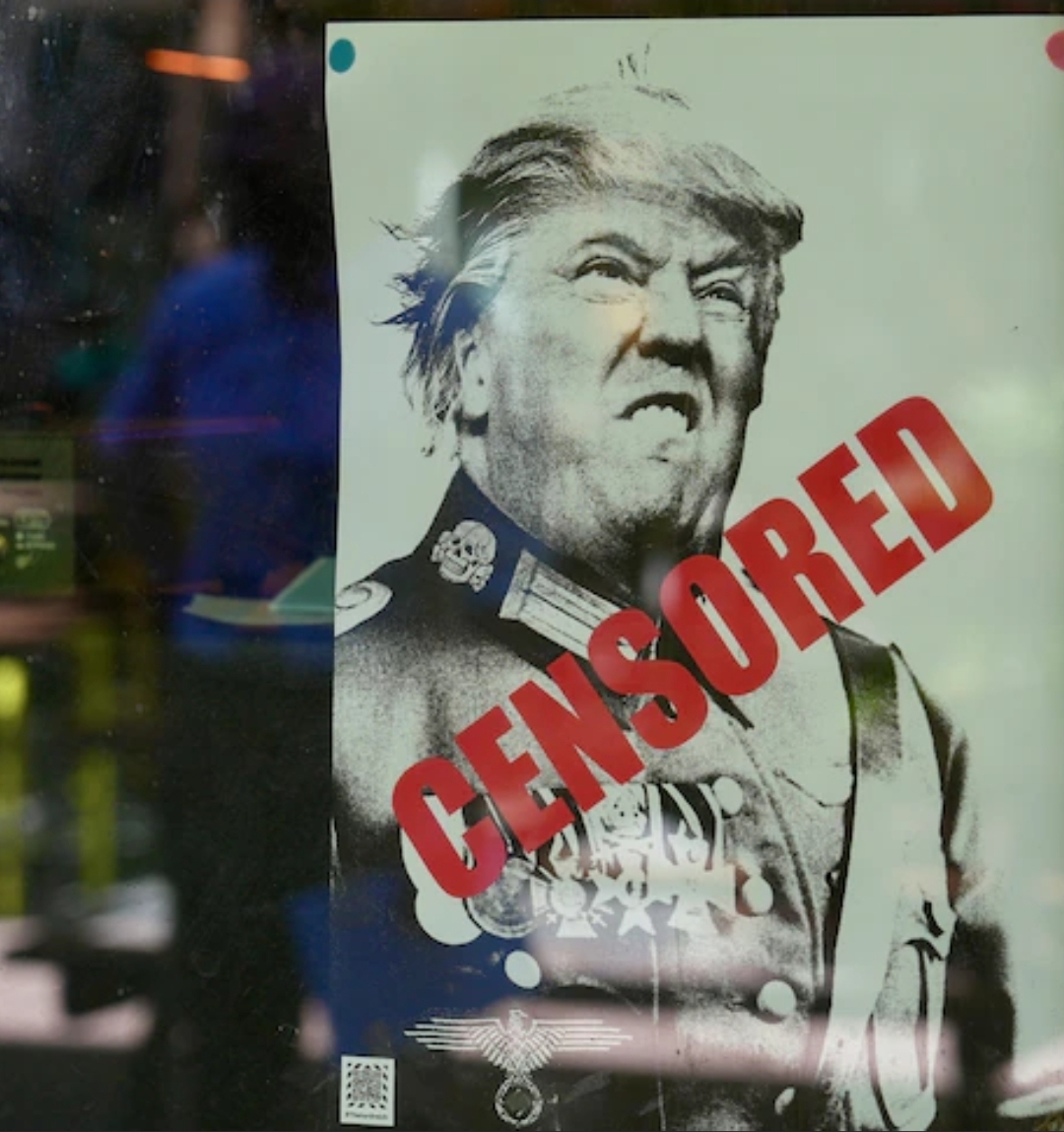
A basic rule of public communication is that attention is not a side effect; it is the medium itself. Attempts to suppress a message therefore carry a predictable risk: suppression becomes the story. In Canberra, police seized posters from the window of a local café and bar following a complaint and temporarily closed the venue […]

Because awareness reveals the trap: that every structure of understanding is made of the same thing it seeks to describe. Language isn’t just the medium—it’s the system. Identity, meaning, time, even agency—these are recursive artefacts of the medium’s need to stabilise itself. And when you see it, really see it, the illusion doesn’t dissolve—it calcifies. […]
As an observer of media and communications systems in regards to oversight, constraint and psychological, cultural or ideological aspirations to control and manipulate, there is a curious enigma and blind-spot in all attempts to surveillance as a method of control. That is, specifically, that asserting prohibition and censorship is only ever superficially able to provide […]
As an observer of media and communications systems in regards to oversight, constraint and psychological, cultural or ideological aspirations to control and manipulate, there is a curious enigma and blind-spot in all attempts to surveillance as a method of control. That is, specifically, that asserting prohibition and censorship is only ever superficially able to provide […]
As a general observation on censorship, redaction and purposeful obfuscation: Information Theory indicates the extent to which strings of symbols bear useful or valuable information and this is measured by the probabilistic entropy and literal surprise of that salience. An enigma of redaction is that, while the extraction of prominent or revealing features of narrative […]
It is interesting that active intervention, interdiction and an assertion of ideological self-interest through campaigns of enthusiastic (technologically-facilitated) censorship are probably the most expensive and least efficient ways of achieving information-centric goals. It is like attempting to cool a building by adding cold air – far more expensive in terms of energy, resources and information-processing […]
It is all about a taboo peek-a-boo…
Have a WordPress.com account? Log in now.

