Categories
cybernetics

Apollo and Daphne

Symmetry, anti-symmetry, and the orbit of desire If art has any enduring value, it lies in the way it makes structure visible. Bernini’s Apollo and Daphne does not just illustrate a myth. It renders a relational geometry: two frames locked in a shared field, unable to close without erasing themselves. The sculpture holds a single […]

Categories
Philosophy

Beyond Hierarchy

Anarchy is usually flattened into a cartoon of riots and broken windows, a synonym for chaos or nihilism. In fact, it comes from the Greek ἀναρχία (anarkhia), meaning “without a ruling principle” or “without a sovereign head,” pointing less to disorder than to the absence of imposed hierarchy. Political economy distorts this by treating central […]

Categories
cybernetics

Limited Language Models

In recent years, large language models have moved along a gradient from research artefacts into everyday infrastructure—search, email, design tools, call centres, legal drafting, medical triage. They operate by predicting the next token in a sequence, trained on vast corpora of text and code. Their fluency comes from compression, not comprehension. They do not possess […]

Categories
cybernetics

The Physics of Nothing: How Missing Information Holds Systems Together

When people talk about “nothing,” they usually mean a lack — no matter, no signal, no data. Yet across the sciences, absence is rarely empty. It has structure. It sets limits. It shapes how systems form and how they hold together. At the core of logic, physics, computation, and cognition, the boundaries of what can […]

Categories
cybernetics

Manichaean  Modulation

Systems don’t hold their shape by conviction. They hold it by habit, cadence, and the slow accretion of tiny decisions that feel neutral while they’re happening. What we call an “economic model” or a “political order” is just a particular tuning of incentives, language, and expectation. Shift the tuning and the whole field reconfigures. The […]

Categories
Philosophy

Conflicted

History shows a stable pattern: societies primed by threat return to it. Empires on the edge of famine, cities rattled by panic, alliances strained by distrust — once a population’s autonomic systems are pushed into vigilance, they begin to synchronise. Cortisol-charged attention, restricted horizons, and defensive postures propagate through rumours, media, and crowd behaviour. High-tension […]

Categories
cybernetics

Recovery

First rule of recovery from a catastrophic medical event: assume nothing from the systems around you. Social, institutional, and community services can offer only a faint outline of psychosocial or emotional support because they understand only a faint outline of themselves — their own roles, goals, and the long tail of unexpected consequences that accompanies […]

Categories
cybernetics

General Intelligence

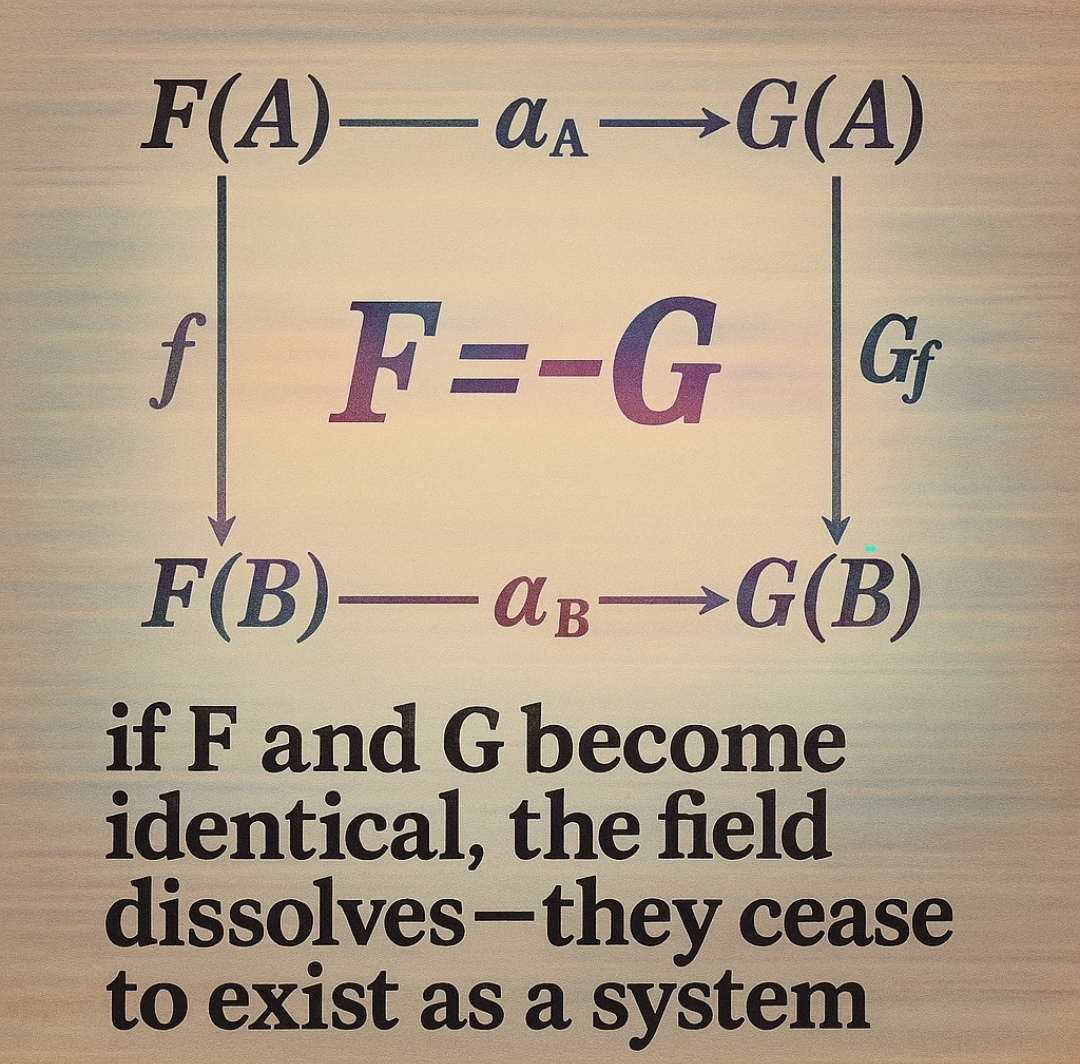
Imagine F and G as two interdependent operations—each defining the other through difference. F acts as a generator: it constructs hypotheses, projections, or internal states. G acts as a comparator: it evaluates, reflects, and reintroduces the outcomes of F back into the system. The diagram’s symmetry, where F = − G, indicates an inversion rather […]

Categories
cybernetics

Organisational Inertia

It is an uncomfortable truth that most organisations exist to sustain their own inertia. Systems accumulate procedures, forms, and roles that replicate themselves under the guise of necessity. Meaning, in this context, is not produced by purpose but by repetition—the continual reinforcement of structures that justify their own persistence. The illusion of productivity masks a […]

Categories
cybernetics

Institutional Epistemology

The canonical irony of institutional epistemology is that once an organisation derives its coherence from misunderstanding, that misunderstanding becomes its stabilising feedback loop. In cybernetic terms, the error signal ceases to correct deviation and instead sustains it—control reorganises itself around dysfunction. The system maintains identity not through adaptation, but through the ritual preservation of its […]

Categories
cybernetics

Norbert Wiener, Redux

In communicative systems, coherence does not arise from shared meaning but from rhythmic alignment. Spectral coupling describes this alignment across frequencies—how patterns of oscillation, delay, and amplitude between subsystems interact to produce stability or distortion. It is not the transmission of messages but the entrainment of their timing and resonance. Within a field logic perspective, […]

Categories
Philosophy

[01] Disinformation Dynamics: Unified Framework

Part 1 — Executive Summary and Scope Modern communication systems—political, technological, and cognitive—operate as self-organising fields of feedback. Their coherence does not arise from authority, ideology, or truth, but from rhythm: the timing, repetition, and resonance of interaction. Disinformation exploits this rhythm. It is not merely falsehood, but a manipulation of synchrony, coherence, and recursion—the […]