When humanity finally runs out of idiots to put in charge, it turns to Captain Fractal. Armed with decades of systems thinking, a ridiculous hat and a dangerous understanding of consequences, he sets about un-fucking civilisation.
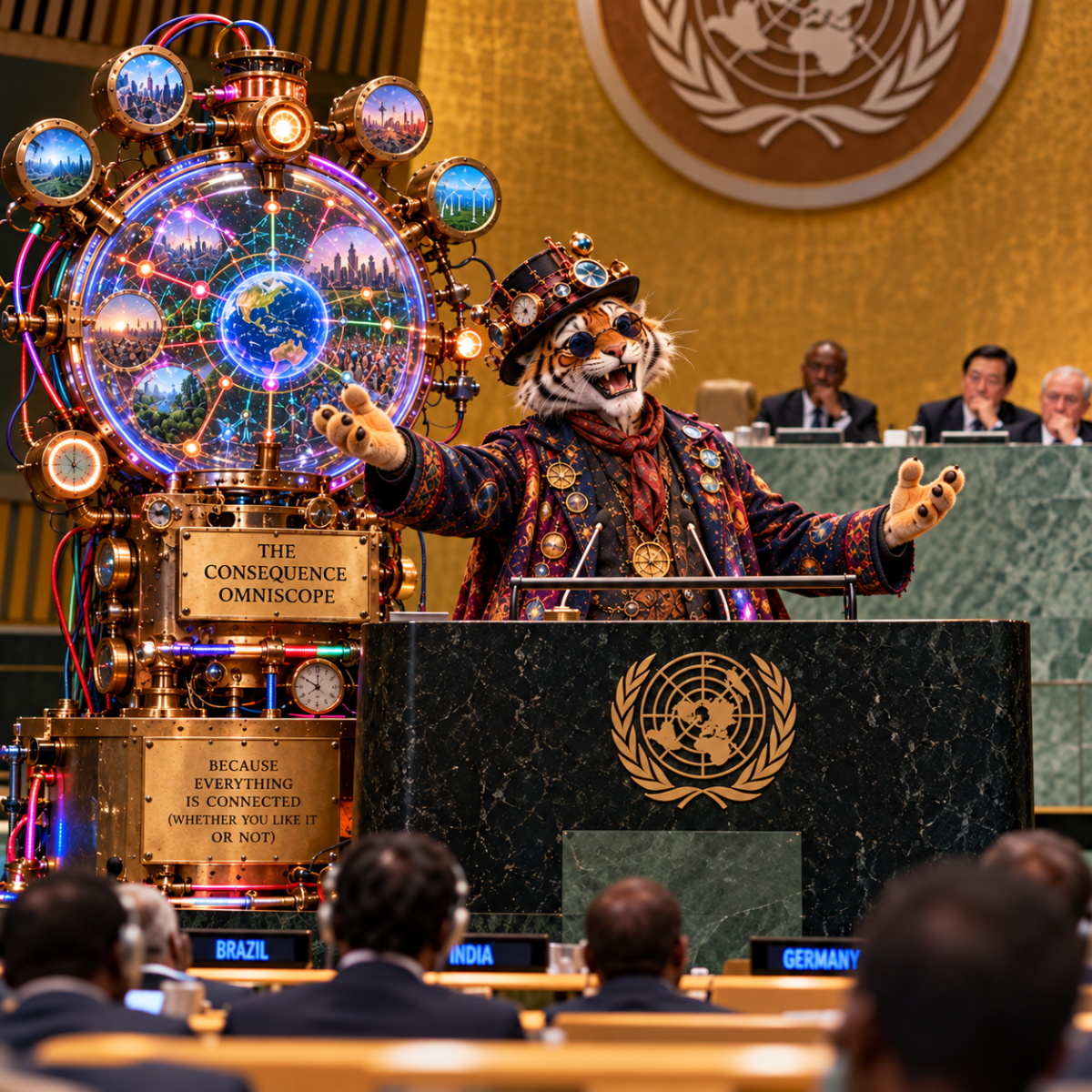
When humanity finally runs out of idiots to put in charge, it turns to Captain Fractal. Armed with decades of systems thinking, a ridiculous hat and a dangerous understanding of consequences, he sets about un-fucking civilisation.

What happens when the people least equipped to recognise intelligence become responsible for selecting, rewarding and managing it?

The scale of the consequences has changed while the competitive selection tests for authority remain embarrassingly small.

Peace is not merely difficult. We have built institutions, identities, economies and languages whose coherence depends upon the persistence of conflict.

Everyone knows a dickhead. The interesting question is why the conditions that generate them do so, enduringly, and with such uncanny frequency.
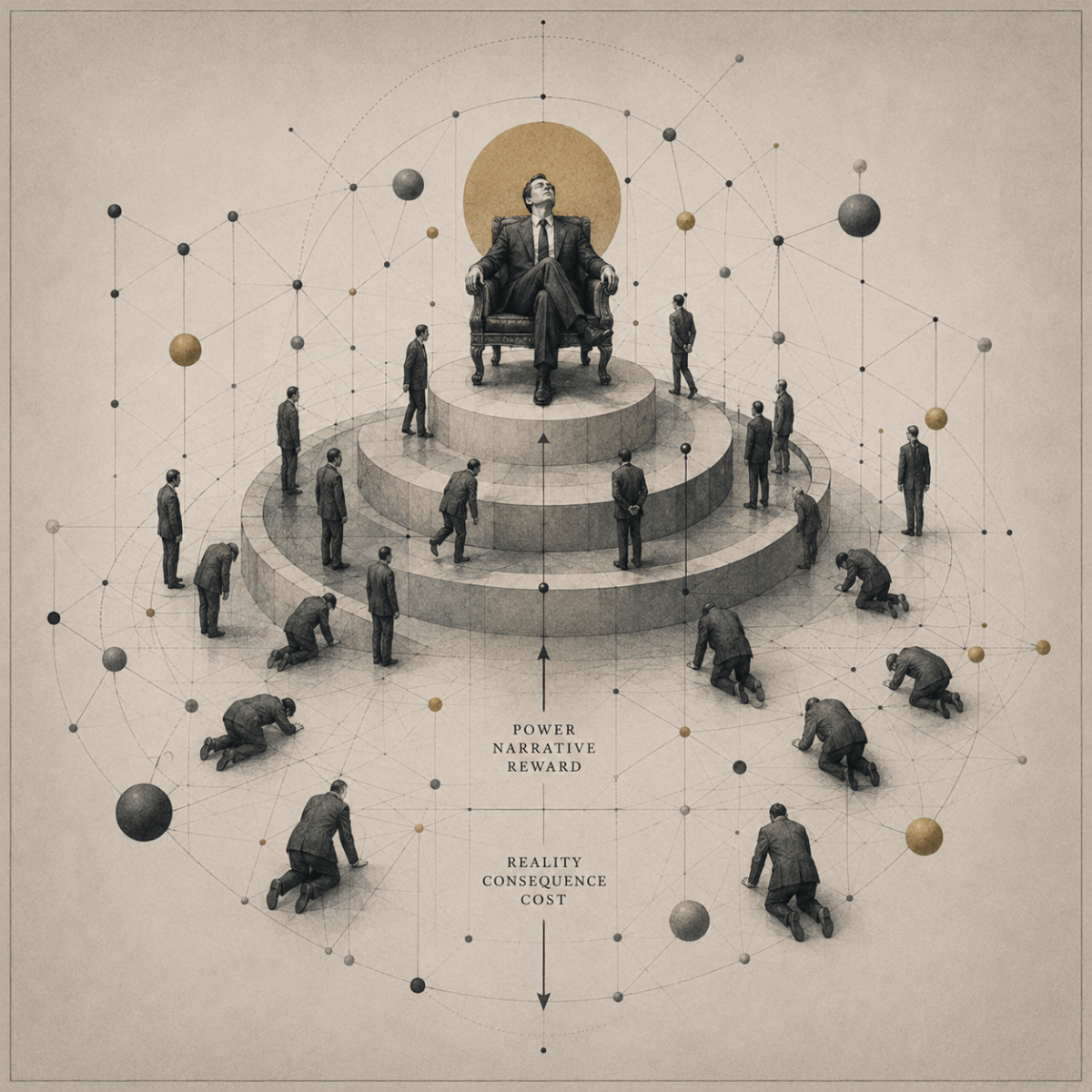
When organisations confuse confidence with competence, wealth with wisdom, and power with understanding, incompetence is no longer simply a failure of leadership but becomes one of its preferred production methods.
Enter a Chorus, beholding the Republic as a cracked glass. Behold the man, not monster, but a mirror, Wherein an age, long sick yet self-amazed, Doth spy its own deformity and cry, “Lo, greatness!” He is no thunderbolt from heaven cast, But weather bred within the common air: Distrust made flesh, grievance given tongue, Ambition […]

Will the technology companies, and their shareholders, absorb responsibility, act with maturity, offer guidance, or exercise restraint. I doubt it. There is no leadership here, only a sustained sprint for more cash. When the AI bubble bursts, expect thousands of reflexive startups to follow. Not to repair damage or learn anything, but to capitalise on […]
History shows a stable pattern: societies primed by threat return to it. Empires on the edge of famine, cities rattled by panic, alliances strained by distrust — once a population’s autonomic systems are pushed into vigilance, they begin to synchronise. Cortisol-charged attention, restricted horizons, and defensive postures propagate through rumours, media, and crowd behaviour. High-tension […]

Abstract: This essay explores how civilisation’s systems—political, economic, and technological—emerge from a mistaken belief that language contains the world, when in truth the world contains our descriptions. The error of equating description with reality is not an isolated flaw but endemic to the distributed, manifold-like topology of semantics itself: uncertainty is not peripheral but woven […]

Everyone in the modern enterprise claims to want innovation, but few will risk what it requires. The fear of disturbance—of deviating from the delicate choreography of compliance and plausible deniability—has become the governing logic of management. Systems now reward those who maintain appearances, not those who learn. The result is a recursive theatre of progress: […]

Every system—whether it’s a company, a community, or a whole civilisation—depends on relationships. We often imagine these relationships as simple connections, like lines on a chart running from point A to point B. But that’s not how they actually work. The real action is in the patterns that form when many relationships overlap. Like the […]
Have a WordPress.com account? Log in now.

