Exploring harmonic structure, observation, language and consciousness, and why uncertainty is fundamental to reality and the possibility of knowledge.
Exploring harmonic structure, observation, language and consciousness, and why uncertainty is fundamental to reality and the possibility of knowledge.

Absence is not the opposite of existence, but the generative condition through which difference, organisation, consciousness and cosmos emerge and persist.
Symbolic systems presuppose an experiencing subject, yet no symbolic system fully accounts for the existence of experience itself.

A is A. The interesting question is how it keeps getting away with it.
Life does not belong to things. Things belong to life. Consciousness, relation, memory, recurrence, and form are not exceptions within reality. They are what reality does.
Life is not astonishing simply because it exists. It is astonishing because, against every available opportunity to fall apart, it keeps holding together and this resilience is the kernel core of its persistence.
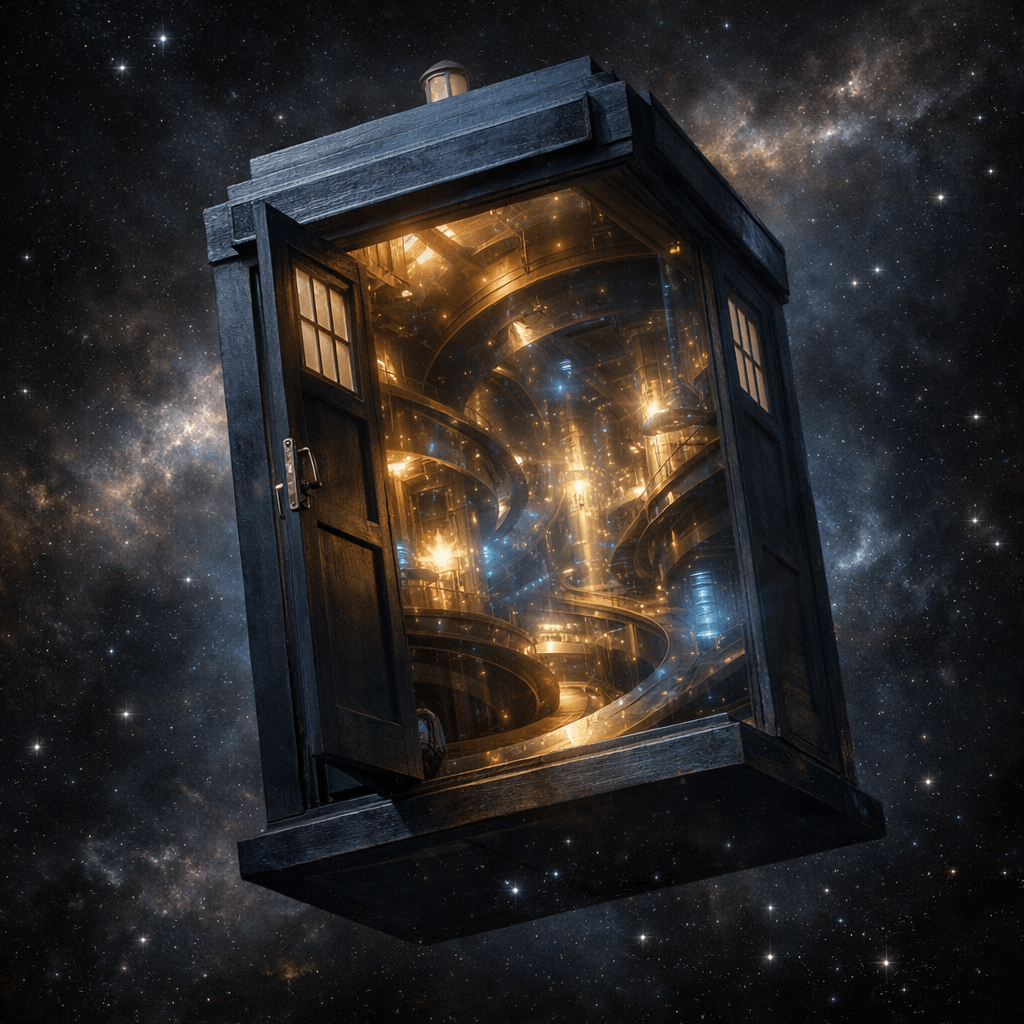
The afterlife, if the phrase is to be used at all, is not best imagined as a sentimental annex bolted onto death. Nor, however, is it something about which confidence is easily justified. What we call a life may be only a local and temporary stabilisation within conditions the person cannot comprehend or contain. The […]
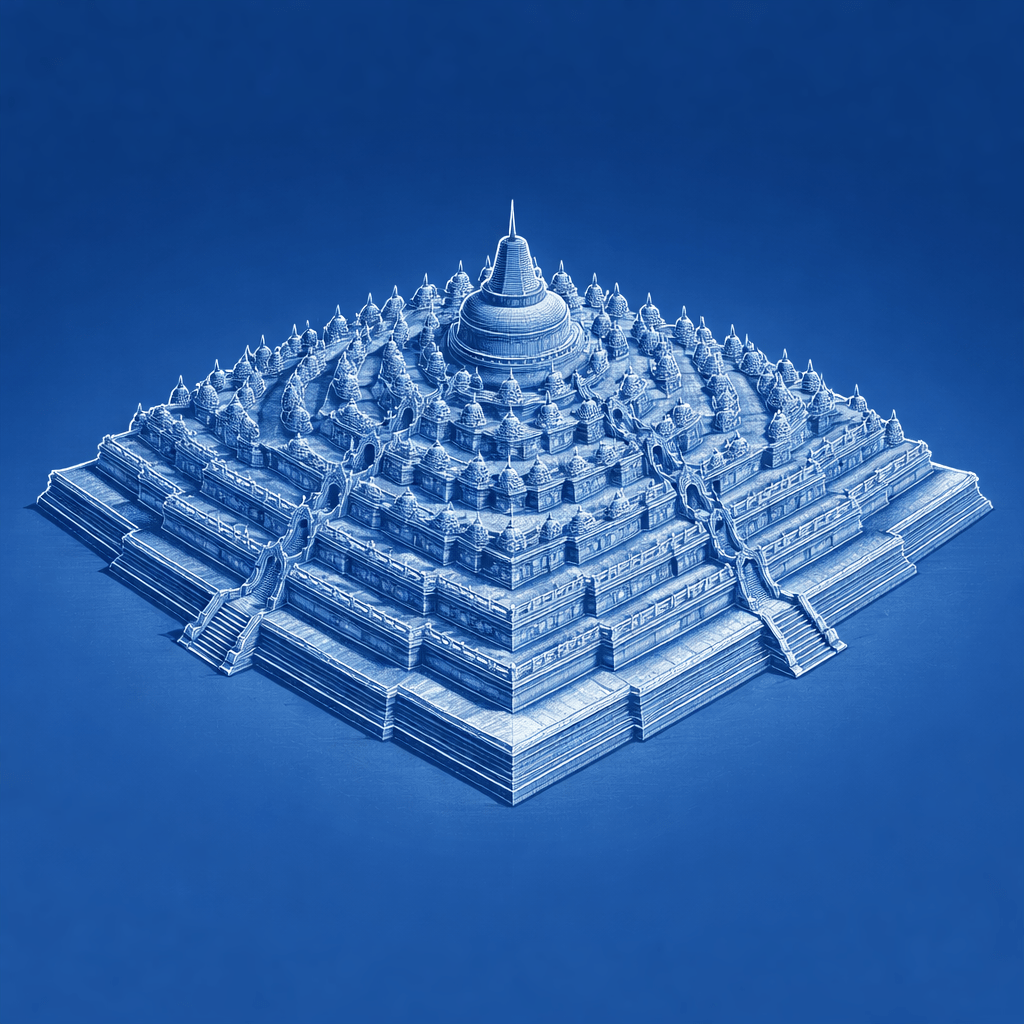
Borobudur is a temple built around an unusual absence, one that quietly reshapes how meaning, worship, psychological insight, and spiritual experience function. Borobudur, in Central Java, Indonesia, is a ninth-century Mahāyāna Buddhist monument constructed as a terraced hill rather than a hollow sanctuary. Its mass is largely earth and stone; there is no interior chamber […]
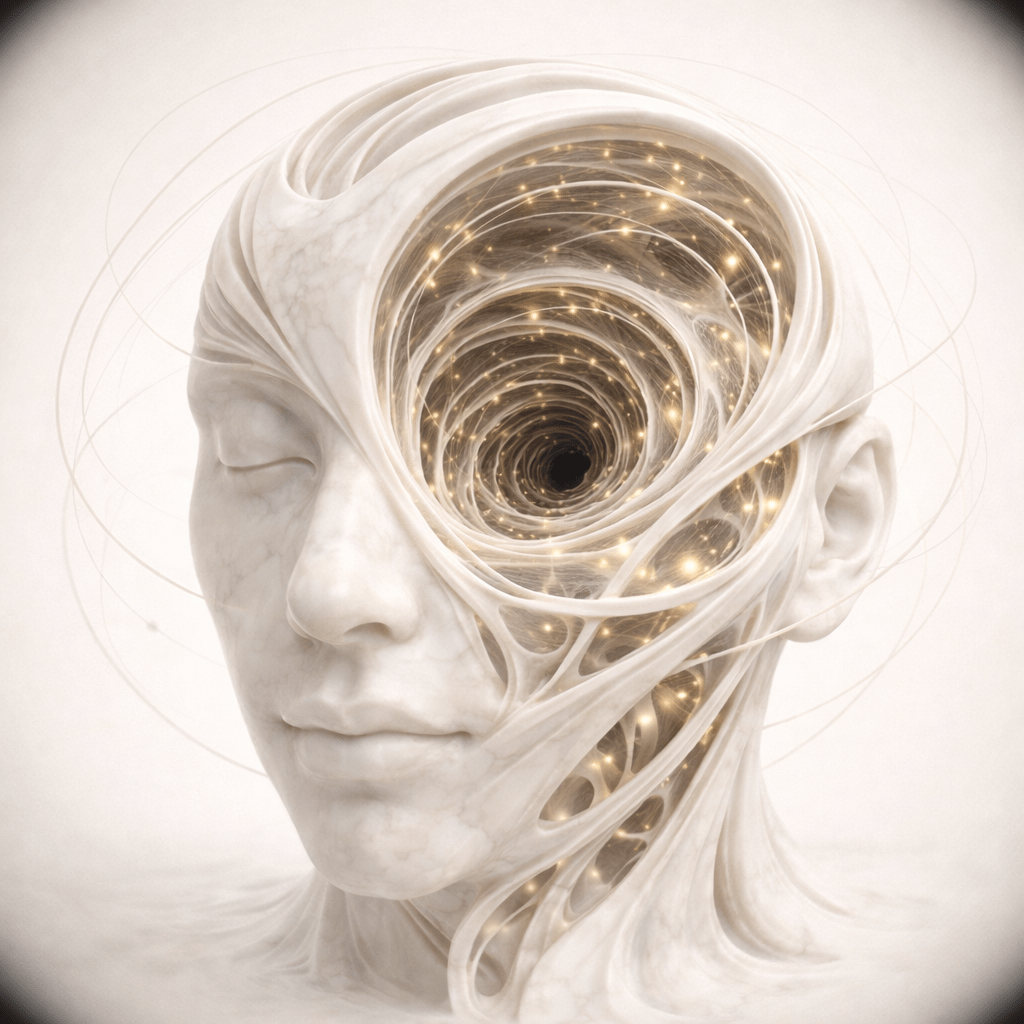
The unconscious is not a hidden chamber beneath awareness, nor a secondary mind running in parallel. It is the emergent interior of dynamical, adaptive, relational complexity itself. It is what complex systems feel like from the inside. Any system capable of learning, anticipation, coordination, and self-regulation must generate internal structure that cannot be fully present […]
What is truth. The moment we ask the question, we are already inside language, and everything that follows unfolds from that fact. Truth is not something we approach from outside, as a detached observer might inspect an object. It arises within sequences of tokens, within the games we play with them, within the structures we […]
Ludwig Wittgenstein argued that the limits of language are the limits of the world, not as metaphor but as structural fact: what cannot be said cannot be thought in any stable form. Bertrand Russell pursued logical atomism to anchor meaning in precise correspondence, seeking a syntax that could mirror reality without residue. Charles Sanders Peirce […]

Across cultures and eras, people have independently named the same phenomenon: the felt presence of a place or time that exceeds its physical form. The Romans called it genius loci, the spirit that animated landscapes, cities, homes, and crossroads. In Japan it appears as kami, in Celtic traditions as thin places — moments or locations […]
Have a WordPress.com account? Log in now.

