How engagement incentives, selective censorship and data extraction weaken cooperation, and why peace depends on changing what our communications systems reward.

How engagement incentives, selective censorship and data extraction weaken cooperation, and why peace depends on changing what our communications systems reward.

Popularity is not a measure of significance. The economics of attention systematically rewards familiar ideas while disadvantaging those capable of changing how we think.

Populism may not need to be manufactured. An overwhelmed communication system already rewards simplification, antagonism and recurrence, while those best placed to change it profit from the resulting volatility.

We built machines to finish our sentences. Now they are helping us finish the world.

The manosphere promises strength and control, yet its communities, platforms and markets are structurally and commercially dependent on reproducing the insecurities they claim to resolve.

Technocratic complexity and populist caricature are parts of the same feedback loop. Each produces the conditions that sustain the other.
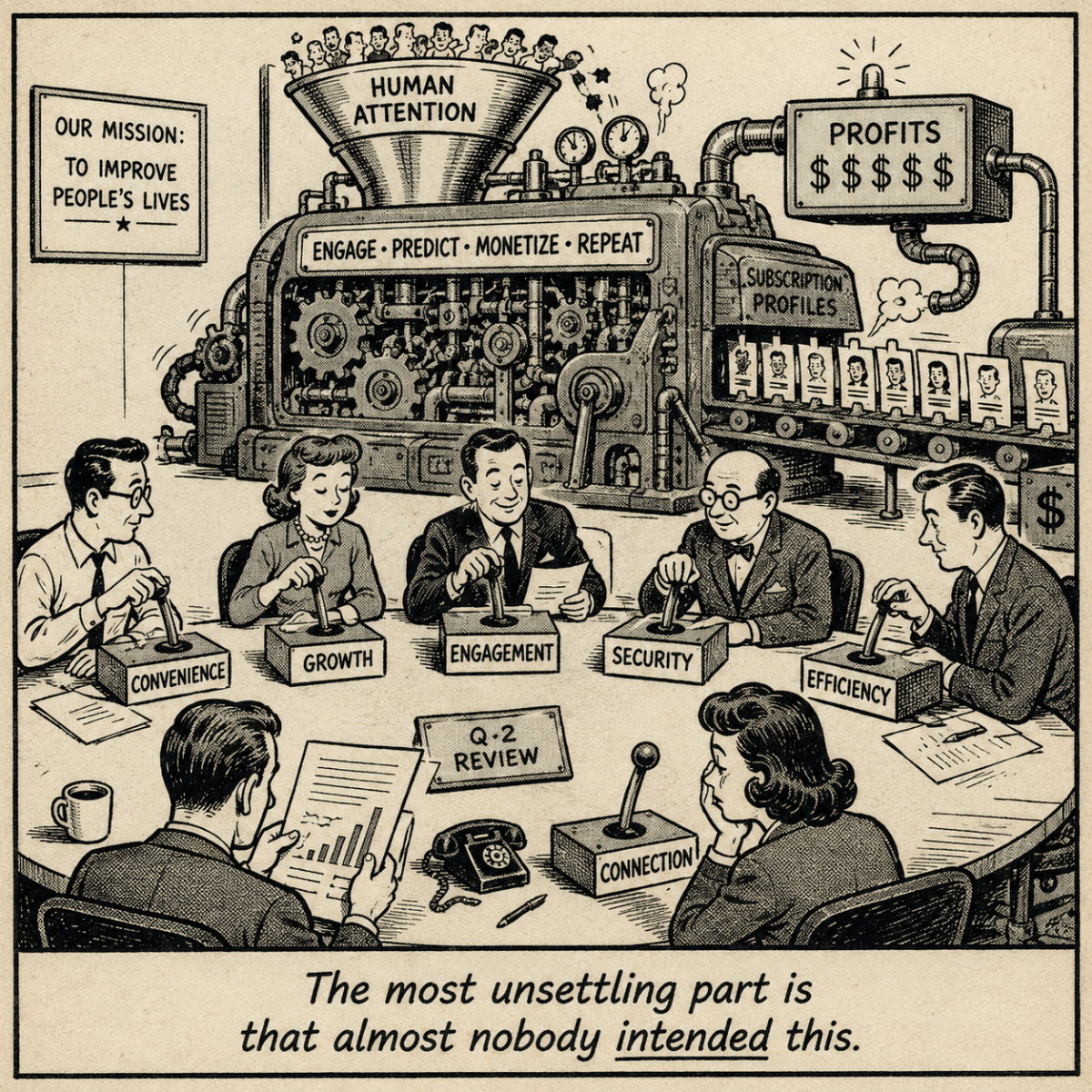
We no longer simply use technology, we now continuously rebuild ourselves and our lives into forms it can recognise, predict and sell.
Have a WordPress.com account? Log in now.

