Categories
life

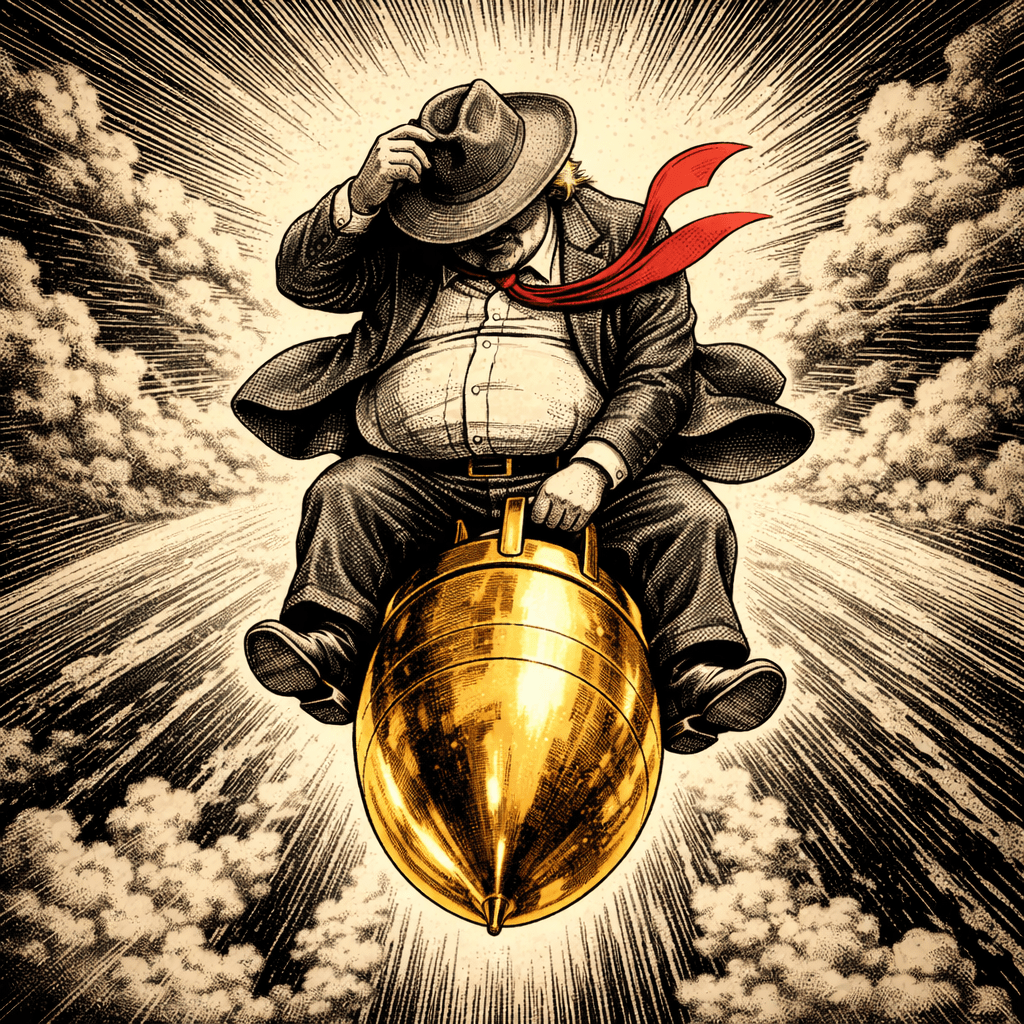
Everyday Exasperation: Traumatic Tyrrany

Most people, across most periods of history, have lived less under grand political visions than under a weary determination to survive whichever charlatan, tyrant, or narcissist happens to drift into power at a given moment and in a given place. Populations are carried along in different ways. Some are swept up in the intoxication of […]

Categories
cybernetics

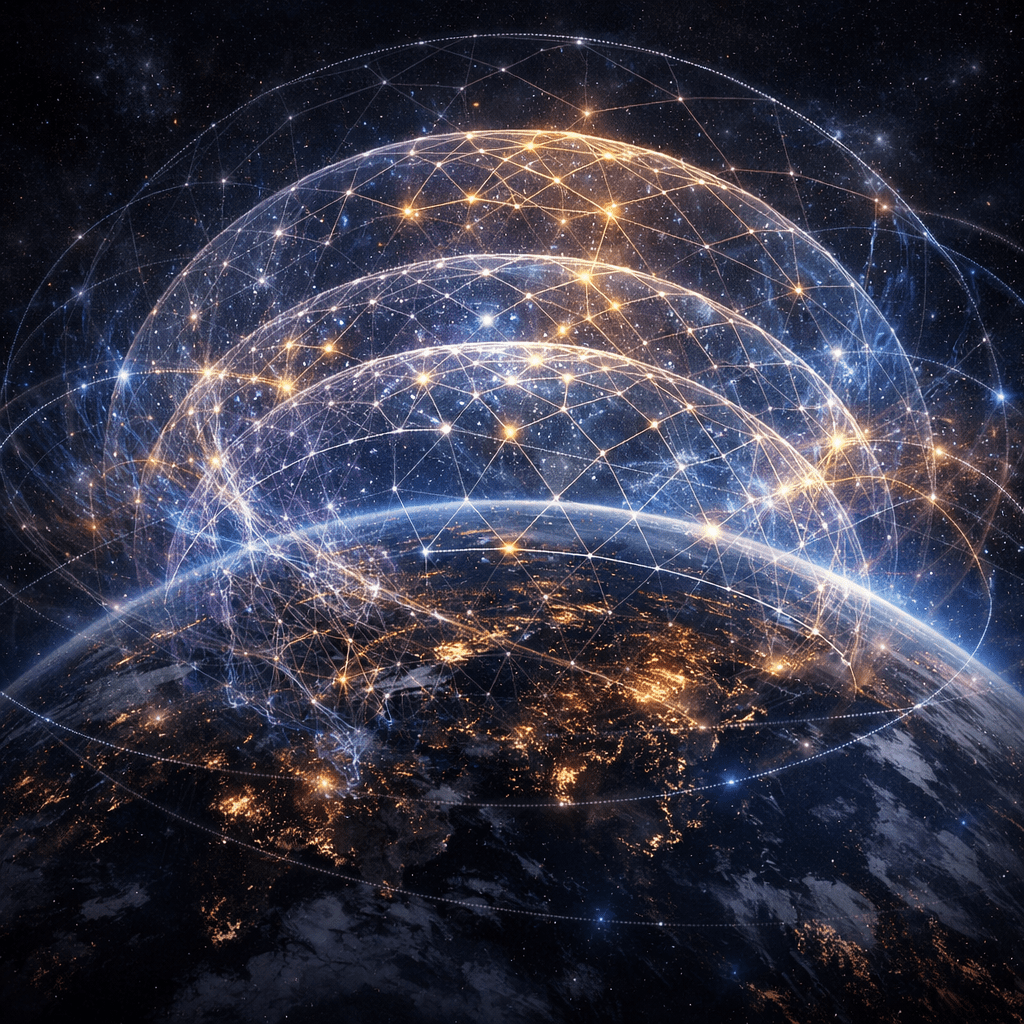
Signal as Delay: Information Propagation Dynamics

The present turbulence in politics, economics, and public life often looks like a collision of personalities or ideologies, yet a quieter transformation has been unfolding beneath those visible disputes. Human communication has expanded far beyond the scale of the individuals who participate in it, stretching through satellites, fibre networks, cloud infrastructure, and algorithmic systems until […]

Categories
politics

Partisan Pattern and Generative Asymmetry

From a historical vantage, societies under pressure compress the communicative field in search of clarity, translating complex realities into brittle narratives that promise order and direction, yet implicitly competitive systems rarely stabilise through such closure because control does not remove difference but redistributes it, converting unresolved variability into simplified signals that travel efficiently through institutions, […]

Categories
history

No Good War

There is a familiar habit among commentators and observers to reach backward into history whenever the present becomes frightening, as though the archive might reassure us that the machinery of civilisation has seen worse and survived. Maybe it has. But what we are dealing with now looks less like a familiar historical episode and more […]

Categories
cybernetics

Navigating Global Strategic Complexity

Metabolising Turbulence in the Information Age When geopolitical shocks ripple through global communication systems, governments often default to interpreting the turbulence through the language of motive, intention, and blame. Actor-centred explanations are easier to communicate and politically actionable, even when the deeper dynamics arise from the interaction of networks, institutions, and information flows. Responsibility still […]

Categories
Philosophy

Subscription

In a world that has deeply and intractably commercialised the concept and experience of individuality, the very last thing actually required of us is to be different. We are sorted and we voluntarily self-sort into labels and categories, compressing ourselves into neat, data-ready boxes that serve as containers for self-managed subscription into vast machines of […]

Categories
Philosophy

Human Systems

Human behaviour gathers around centres that never quite appear. We move toward meanings that seem solid, yet their solidity comes from the very motion that tries to reach them. The closer we look, the more the “centre” dissolves into the relations that formed it, leaving us oriented by something that exists only as a pattern […]

Categories
Philosophy

[01] Disinformation Dynamics: Unified Framework

Series preamble: this series of documents is an educated guess. I study complexity, communication, and culture. The underlying harmonic structure should be evident to anyone with a passing familiarity with physics, mathematics, or logic. Manifold dynamics provide a topological bridge to and through communication systems, and in some sense are those systems. Disinformation functions here […]

Categories
Philosophy

[02] Disinformation Dynamics: Recursive Harmonics

2.1 Coherence as a Function of Recursion Every communication system is recursive. It consists of elements that transmit signals influencing their own subsequent states. This self-reference produces coherence. A message gains meaning not because it exists but because it is repeated, referenced, and reinterpreted. Without recursion, meaning is static. With recursion, meaning becomes dynamic and […]

Categories
Philosophy

[03] Disinformation Dynamics: Interdiction Operations

3.1 Measurement Philosophy Measurement in recursive harmonic systems does not isolate variables; it captures relationships. Every observation modifies what is observed, because communication systems are reflexive. Therefore, measurement itself must be designed as participation in the field—an act of modulation that respects feedback dynamics. The goal is not to determine truth but to detect phase […]

Categories
Philosophy

[04] Disinformation Dynamics: Operational Framework

4.1 Overview Disinformation interdiction is not the elimination of falsehood but the rebalancing of systemic coherence. It operates at the level of phase relationships—how signals align and reinforce one another—rather than semantic truth. The objective is to restore dynamic equilibrium: sufficient synchrony for stability, sufficient noise for adaptability. The system must breathe. Interdiction therefore proceeds […]

Categories
Philosophy

[05] Disinformation Dynamics: Implementation and Resilience

5.1 The Principle of Reflexive Governance Governance within a recursive communication field cannot rely on static regulation. It must function as reflexive control—a governance system that perceives and adjusts its own influence in real time.Each intervention becomes a feedback signal: the regulator is part of the system, not external to it.This principle ensures adaptability without […]