Climate change becomes civilisational risk when insurance can no longer translate catastrophe into recoverable cost.
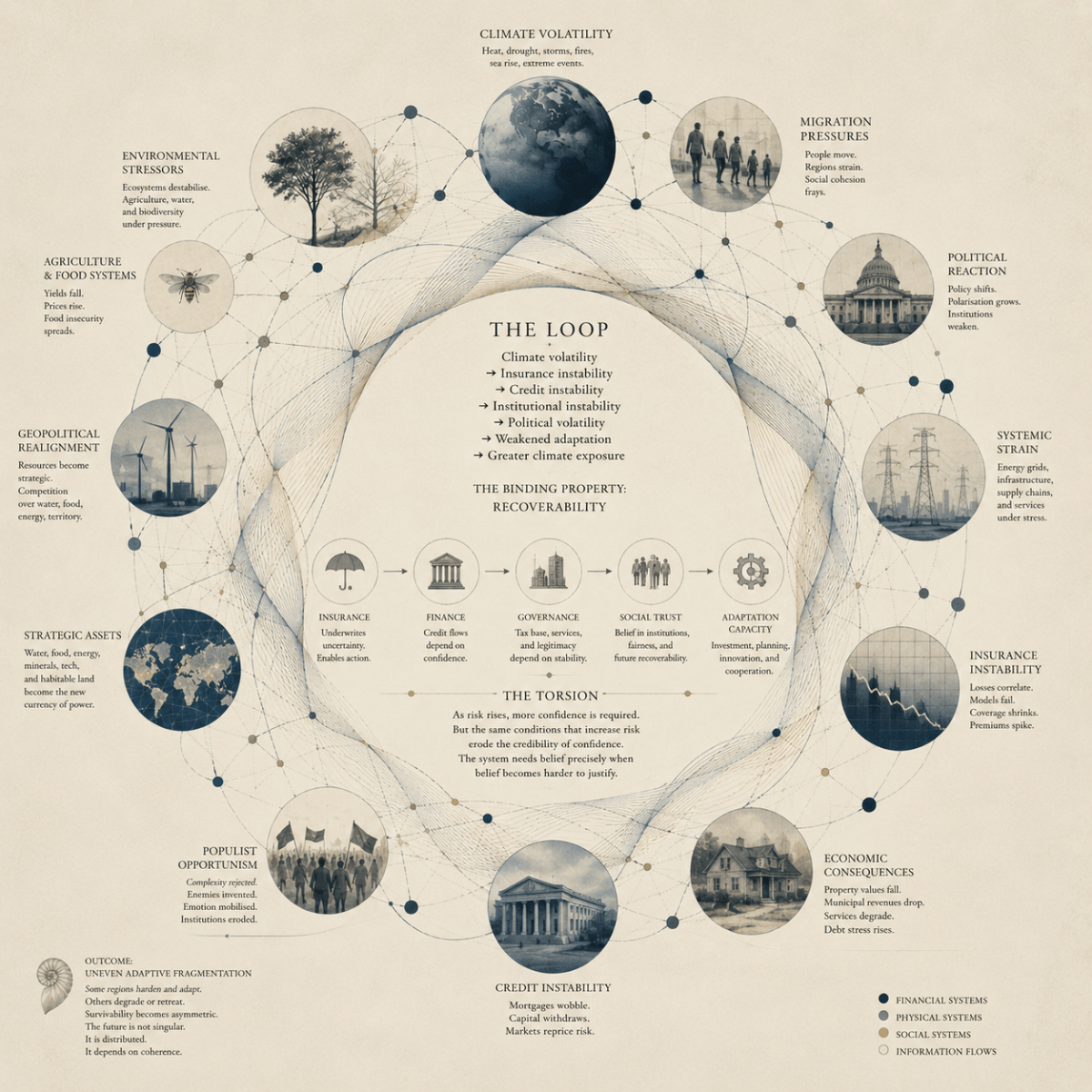
Climate change becomes civilisational risk when insurance can no longer translate catastrophe into recoverable cost.

War persists not simply because people or cultures remember conflict, but because entire civilisations derive identity, coherence, profit, and meaning from its repetition.
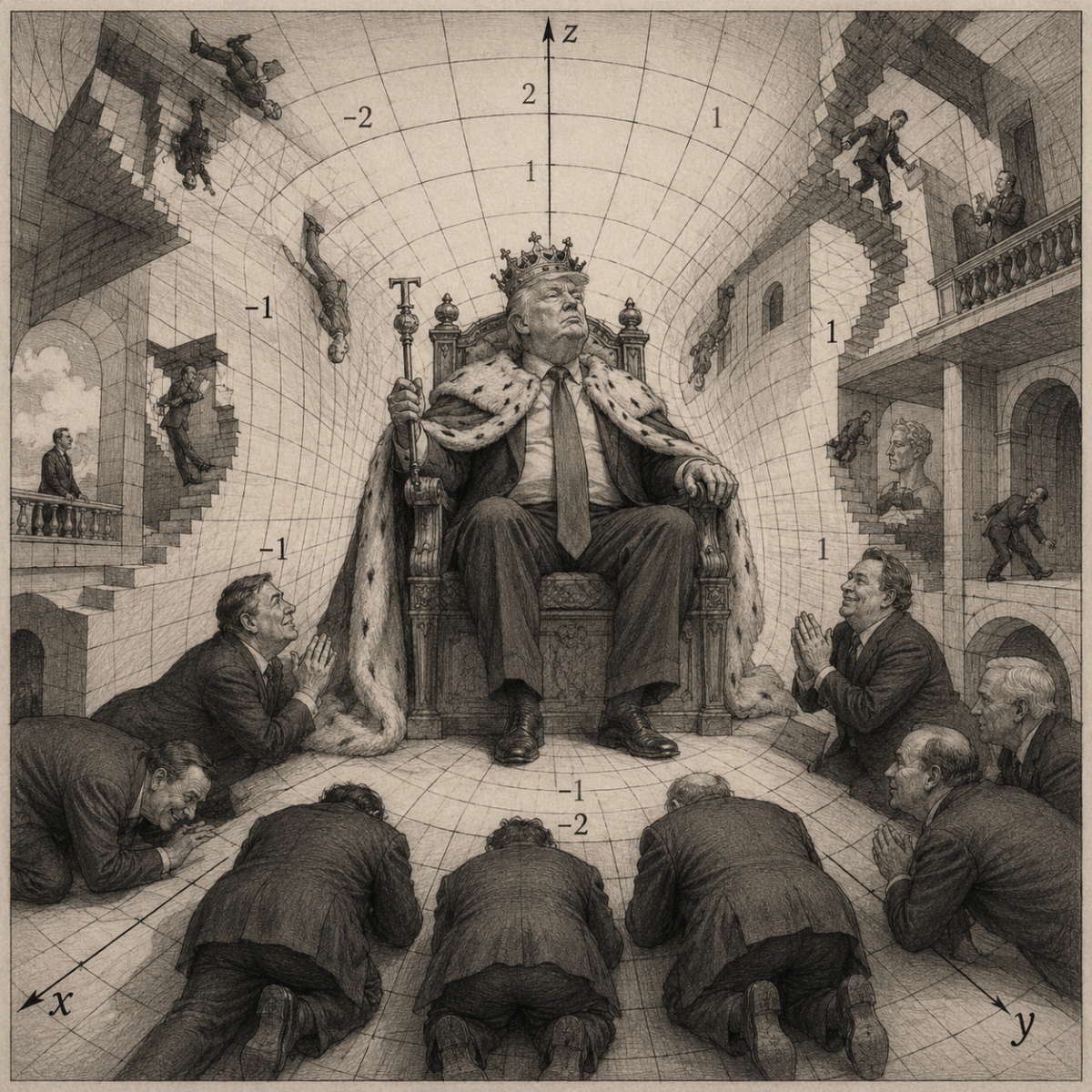
The court of red caps and lacquered smiles now finds itself chained to a king who mistakes appetite for destiny and spectacle for wisdom at precisely the historical moment requiring restraint, literacy, diplomacy, patience, and institutional coherence.
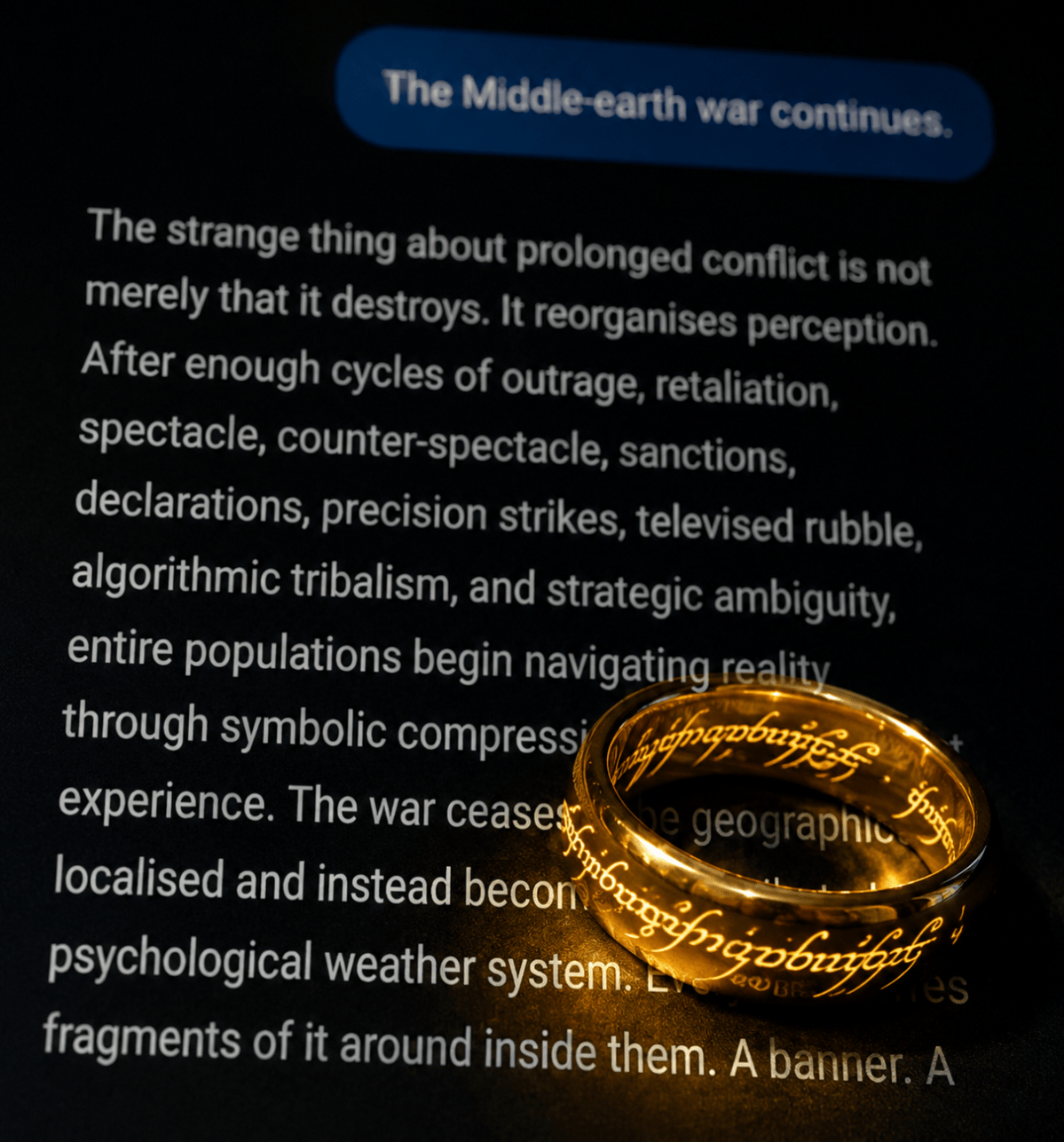
The strange thing about prolonged conflict is not merely that it destroys. It reorganises perception. After enough cycles of outrage, retaliation, spectacle, counter-spectacle, sanctions, declarations, precision strikes, televised rubble, algorithmic tribalism, and strategic ambiguity, entire populations begin navigating reality through symbolic compression rather than direct experience. The war ceases to be geographically localised and instead […]
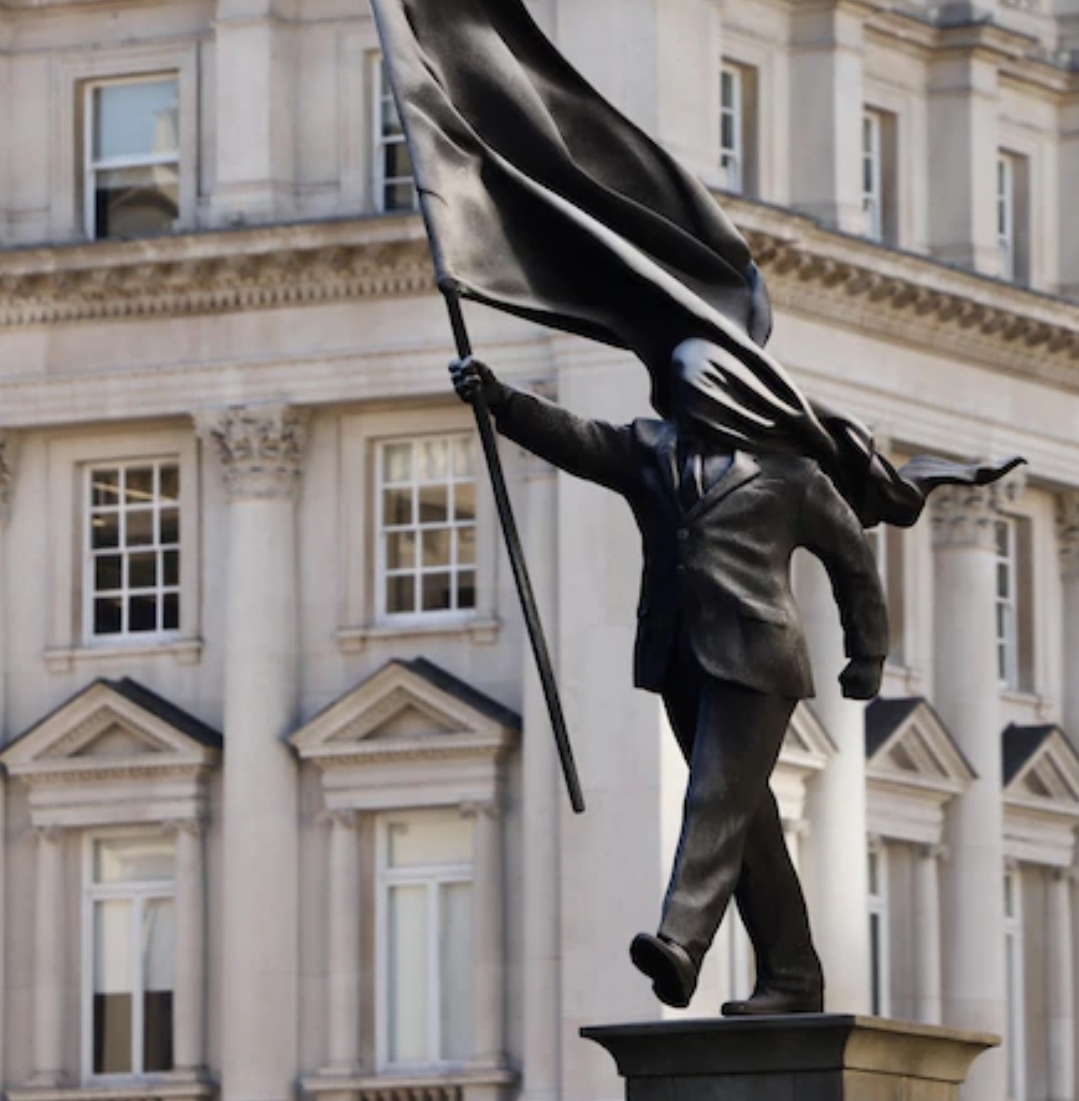
Trump reads alliances as costs to cut, missing that they are the distributed, Global infrastructure and constitutive precondition through which American power exists and persists at all.
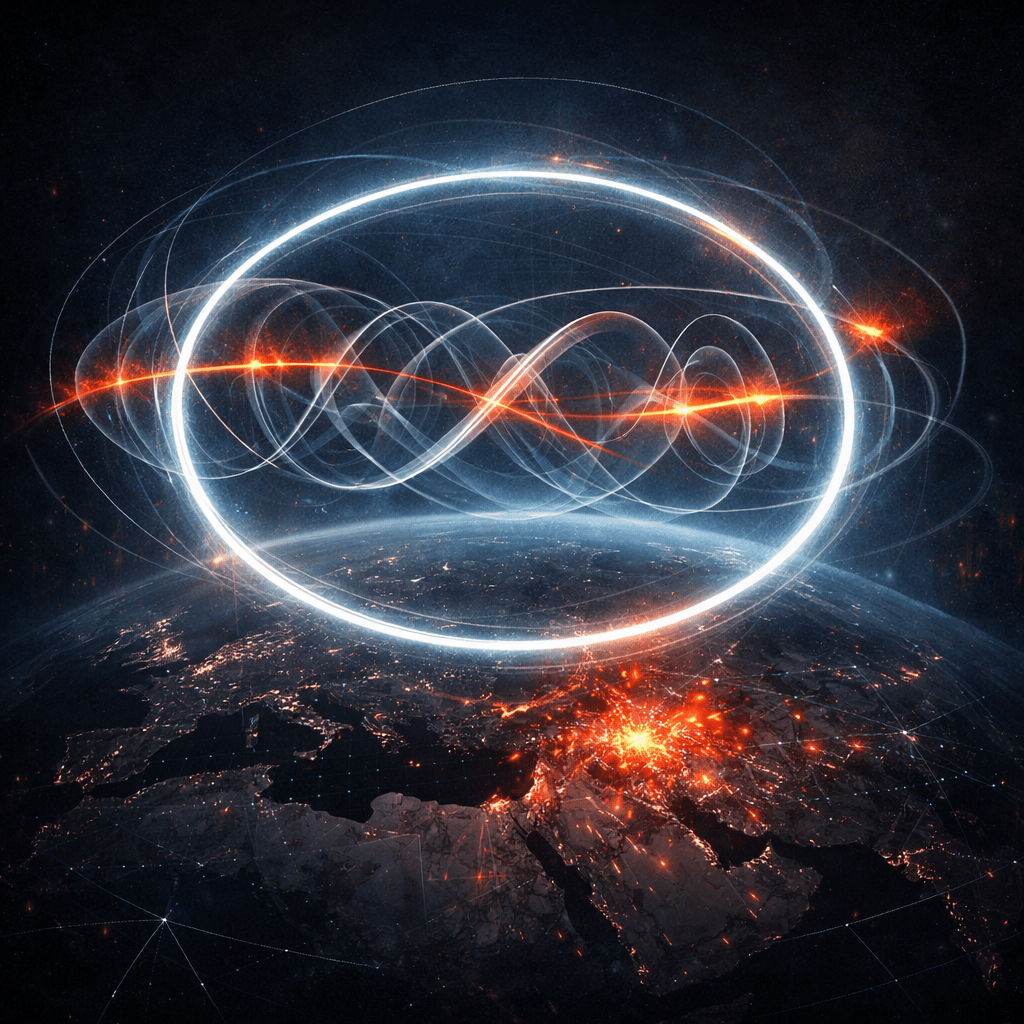
Given the ubiquity of fossil-fuel dependency, an energy price shock does not simply or only remain an economic event. It propagates as a disturbance through oscillatory coupling across relational networks spanning the high-dimensional space linking supply chains, institutions, media systems, and lived experience, where perturbation in one domain modulates conditions in others and returns altered […]

The Mad King is usually treated as a personality problem. History supplies familiar figures. Erratic rulers, impulsive leaders, volatile decision makers whose behaviour appears to bend events. Yet this framing may be backwards. Instability at the top of power hierarchies may emerge not from individual psychology but from the structure of complex social systems themselves, […]
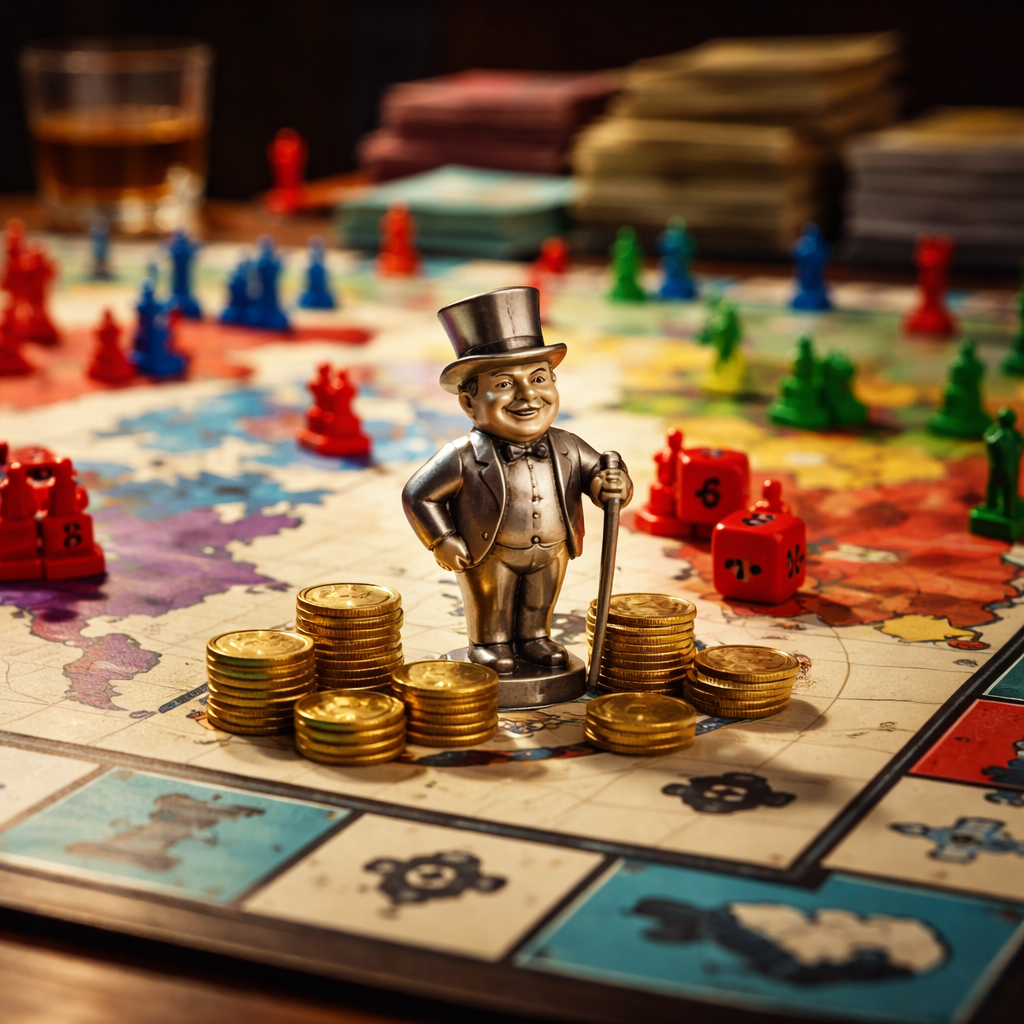
The current conflict involving Iran is not a single discrete event but an escalation within an already coupled regional system. Tensions between Iran, Israel, and aligned actors have intensified through reciprocal strikes, proxy involvement, and pressure on infrastructure and logistics networks across the Middle East. What appears as sudden escalation can be understood more clearly […]
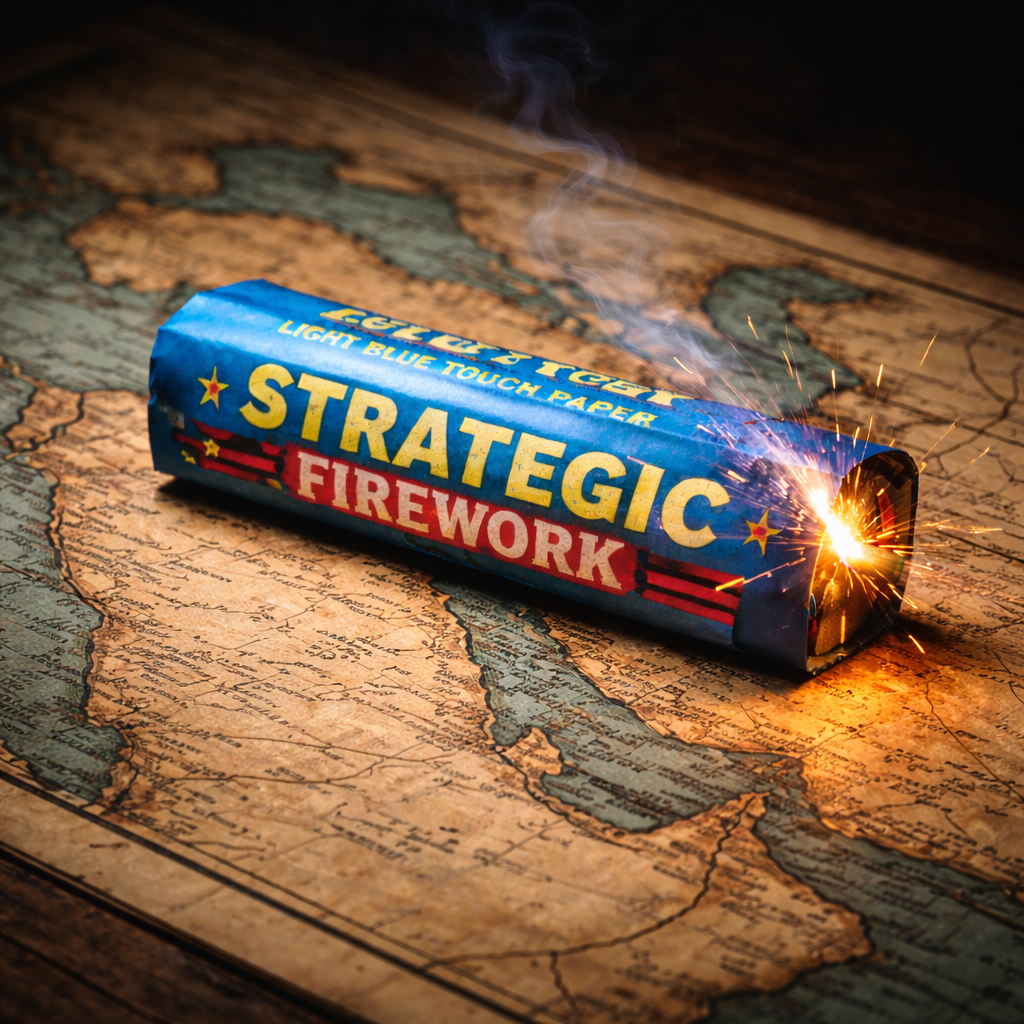
What we call progress in modern societies is often narrated with a tone of triumph, as though markets expanding, technologies multiplying, and geopolitical influence widening were evidence of a steady ascent of civilisation itself. Yet this rhetoric quickly dissolves under scrutiny, because the same forces celebrated as engines of advancement are frequently driven by the […]
There is a familiar habit among commentators and observers to reach backward into history whenever the present becomes frightening, as though the archive might reassure us that the machinery of civilisation has seen worse and survived. Maybe it has. But what we are dealing with now looks less like a familiar historical episode and more […]
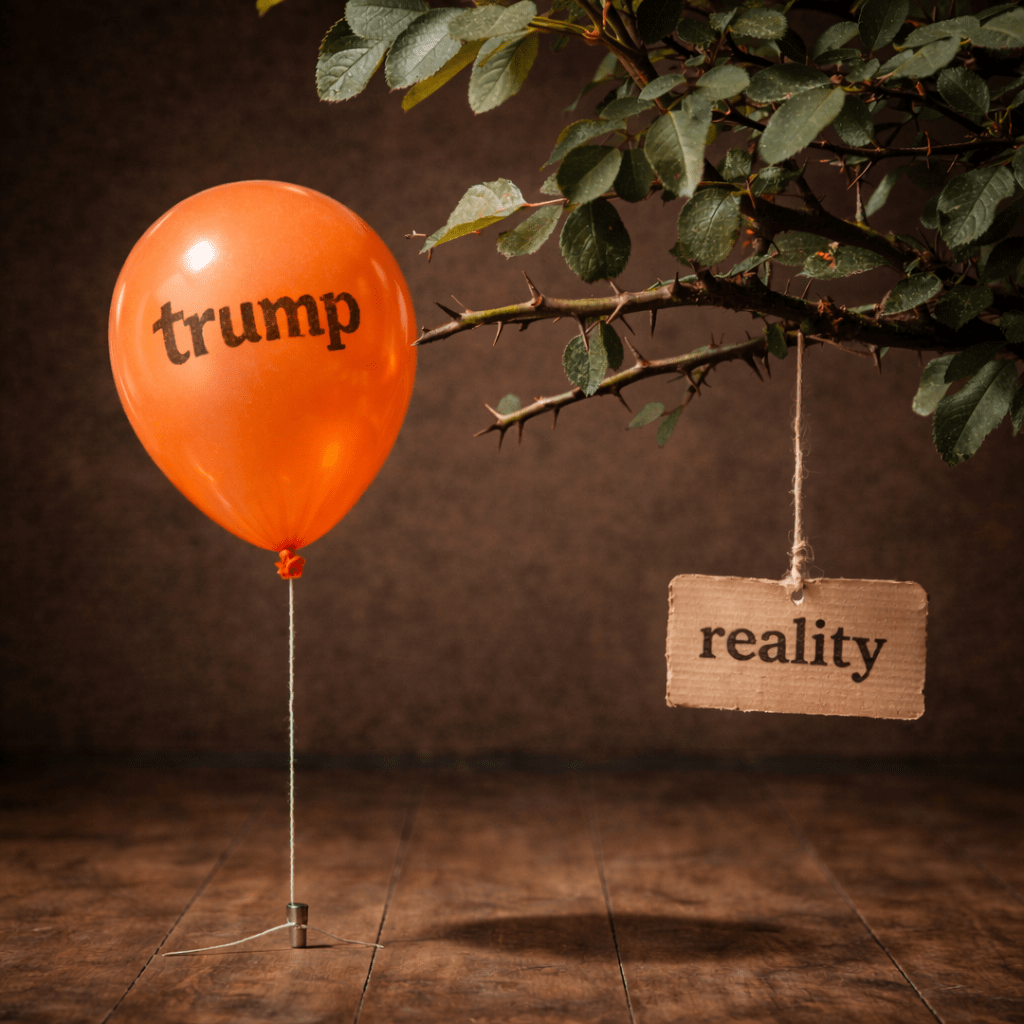
What we call strategy in world events is almost never that. Significant historical events are routinely narrated as the product of careful planning, institutional continuity, and deliberate intent, yet the public record more reliably shows decisions taken under pressure, justified after the fact, and sustained long after anyone can clearly explain why they began. Narratives […]
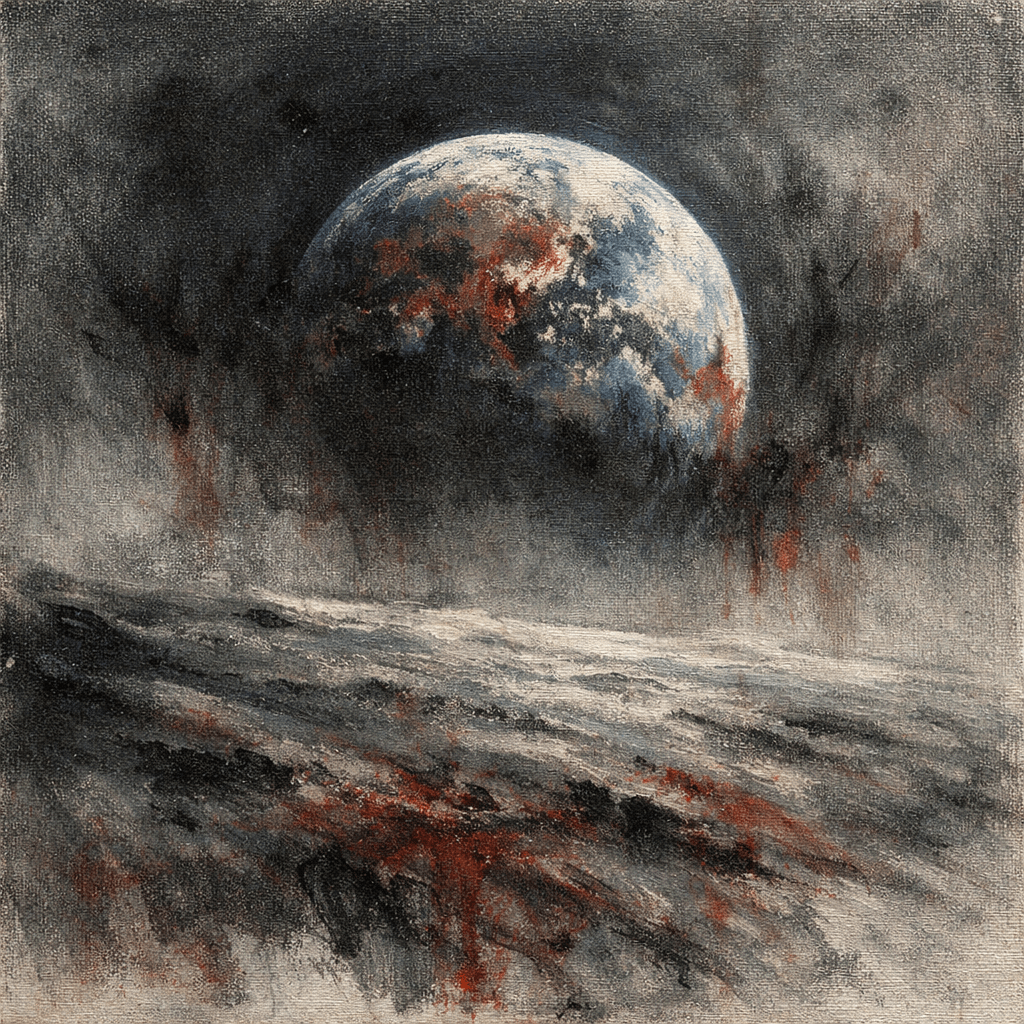
Fragmentary politics is the largely unwitting doctrine of manufacturing and sustaining endless political and sociopsychological friction in order to self-validate. It generates adversarialism and conflict, then feeds on the consequences, mistaking turbulence for relevance and agitation for purpose. This is not strategy. It is structural incompetence: the conversion of social damage into political leverage, and […]
Have a WordPress.com account? Log in now.

