Over coffee, Captain Fractal considers a civilisation whose communication systems increasingly reward the behaviours that undermine its survival. The machinery isn’t broken. That’s the problem.

Over coffee, Captain Fractal considers a civilisation whose communication systems increasingly reward the behaviours that undermine its survival. The machinery isn’t broken. That’s the problem.
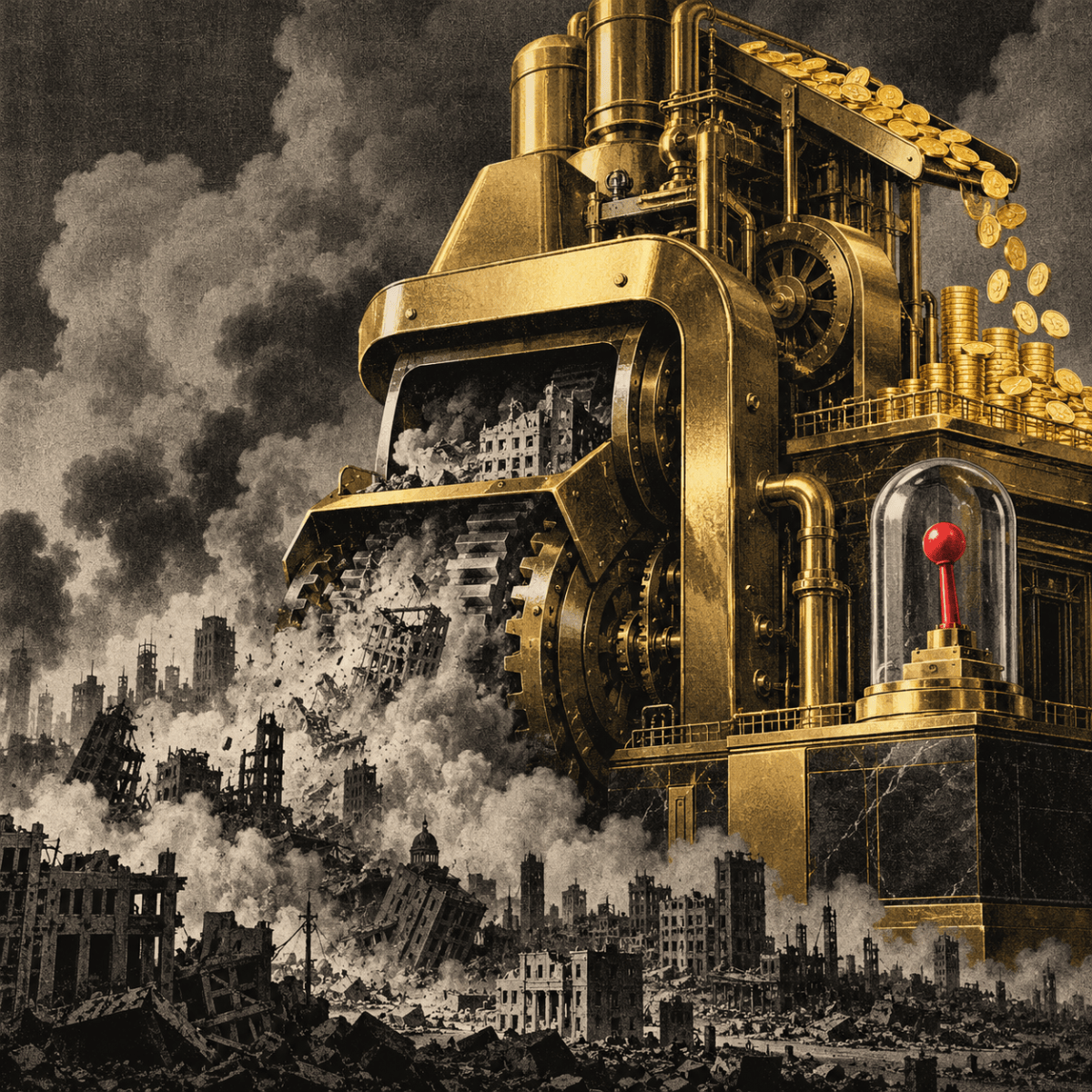
Civilisation has made its own destruction so profitable that its survival now constitutes a threat to the economy.
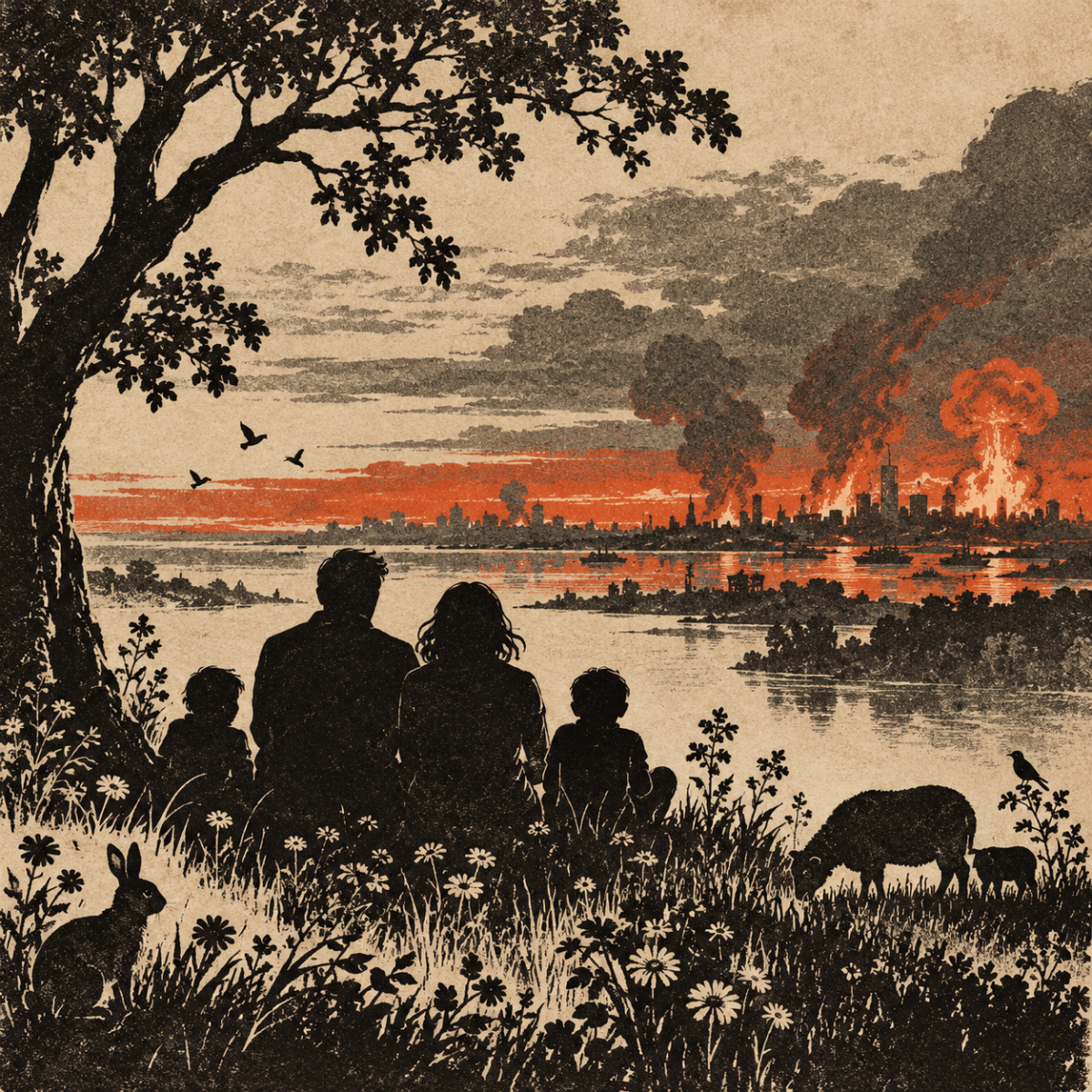
We have spent billions of years becoming what we are, yet our political and economic systems increasingly reward the destruction of the complex relationships that sustain us. What we stand to lose is beyond calculation, and the tragedy is how unnecessary so much of it is.

The simple and uncomfortable truth of urban life is that it functions as a kind of brightly lit direct-to-consumer clearance warehouse with lifestyle amenities. Marginalisation and exclusion are not side effects; they are throughput. Value is not attached to who you are, how you feel, or what you believe except insofar as these can be […]

Service management systems are plagued by managerial failure. The primary error is the belief that regulatory oversight exists to eradicate delay, to accelerate everything. The result is a chaotic environment in which every actor attempts to displace temporal and material costs onto other people, times, and places – both within and beyond the organisation. This […]

Fragmentary politics is the largely unwitting doctrine of manufacturing and sustaining endless political and sociopsychological friction in order to self-validate. It generates adversarialism and conflict, then feeds on the consequences, mistaking turbulence for relevance and agitation for purpose. This is not strategy. It is structural incompetence: the conversion of social damage into political leverage, and […]

Civilisation is not a stable object. It is a continuous process of partial failure and provisional repair, with collapse always occurring somewhere while continuity is maintained elsewhere. What changes is not whether collapse happens, but its rate, distribution, and perceptibility. When coordination, trust, and meaning decay faster than institutions can reconstitute them, collapse ceases to […]
Have a WordPress.com account? Log in now.

