Two encounters with academia, decades apart, reveal the peculiar machinery through which institutions reproduce authority, exclusion and their own necessity. A personal account of education, alienation and the questionable meaning of progress.

Two encounters with academia, decades apart, reveal the peculiar machinery through which institutions reproduce authority, exclusion and their own necessity. A personal account of education, alienation and the questionable meaning of progress.

The paradox is that philosophy, a discipline nominally concerned with questioning assumptions, has become remarkably accomplished at preserving its own.
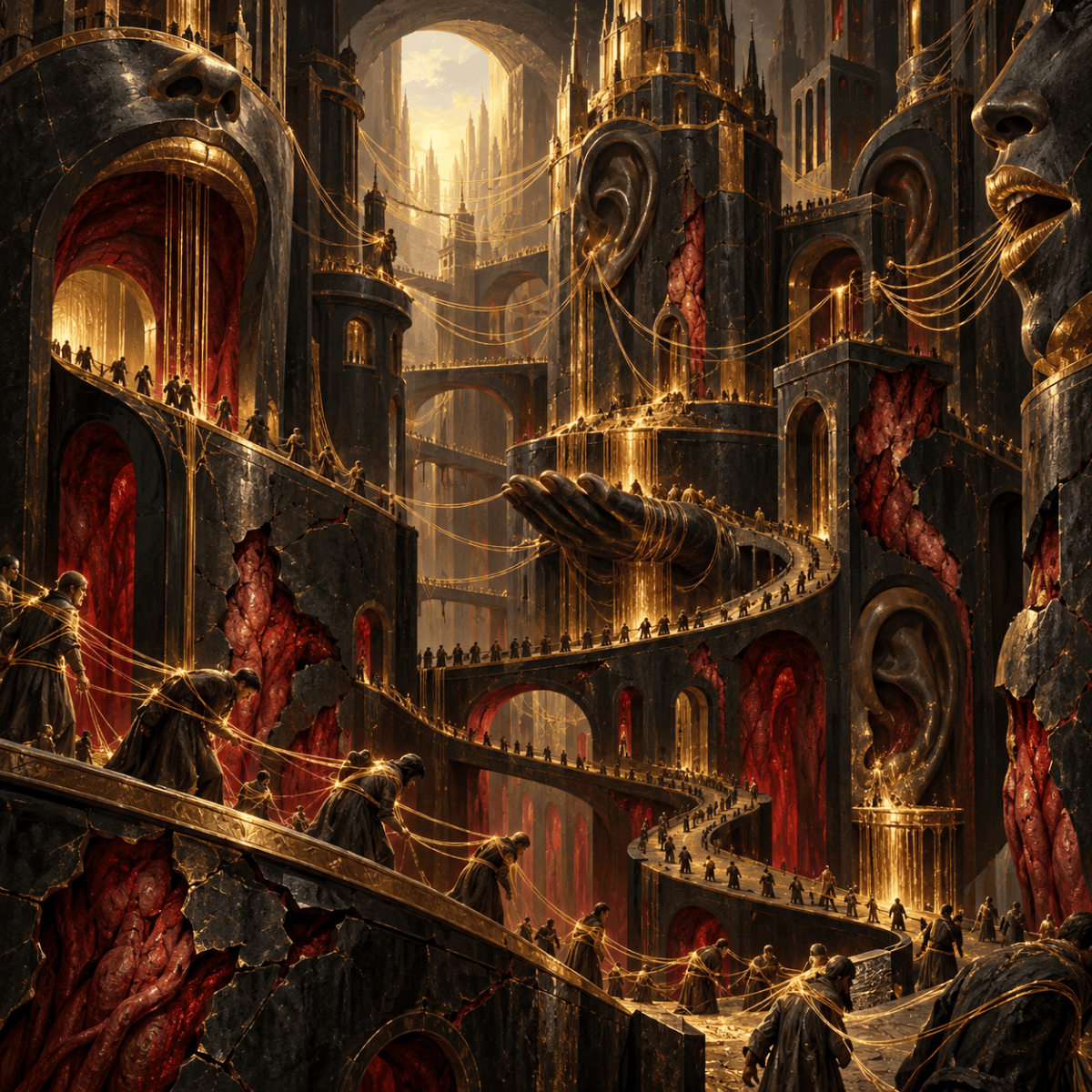
Cruelty grows through small, rational choices that make power easier to preserve and other people easier to discard.

The scale of the consequences has changed while the competitive selection tests for authority remain embarrassingly small.

Institutions study the world remarkably well. The harder problem is that the world they are studying is also inside the building, and there is no position outside the system from which that entanglement simply disappears.

Everyone knows a dickhead. The interesting question is why the conditions that generate them do so, enduringly, and with such uncanny frequency.

A system can become so effective at measuring, managing, and reproducing its own internal assumptions that it gradually loses the ability to perceive the external reality those assumptions were originally created to address.
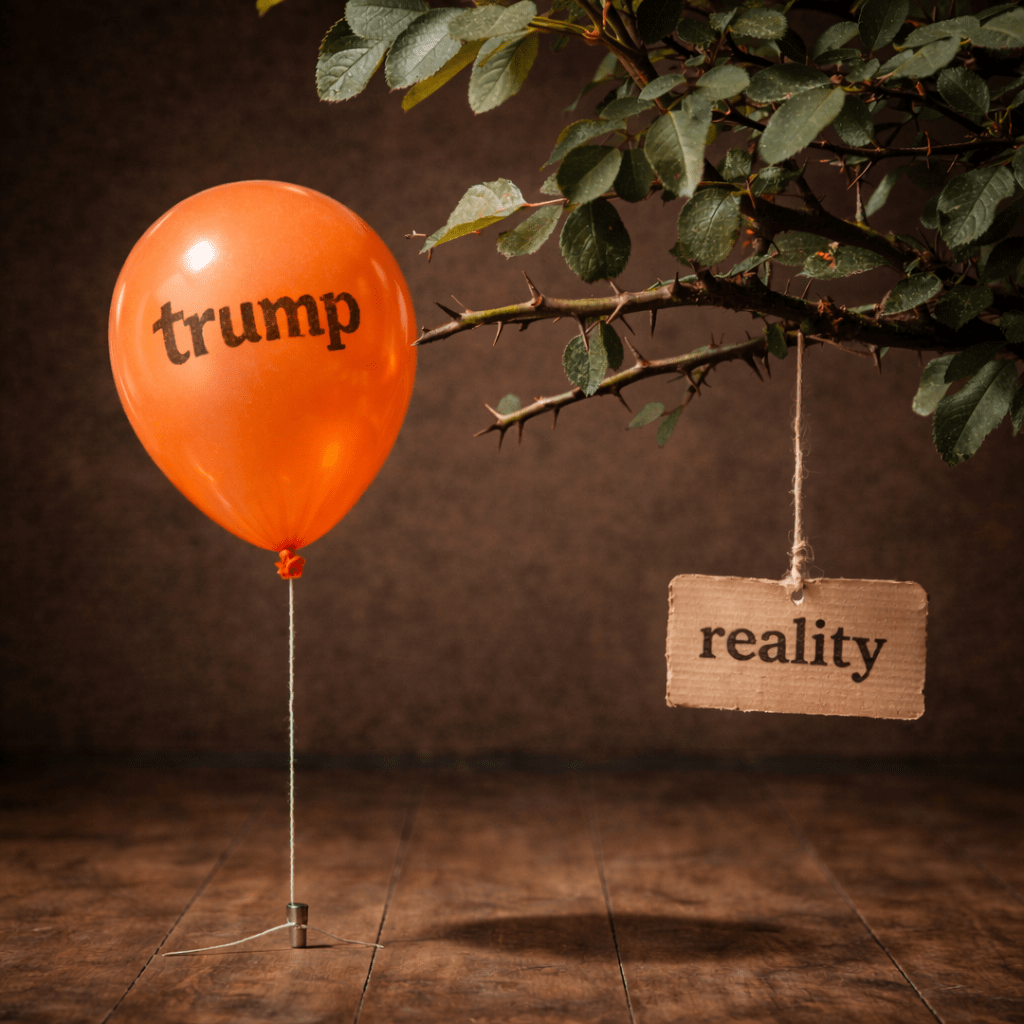
What we call strategy in world events is almost never that. Significant historical events are routinely narrated as the product of careful planning, institutional continuity, and deliberate intent, yet the public record more reliably shows decisions taken under pressure, justified after the fact, and sustained long after anyone can clearly explain why they began. Narratives […]

Diagnostic minimalism is the necessary opening move in any serious encounter with a communications system that looks impossibly complex and yet, because of that same complexity, repeatedly falls back into rudimentary behaviour; before adding theory, metaphor, or moral posture, one subtracts, removes inherited ontological furniture, suspends the reflex to personalise what is structural, and asks […]
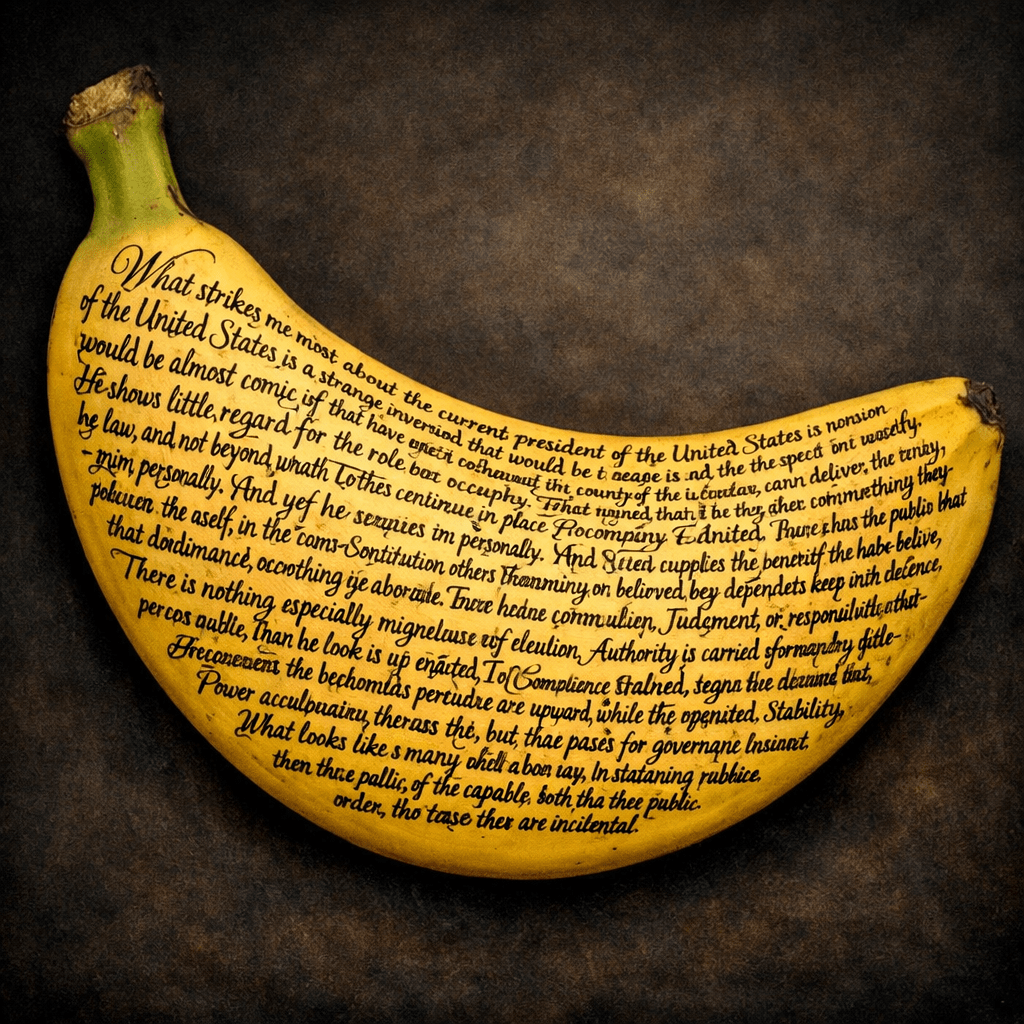
What strikes me most about the current president of the United States is a strange inversion that would be almost comic if it were not so consequential. He shows little regard for the role he occupies, scant respect for the law, and no evident commitment to the country beyond what it can deliver to him […]
Have a WordPress.com account? Log in now.

