Beliefs persist less because they are true than because they provide the transient continuity of narrative as semantic coherence.
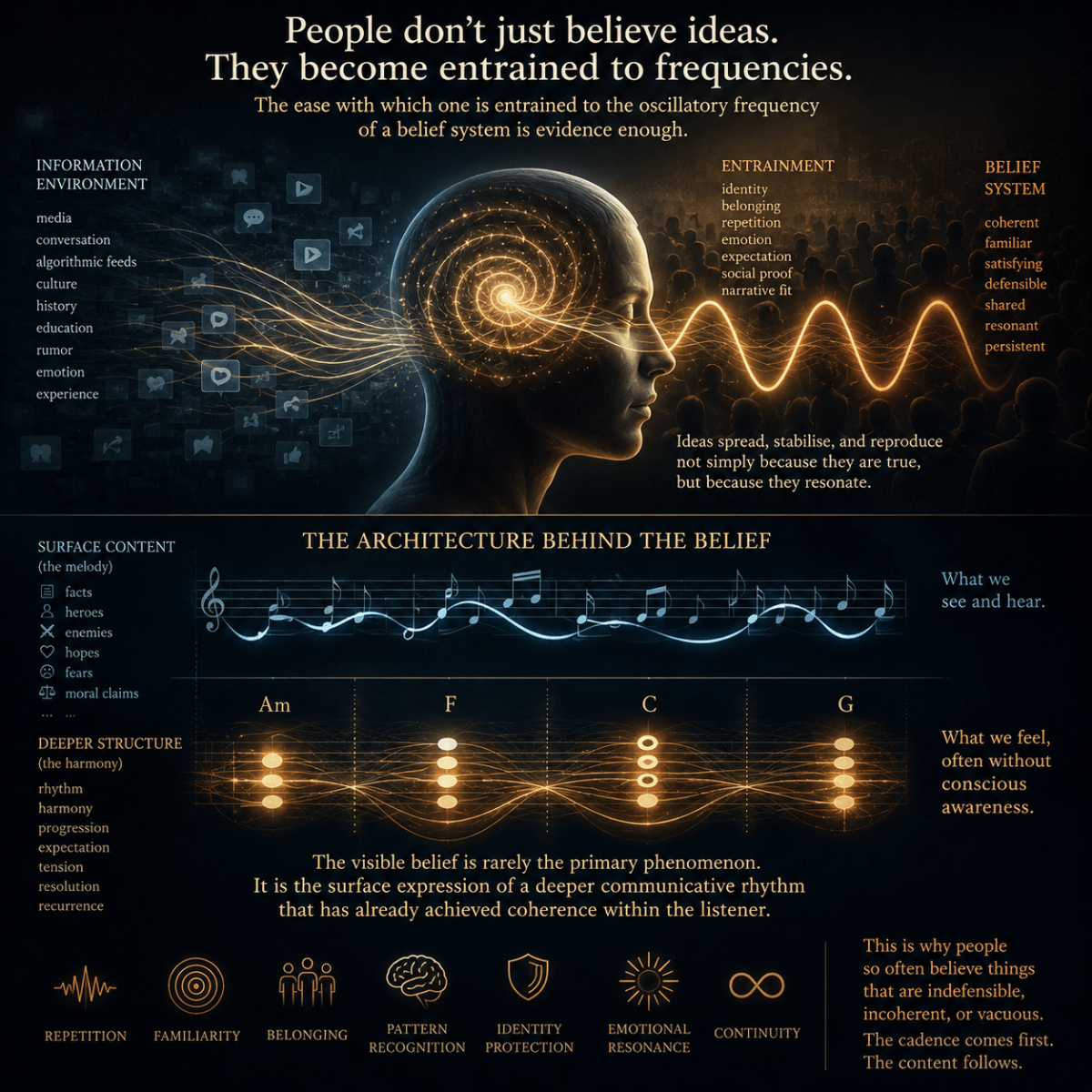
Beliefs persist less because they are true than because they provide the transient continuity of narrative as semantic coherence.

War persists not simply because people or cultures remember conflict, but because entire civilisations derive identity, coherence, profit, and meaning from its repetition.

A technologically-mediated civilisation has built planetary systems of prediction and control around biological reflexes still calibrated for tribe, threat, status, and symbolic belonging.
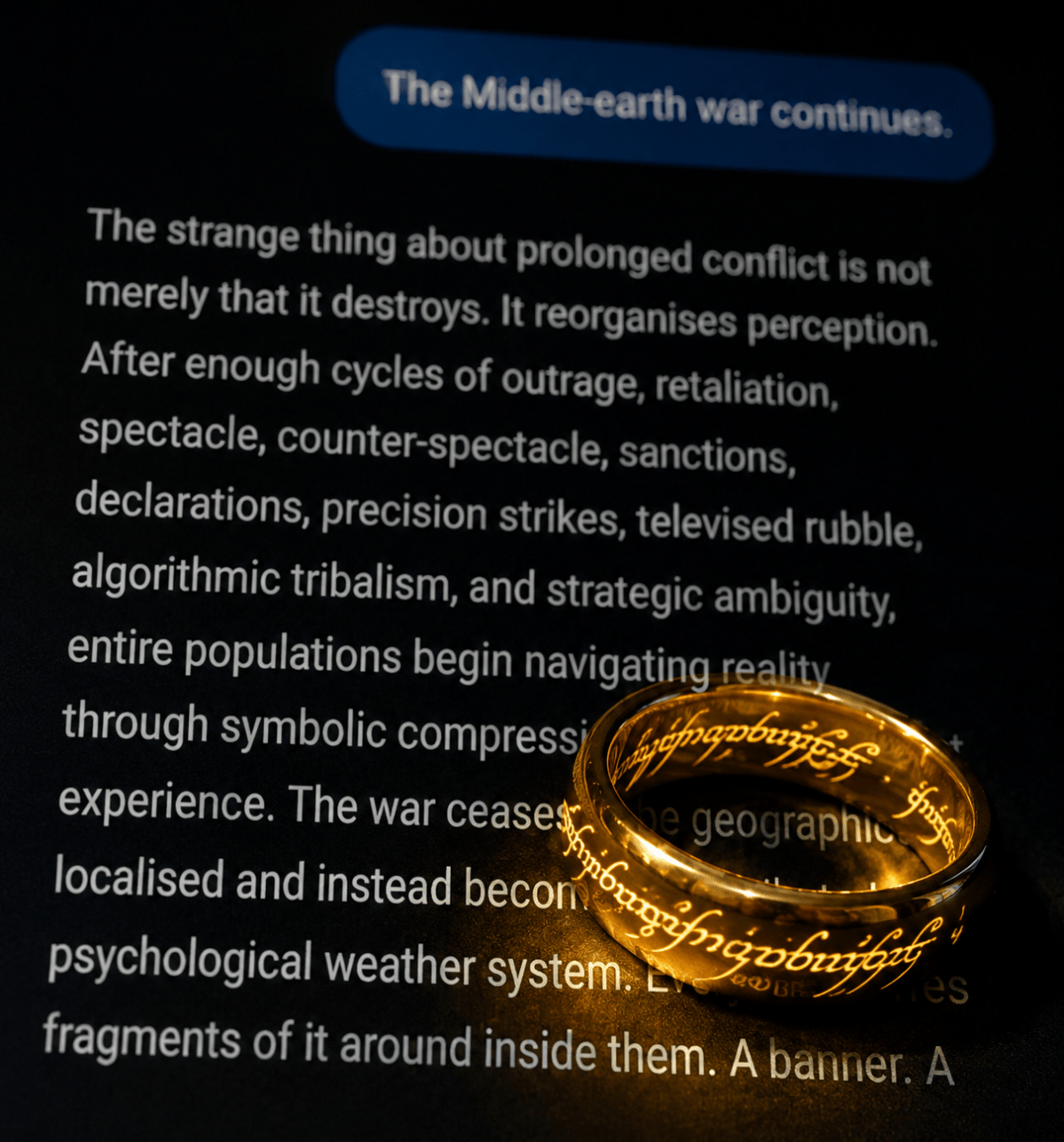
The strange thing about prolonged conflict is not merely that it destroys. It reorganises perception. After enough cycles of outrage, retaliation, spectacle, counter-spectacle, sanctions, declarations, precision strikes, televised rubble, algorithmic tribalism, and strategic ambiguity, entire populations begin navigating reality through symbolic compression rather than direct experience. The war ceases to be geographically localised and instead […]
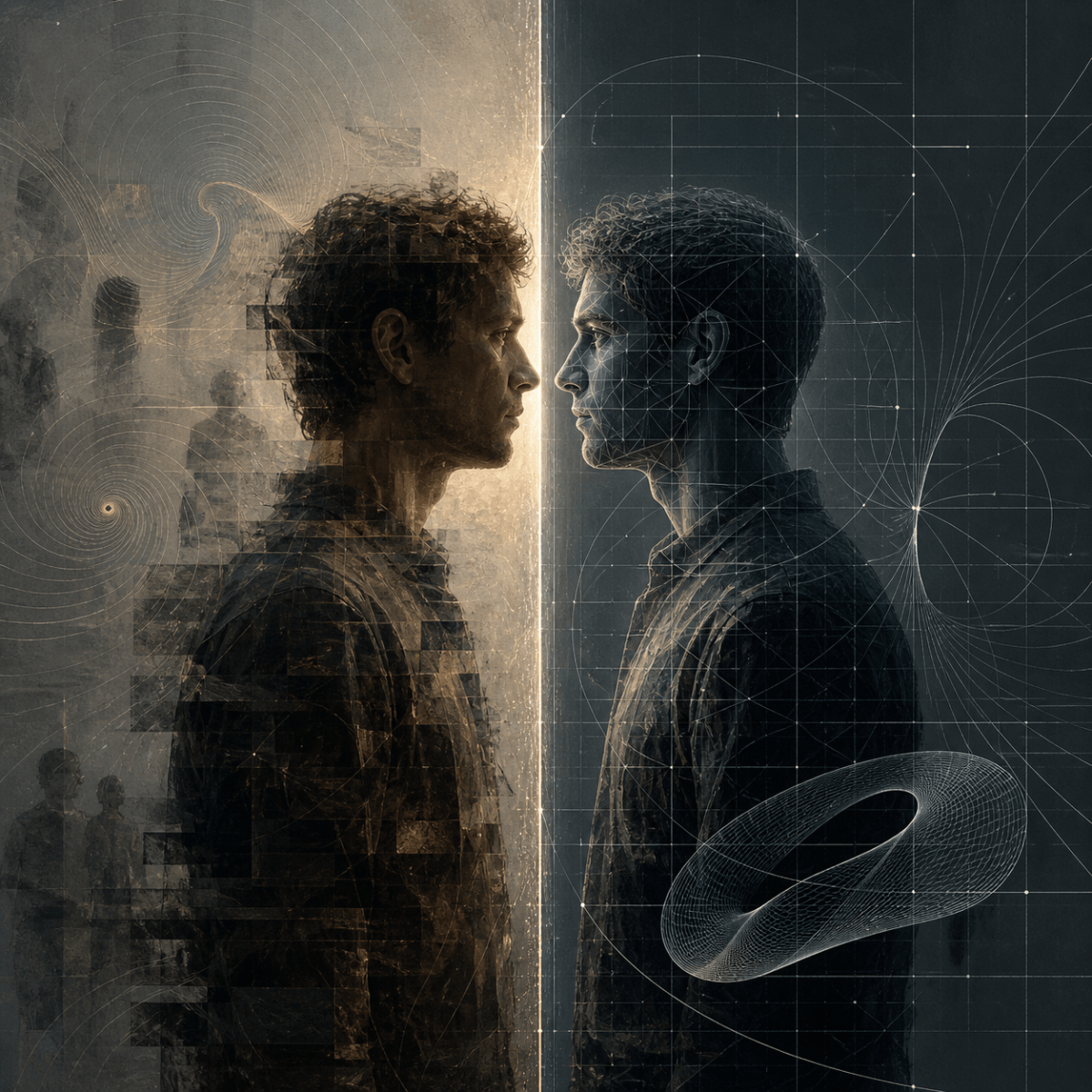
Fear of others is not finally fear of difference, but fear of the gap through which the self discovers it was never solid, never alone, and never entirely its own.

Language does not contain the world; the world contains language, yet impoverished meaning becomes machinery, mythology, and moral fact precisely when language behaves as though its crude categories contain reality itself.
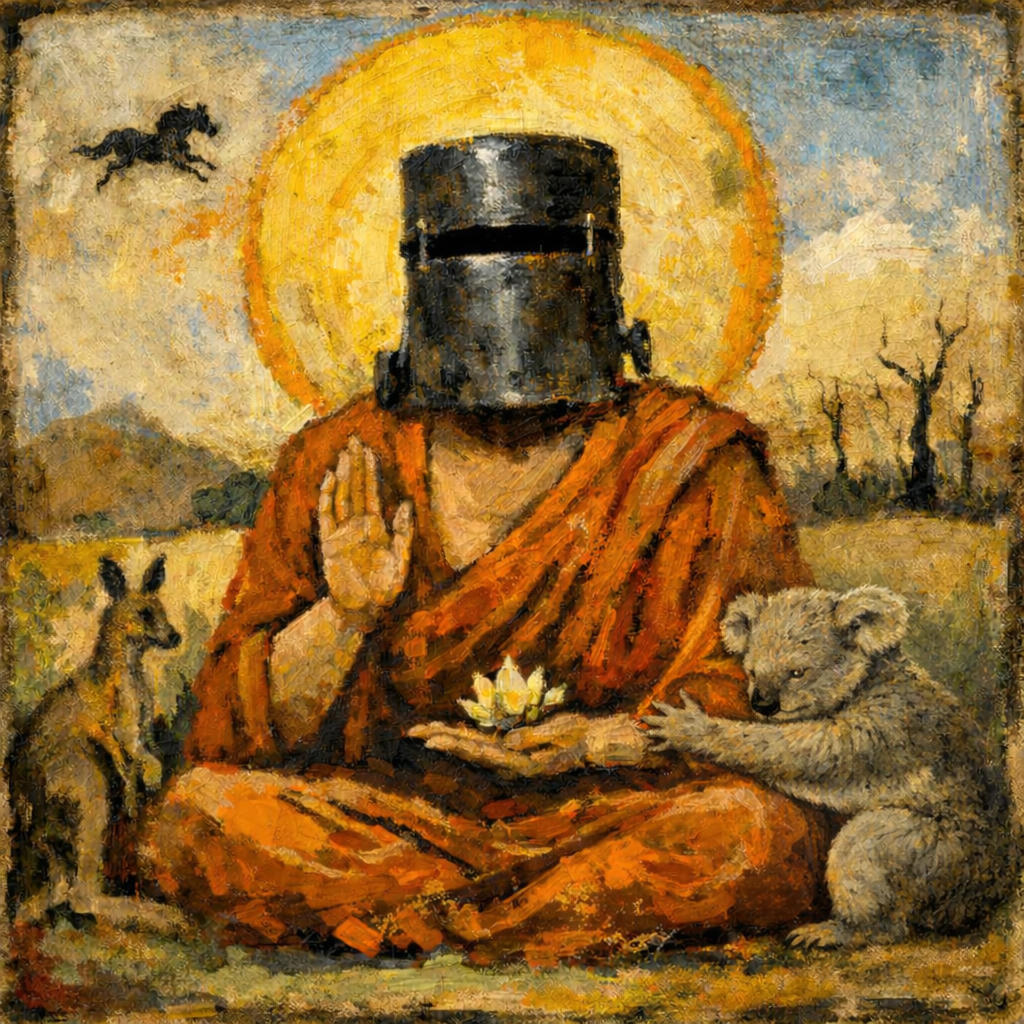
Psychoanalysis begins with a joke that only works because it fails: the patient arrives burdened with paranoia, anxiety, and unhappiness, and the doctor replies that this is simply the human condition. (Cure denied.) The moment this is understood, the structure collapses. The consulting room becomes a mirror, not a remedy, and what it reflects is […]

Intelligence is becoming a liability. Not socially ornamental intelligence, not credentialed cleverness, but actual understanding. The kind that sees structure, delay, recursion, consequence. The kind that notices when a system is lying to itself. That form of intelligence generates friction. It interrupts performance. It destabilises belonging. It exposes the hidden costs that simple stories are […]
Racism, misogyny, and other forms of exclusion recur not because they are compelling, justified, or desirable, but because large-scale social systems are biased toward generating them, or things like them, under stress. Calling this structural does not mean denying choice. People do make choices, good, bad, and ugly, and they live with the consequences of […]
…any system complex enough to interpret must remain vulnerable to the modulation of its own interpretive dynamics…
Nationalism and anti-immigration movements recycle the same script: identify an external group, blame them for decline, and convert frustration into political capital. Yet the structural causes—corporate monopolies, rent-seeking industries, regulatory capture—remain largely unexamined. People misattribute the erosion of wages, housing affordability, and job security to migrants because scapegoating offers a simple, visceral answer where systemic […]

Power’s paradox is that it flourishes best where it cannot fully dominate. Like the tensile balance of a body held together by structured tension, it requires counterforces, resistance, and the ever-present possibility of dissolution to sustain itself. Autocracy and capital alike reveal this pattern: their most efficient mode of operation is not in a vacuum […]
Have a WordPress.com account? Log in now.

