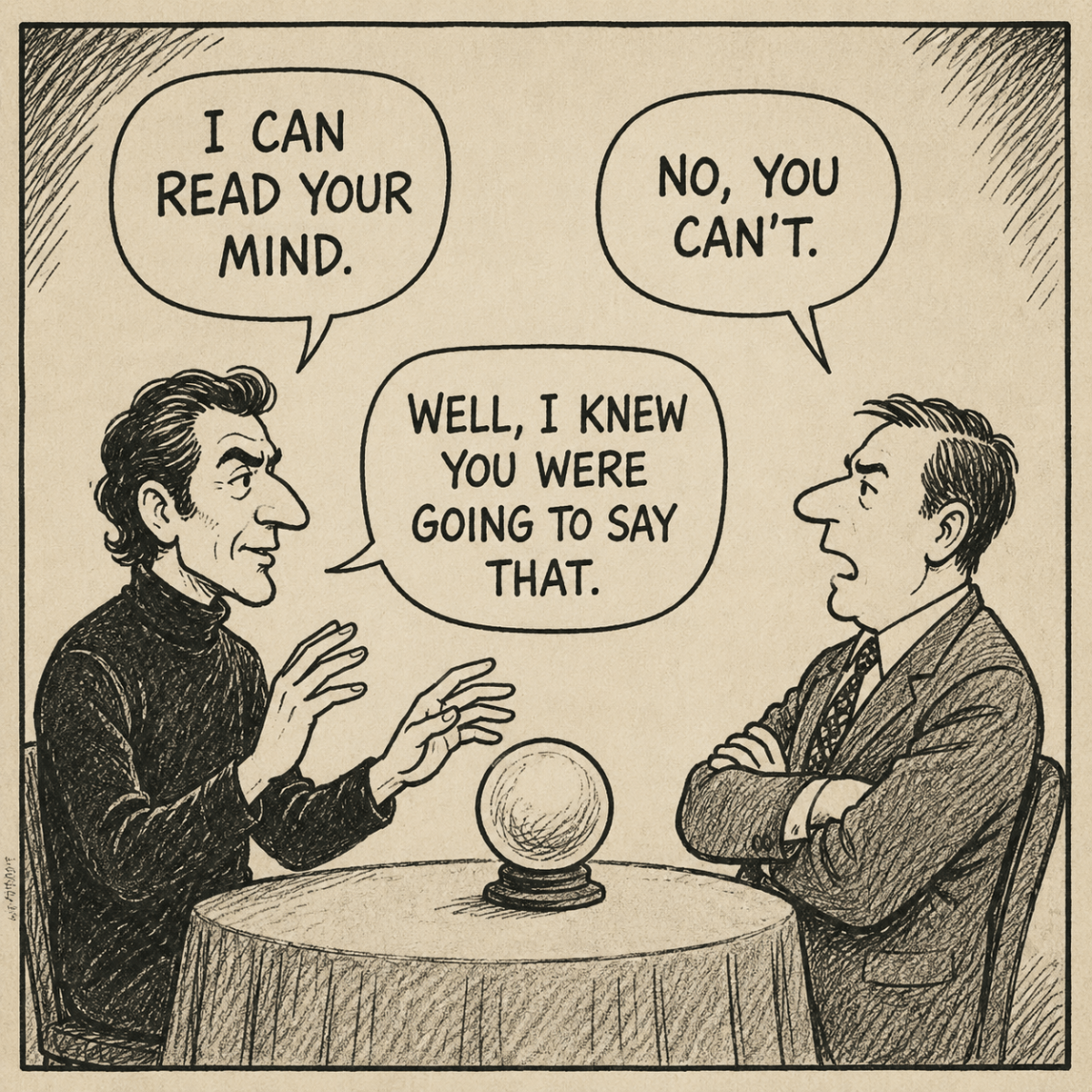
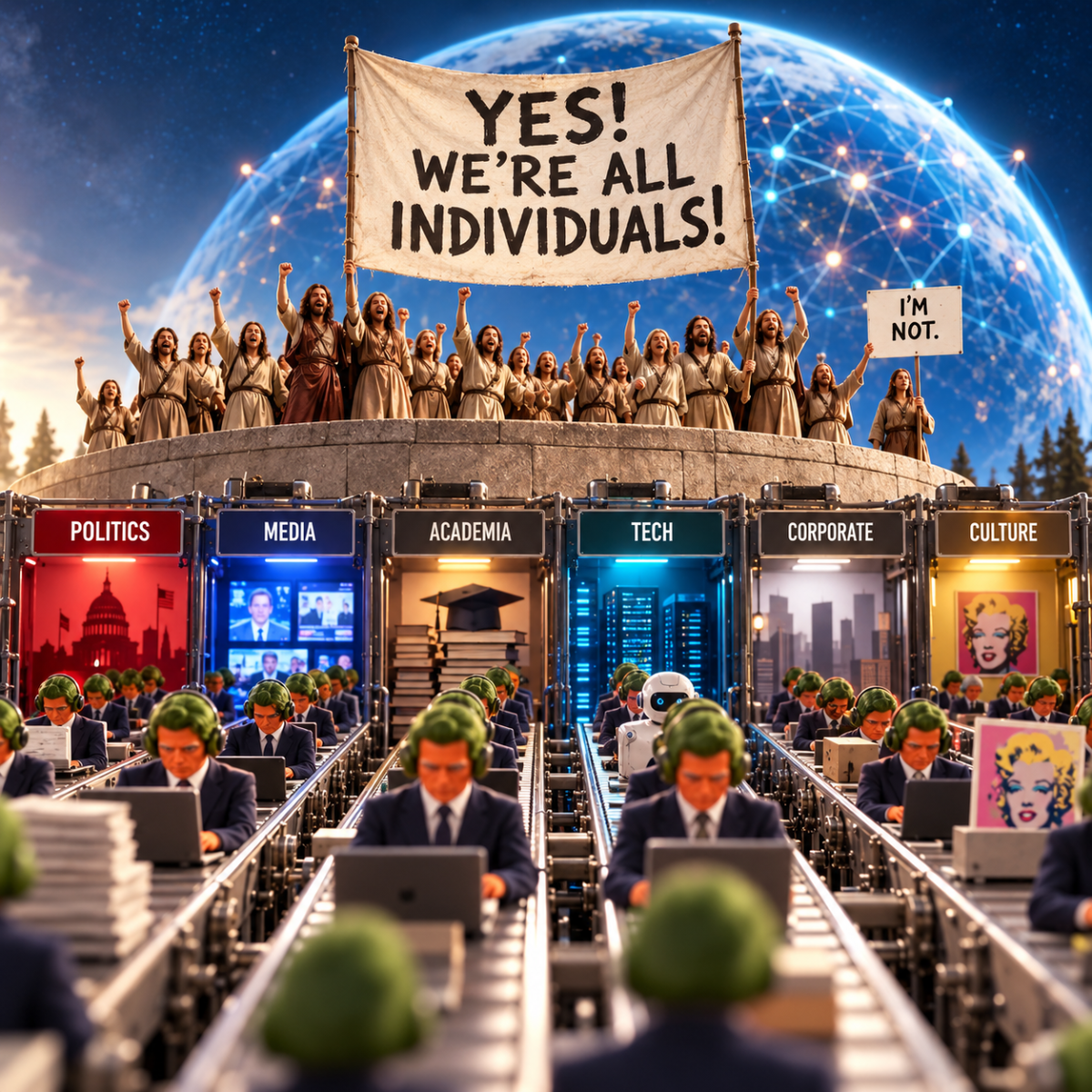
Why institutions, political movements and intellectual communities reproduce the same patterns of identity, conformity and exclusion while insisting on their differences.
Categories
Yes, We’re All Individuals
- Post author By G
- Post date Oct 8, 2026
- No Comments on Yes, We’re All Individuals
- Tags Artificial Intelligence, Autorreproducción, アイデンティティ, コミュニケーション, システム思考, テクノロジー, collective behaviour, communication, complejidad, Complexity, Comportamiento Colectivo, comunicación, Conformidad Institucional, Diferencia, difference, Differenz, emergence, emergencia, Emergenz, 自己再生産, 集団行動, 複雑性, 言語, filosofía, identidad, Identität, identity, institutional conformity, Institutionelle Konformität, inteligencia artificial, künstliche Intelligenz, Kollektives Verhalten, Kommunikation, Komplexität, language, lenguaje, pensamiento sistémico, philosophie, Philosophy, Selbstreproduktion, self-reproduction, Sprache, Systemdenken, systems thinking, technologie, technology, tecnología, 制度的同調, 創発, 哲学, 差異, 人工知能