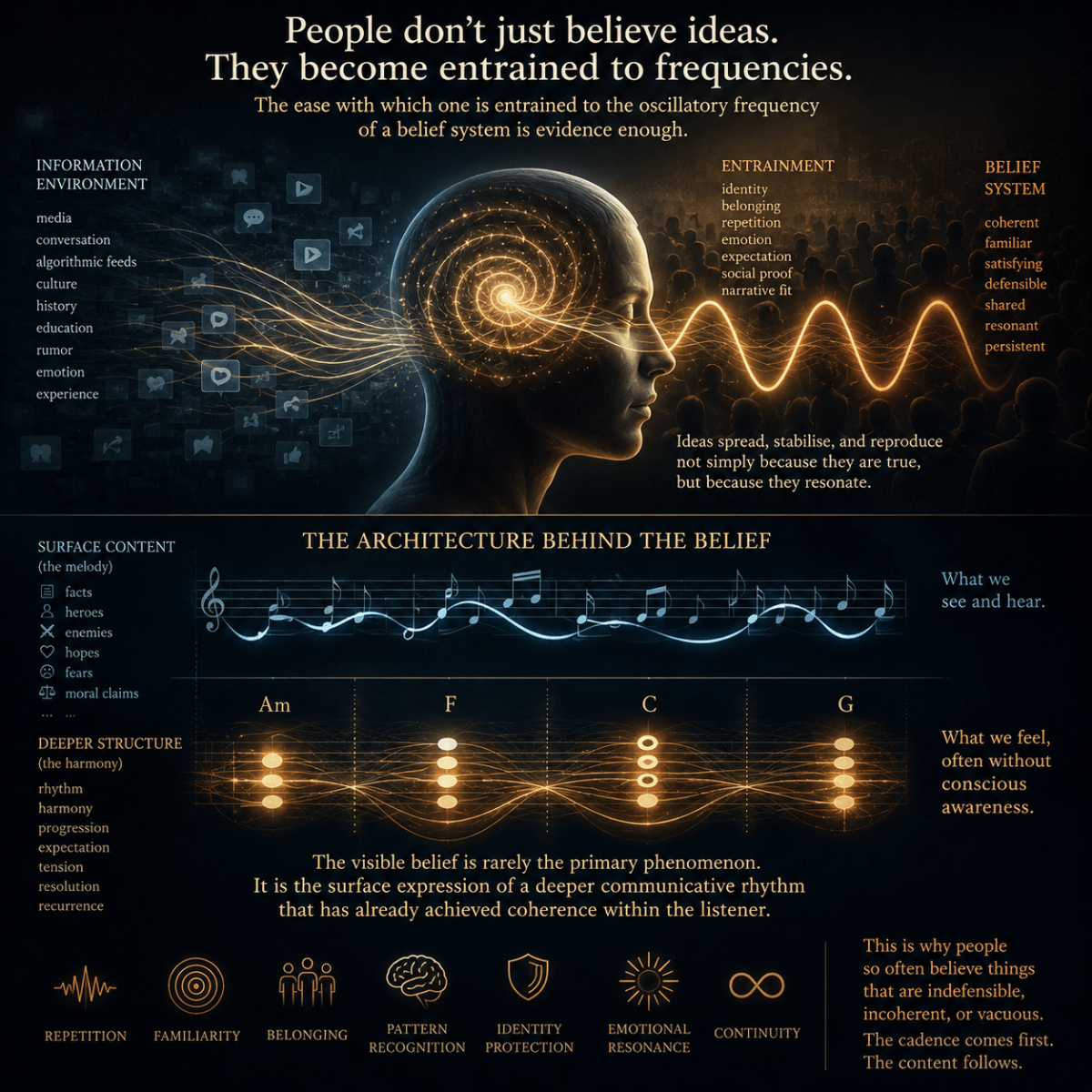
Science has not stopped discovering reality. We have become less capable of surviving what those discoveries imply about ourselves.
Categories
the conspicuous absence in science
- Post author By G
- Post date Jun 16, 2026
- No Comments on the conspicuous absence in science
- Tags agentività distribuita, agentivité distribuée, Bedeutung, Bewusstsein, cadre orbital, cambiamento di paradigma, changement de paradigme, cibernetica, complessità, complexité, Complexity, conscience, consciousness, coscienza, cultura, culture, cybernétique, cybernetics, cybernetyka, 现实, 相位动力学, 科学, 科学进步, 系统论, 维纳-辛钦, découverte, dinamica di fase, discovery, distributed agency, dynamika fazowa, dynamique de phase, Винер-Хинчин, идентичность, институты, кибернетика, культура, наука, научный прогресс, орбитальная структура, открытие, elosztott cselekvőképesség, Entdeckung, 范式转移, 문화, 语言, 발견, 복잡성, 과학, 과학적 진보, 분산 행위성, 비너-힌친, 身份认同, 轨道框架, fázisdinamika, felfedezés, filosofía, filozófia, identità, identitás, Identität, identité, identity, information theory, Informationstheorie, információelmélet, Institutionen, institutions, instytucje, intézmények, istituzioni, 사이버네틱스, 시스템이론, 패러다임 전환, 언어, 현실, 오비트 프레임, 위상 동역학, 의미, 의식, 정보이론, 정체성, 제도, 철학, jelentés, język, kibernetika, komplexitás, Komplexität, kultúra, Kultur, Kybernetik, langage, language, linguaggio, meaning, nauka, nyelv, распределённая агентность, реальность, сложность, смена парадигмы, смысл, сознание, теория информации, теория систем, фазовая динамика, философия, язык, odkrycie, orbit frame, orbitális keret, Orbitrahmen, paradigm shift, paradigmaváltás, Paradigmenwechsel, phase dynamics, Phasendynamik, philosophie, Philosophy, postęp naukowy, progrès scientifique, progresso scientifico, rama orbitalna, réalité, Realität, reality, realtà, rendszerelmélet, rozproszona sprawczość, rzeczywistość, Science, scientific progress, scienza, scoperta, sens, significato, Sprache, struttura orbitale, systems theory, Systemtheorie, teoria dei sistemi, teoria dell'informazione, teoria informacji, teoria systemów, théorie de l'information, théorie des systèmes, tożsamość, tudat, tudomány, tudományos haladás, valóság, verteilte Handlungsfähigkeit, Wiener-Khinchin, Wissenschaft, wissenschaftlicher Fortschritt, zmiana paradygmatu, znaczenie, złożoność, 分布式能动性, 制度, 发现, 哲学, świadomość, 复杂性, 意识, 意义, 控制论, 文化, 信息论