Categories
cybernetics

Wiener–Khinchin theorem

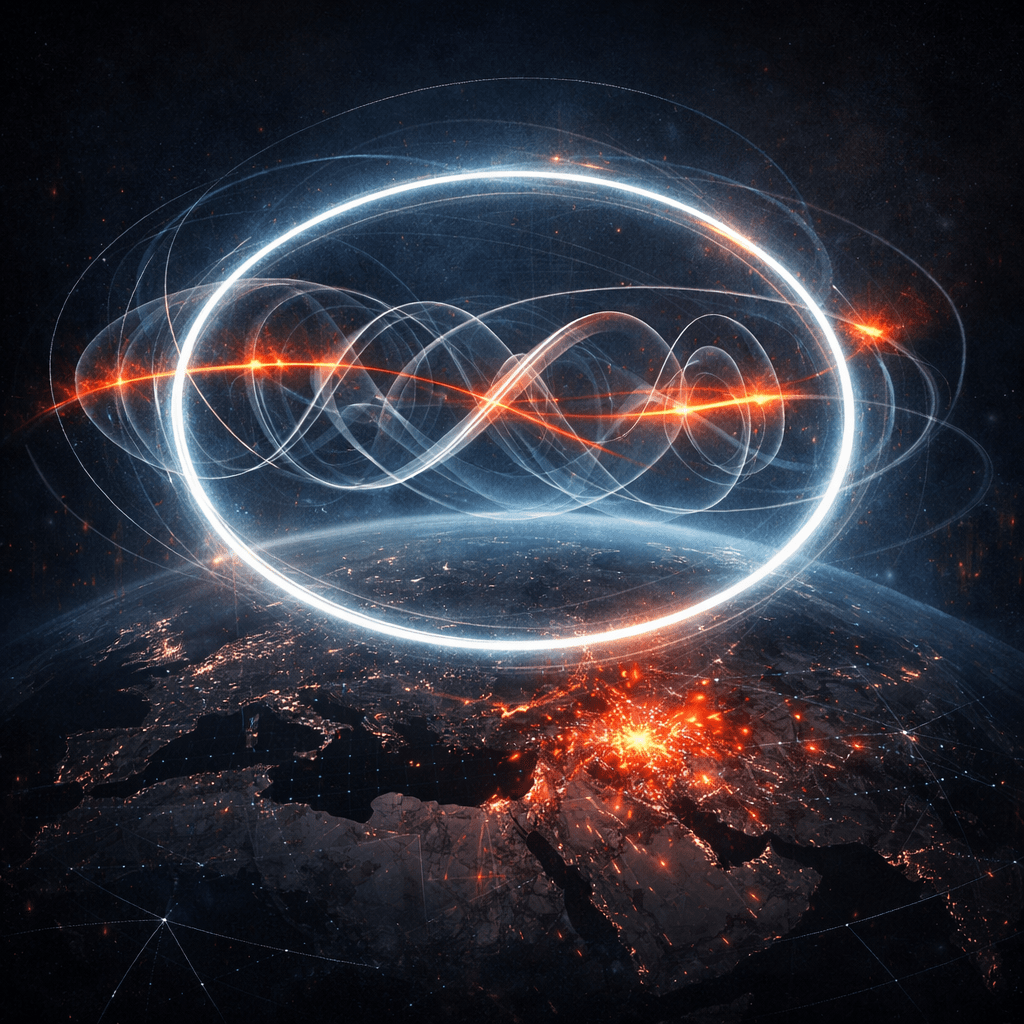
The Wiener–Khinchin theorem describes a quiet inevitability: when a system repeats itself, even imperfectly, that repetition condenses into structure. Time leaves a trace. Signals that return, echo, or correlate with their own past do not merely accumulate; they reorganise into a spectrum, a distribution of emphasis and weight. What looks like flux from within time […]

Categories
Philosophy

Loaded Dice

The simple and uncomfortable truth of urban life is that it functions as a kind of brightly lit direct-to-consumer clearance warehouse with lifestyle amenities. Marginalisation and exclusion are not side effects; they are throughput. Value is not attached to who you are, how you feel, or what you believe except insofar as these can be […]

Categories
Philosophy

The Logic Beneath Logic

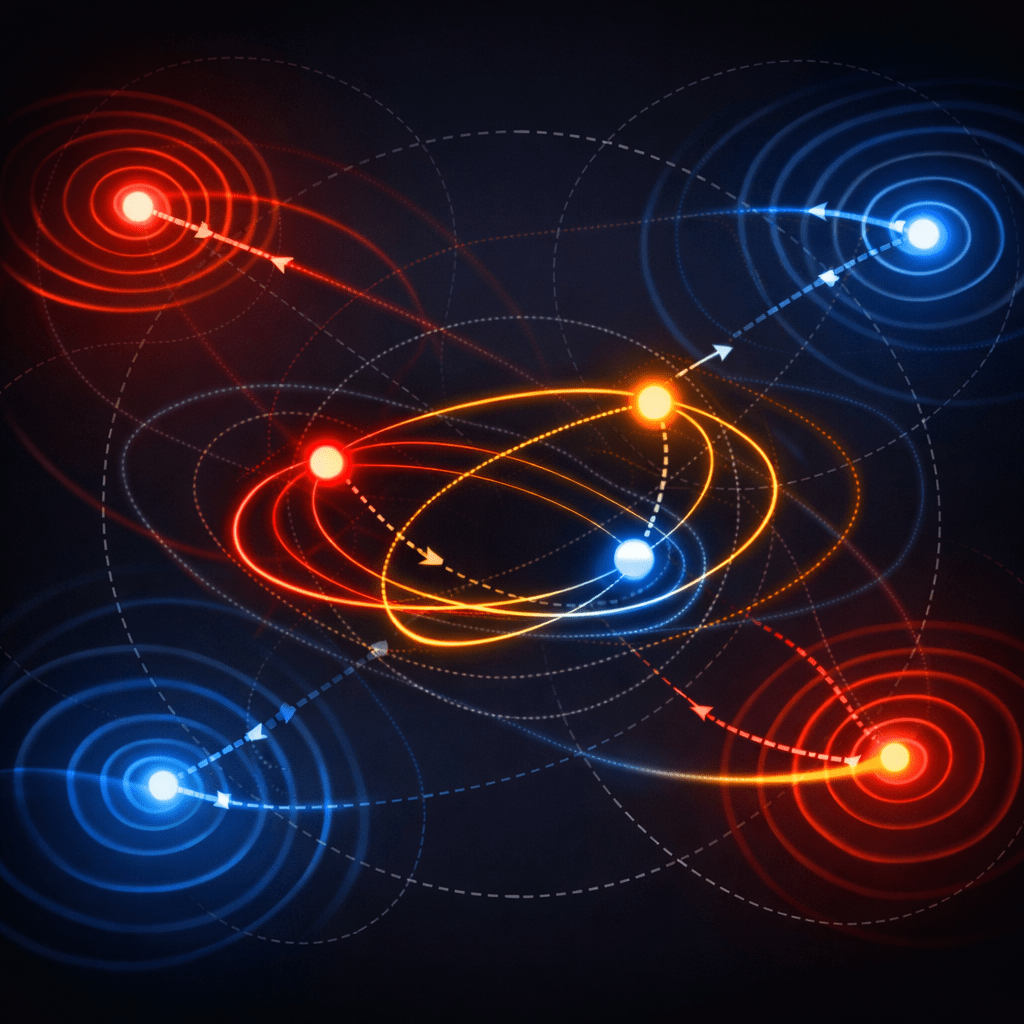
The diagram does not describe things in the world. It describes the condition under which things can appear as things at all. Inside the enclosing oval are two distinct systems. They are deliberately drawn as different. Each contains a trace of the other inside itself, but never the other as such. Between them is a […]

Categories
politics

Populism: Flirting with Disaster

Populism gains traction by pointing at real pressures: housing stress, cost-of-living anxiety, cultural dislocation, institutional distance, a sense that no one is steering. These are not imagined problems. They are the very real conditions that make people receptive to blunt answers and strong voices. The tragedy is that the tools populism offers to address these […]

Categories
Philosophy

Big Problems Don’t Fit in Small Boxes

Many of the critically defining problems of our time resist piecemeal treatment. Understanding consciousness, curing cancer, alleviating poverty, managing environmental sustainability, mitigating climate change without triggering new failures, securing digital infrastructure, managing geopolitical instability, slowing social decay, and containing the adverse effects of runaway technological growth are not separate challenges but tightly coupled dynamical processes. […]

Categories
Philosophy

Atlas, Debugged

I no longer believe the world can be healed by better arguments, smarter policies, cleaner data, or more sophisticated machines. These things mostly just turn the volume up on whatever is already broken. The deeper condition is non-closure: the simple fact that complex systems do not stabilise by resolving tension, but by holding it in […]

Categories
Philosophy

self

The self never settles because the world never settles. Your body changes. Neural chemistry fluctuates. Memory edits itself. Relationships move. Context rearranges. Words drift. Culture turns. New facts arrive, old certainties decay, and the feedback never stops. So the self is not rewritten because it is faulty, but because it is embedded in conditions that […]

Categories
politics

Australian Democracy: One Country, Many Ways

Australia works because it stays balanced. Its democracy is not built on simple agreement, but on the disciplined interaction between different ways of seeing the world. Labor and Liberal are not just rival teams. Together, they form the smallest political structure capable of holding a complex society together. Two sides generate debate, correction, and restraint. […]

Categories
cybernetics

Cybernetics: Good Intentions, Bad Vibes

The language of the school was expansive: culture, power, technology, ethics, ecology, gender, indigeneity, diversity, human experience, systems, responsibility, complexity. It spoke fluently about uncertainty, fragility, and care. It marketed itself as a space for deep reflection on and constructive engagement with how technological systems were and are reshaping civilisation. But in one all-staff meeting, […]

Categories
cybernetics

Technocratic Tyrrany

We use technologies that also use us. Over time, methods are formalised into metrics, metrics are stabilised into categories of meaning, and tools designed to assist begin to define which actions are recognised as valid. What once supported activity becomes background infrastructure. The tools move to the centre. Human experience no longer anchors them; it […]

Categories
cybernetics

Why an Autocratic Turn is Catastrophic

An autocratic turn accelerates self-destructive collapse not because it is immoral, but because it forces a distributed system into a shape it cannot sustain. Short-term unity is purchased by suppressing variation, and the centre begins to confuse resistance with disobedience rather than information about system limits. Feedback from courts, states, agencies, markets, and elections is […]

Categories
cybernetics language Philosophy

Living Inside Language

We learn to navigate the world by drawing lines through it. Self and other. Mind and world. Human and machine. These distinctions help us function, the way handrails help us walk down unfamiliar stairs. They stabilise action and expectation. But they are not where reality begins. They are not built into the fabric of existence. […]