Life may not need a planet. It may only need matter, persistent gradients of energy, memory, and enough time for (ie self-) organisation to become aware of itself.
the oldest questions
Life may not need a planet. It may only need matter, persistent gradients of energy, memory, and enough time for (ie self-) organisation to become aware of itself.
The defining challenge of this century is no longer building more powerful technologies. It is developing human and institutional capacities capable of understanding, governing, and surviving the systems we have already created.
The system’s entropy offset becomes the labour imposed on those required to submit to its assumptions in order to reproduce its organisational structure through time.
Corruption begins when reward outpaces responsibility, reflecting the tendency of complex communication systems to abbreviate consequence and concentrate advantage.
Time is not something through which relations pass. Time is the finite propagation of relation itself.
The question is whether what we currently reward actually assists the capacity of civilisation to persist, adapt, repair itself, and create meaningful futures.
Coherence emerges from the continual negotiation of irreducible difference. Discrete boundaries and differences are contingent.
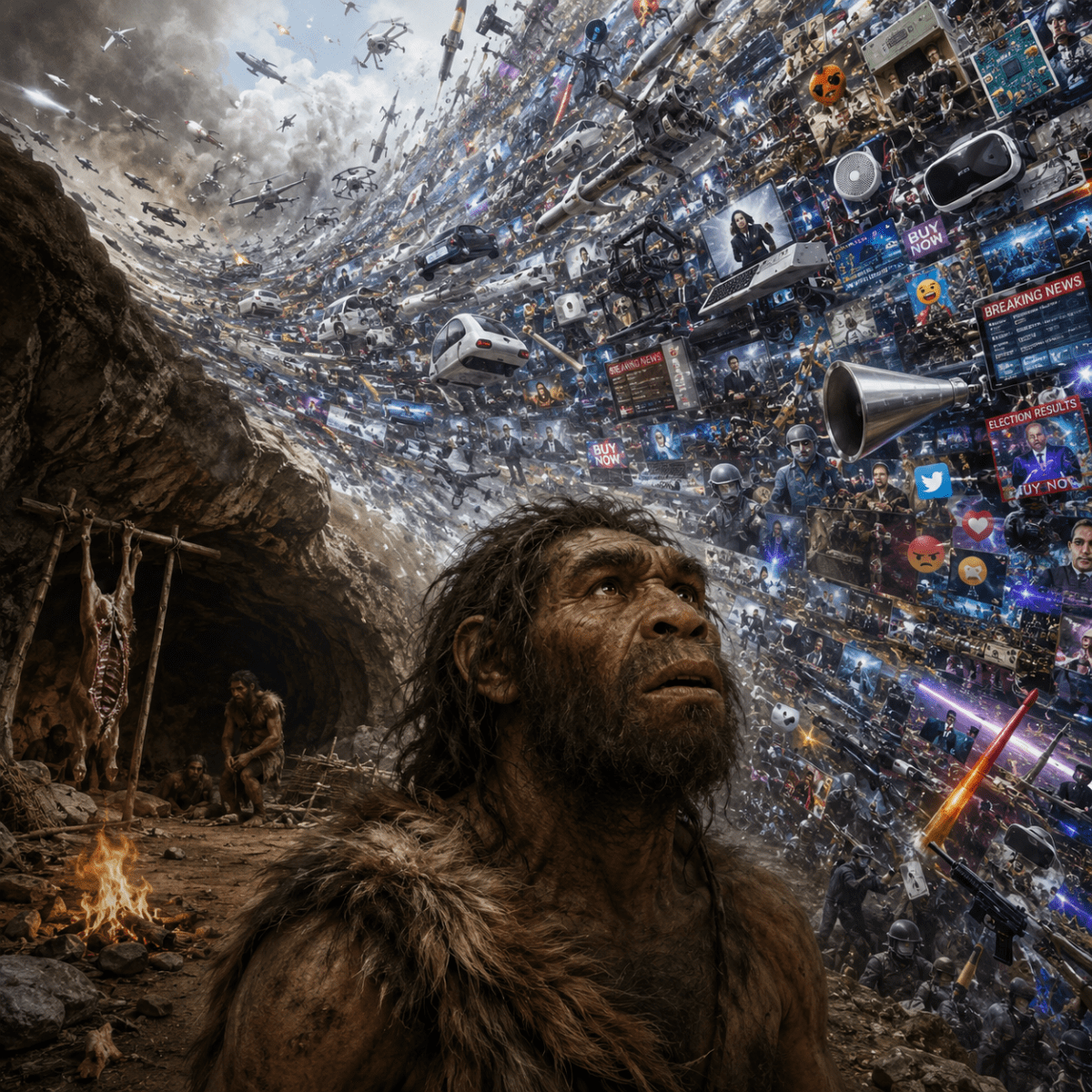
Science has not stopped discovering reality. We have become less capable of surviving what those discoveries imply about ourselves.