Loneliness becomes a market when technology makes itself the bridge between people.
Categories
mediated intimacy

Loneliness becomes a market when technology makes itself the bridge between people.

Unpopular ideas are not always wrong. Sometimes they simply fail to flatter the machine.

The technology sector is learning to metabolise its own disorder: turning instability into dependency, and dependency back into revenue.

At precisely the moment technology allowed us to express our own thoughts with unprecedented speed, ease, and fluency, people began switching off from the flood of language-model-mediated self-expression that followed.

The internet did not die; it was embalmed alive, taught to imitate its own pulse, and released back into the world as an infinite machine for converting human meaning into synthetic residue.

Technology cannot solve itself, because the introspective incompleteness that limits it is a function of the same combinatorial unboundedness that makes it at all possible; spoiler: we humans are similarly and simultaneously bound by identical logic.

Technology promised to save us effort, then quietly reorganised civilisation around the effort required to sustain technology.

Most of us live inside small coordinate systems. That does not mean small minds or small lives. It means we only ever meet the world from where we are. Family, work, language, class, nation, memory, injury, hope, fear, money, obligation, and belonging all shape what the world appears to be. They give life direction. They […]

Technology is extraordinary. It extends memory, speed, coordination, reach, and control. But it also carries a persistent deception. Not because it is unreal, but because it repeatedly presents open systems as though they could be made to feel closed. Cybersecurity makes this especially clear. There is no final safety, no completed perimeter, no settled technical […]

Let’s save AI, and ourselves, from the people currently running it as though technical intelligence were sufficient to govern human life. The problem is not simply that they are foolish in some ordinary sense, but that they mistake optimisation, scale, fluency, abstraction, and wealth for wisdom. Technical intelligence does not transduce lived experience with anything […]

We keep asking whether artificial intelligence will take control of the world. Yet a quieter possibility sits beneath the question: the systems already shaping events may not be controlled by any single intelligence at all. Complex adaptive systems rarely possess a master node; and this absence, curiously, is precisely the binding unity of the system. […]
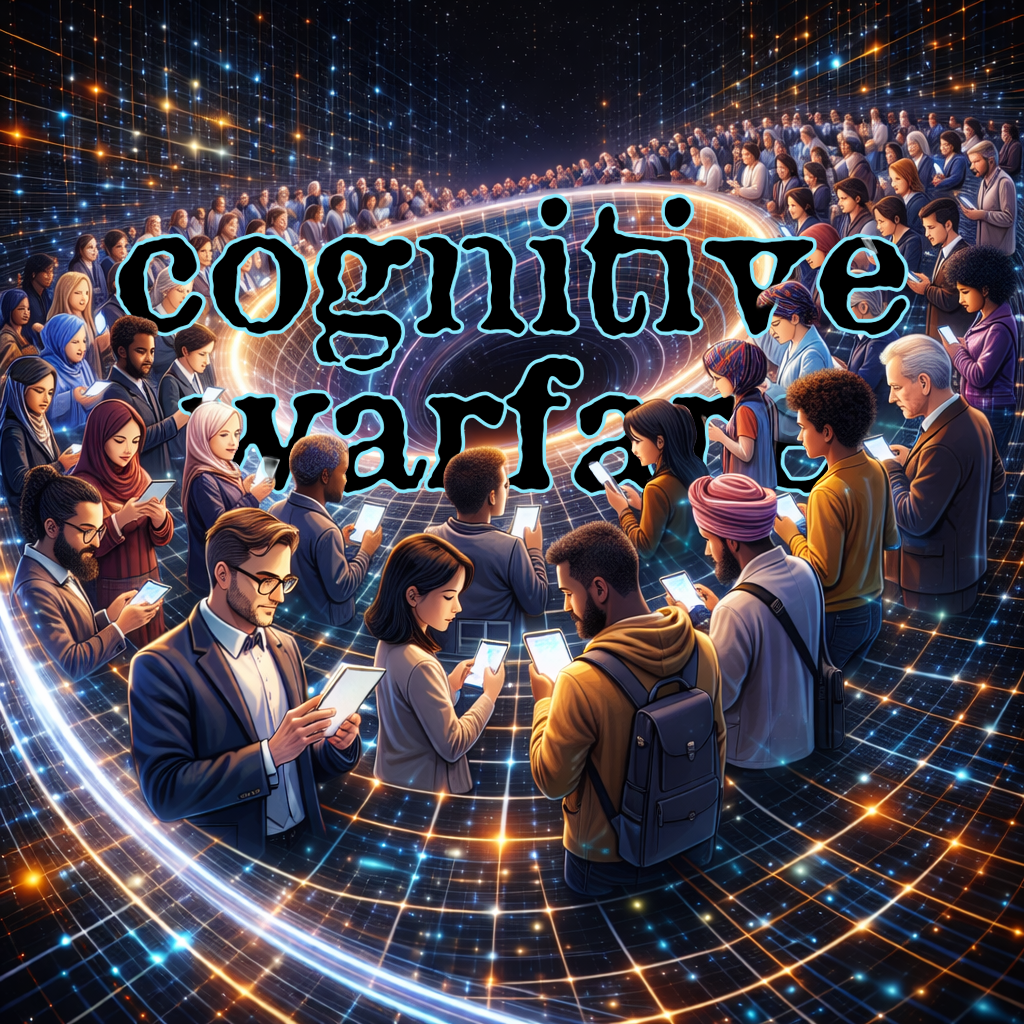
A cognitive war is not simply about what you think. It is a war over how you think, because once the structure, code, and cadence of thought, of language, of behaviour are altered, the content becomes easy to steer. Some of these biases are ancient, natural, even necessary: shortcuts of perception, habits of inferential prediction, […]
Have a WordPress.com account? Log in now.

