Technology promised to save us effort, then quietly reorganised civilisation around the effort required to sustain technology.
Categories
technological recursion

Technology promised to save us effort, then quietly reorganised civilisation around the effort required to sustain technology.

Malakacene: the long historical moment in which technologically mediated societies stopped selecting primarily for competence, wisdom, restraint, and institutional responsibility, and instead became increasingly vulnerable to the rapid propagation of spectacle, grievance, aggression, narcissism, and performative certainty masquerading as leadership.

Technologically mediated democracies are invoking remedial, simplified political coherence faster than they are generating the intelligence and/or aptitude required to govern the accelerating complexity of contemporary socioeconomic experience.
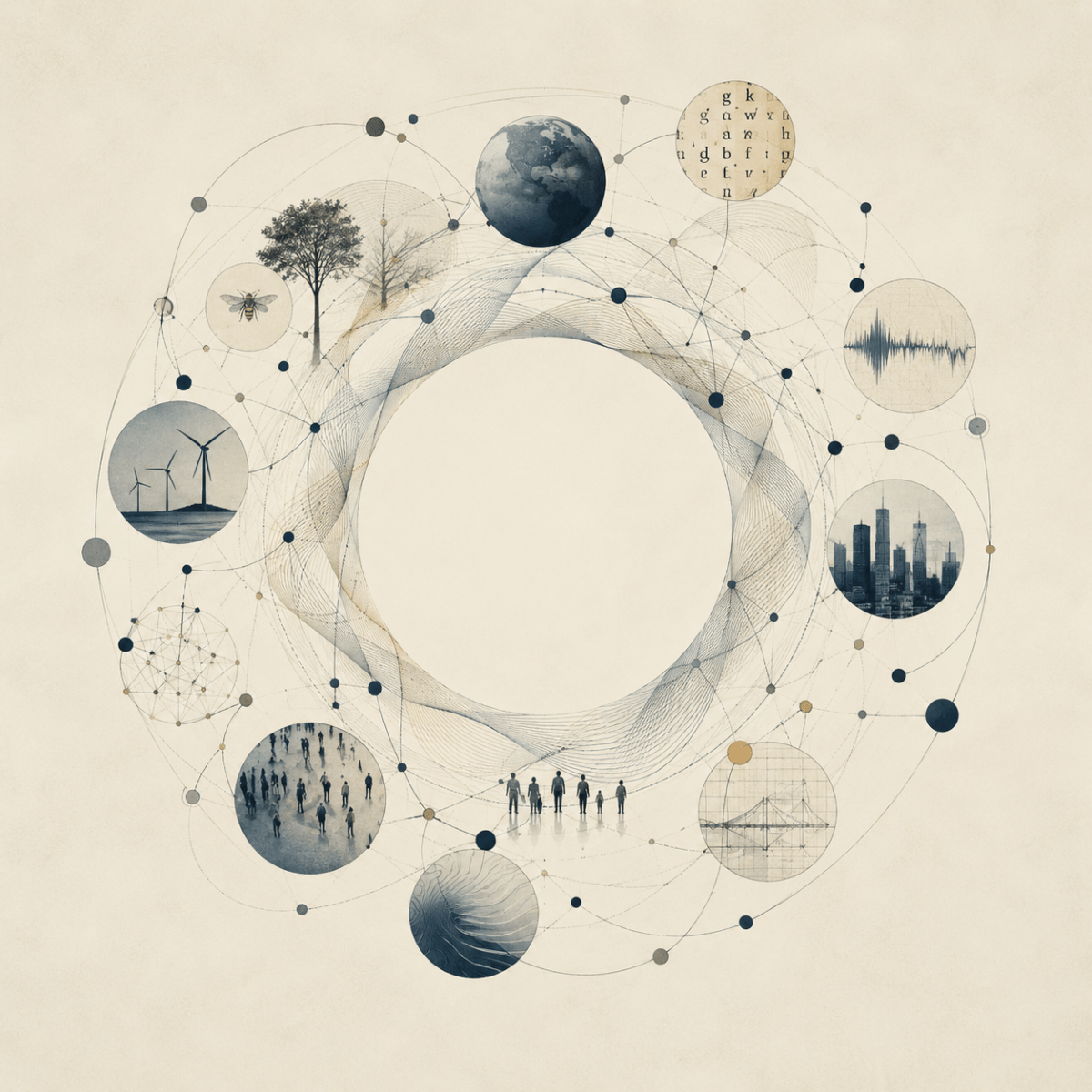
A strong current in modern thought still treats things as if they exist first, complete in themselves, and only later enter into relation with other things. The individual. The institution. The nation-state. The market. The technological platform. These are often imagined as discrete objects possessing internal coherence, as though persistence were generated primarily from within […]
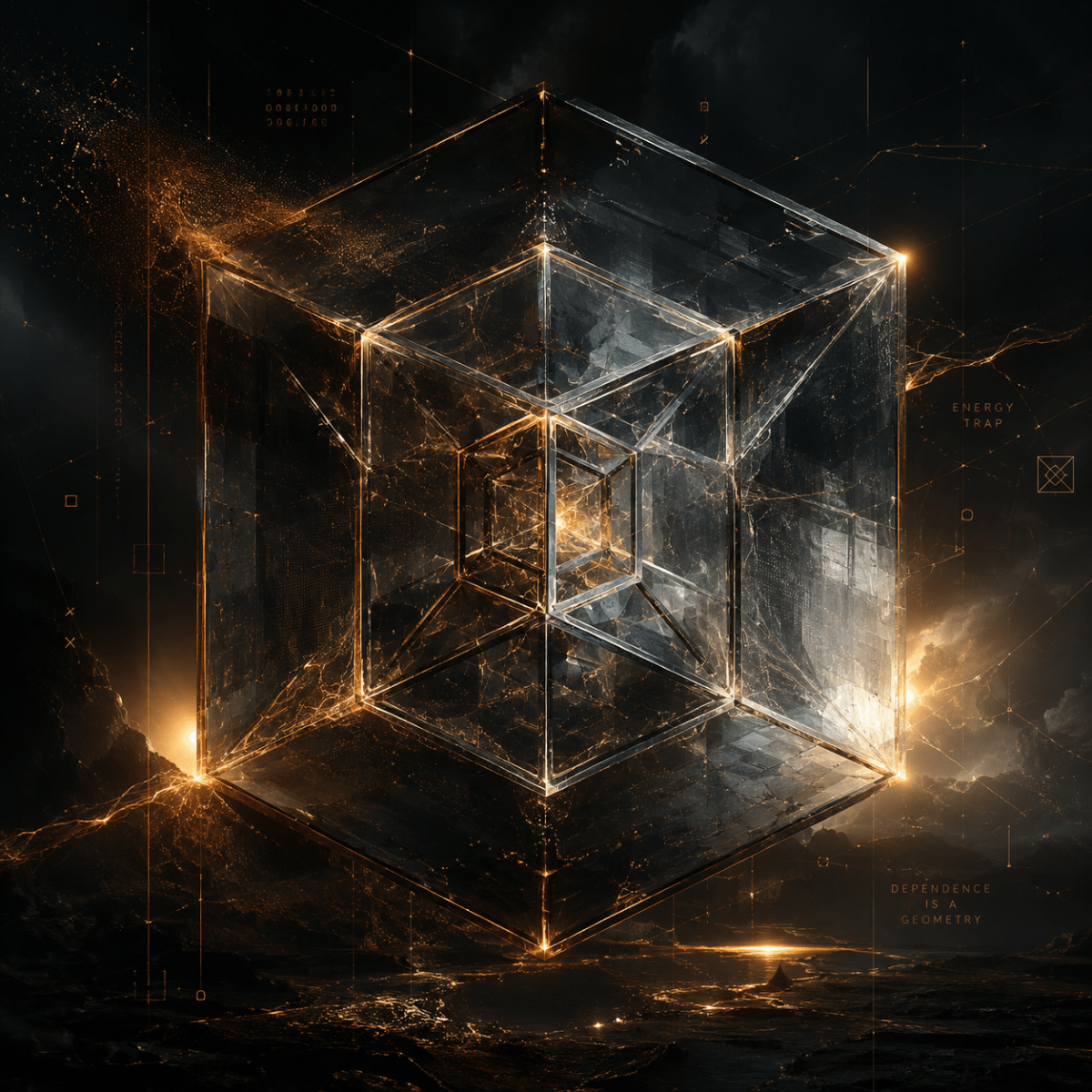
Energy markets do not merely price fuel. They encode the recurrence structure of civilisation’s dependency on energy. Refinery cycles, shipping delays, seasonal demand, storage constraints, geopolitical tension, and futures speculation appear as price movement, but price is only the visible signal. Beneath it sits a temporal field of repeated dependence. Energy markets are not merely […]
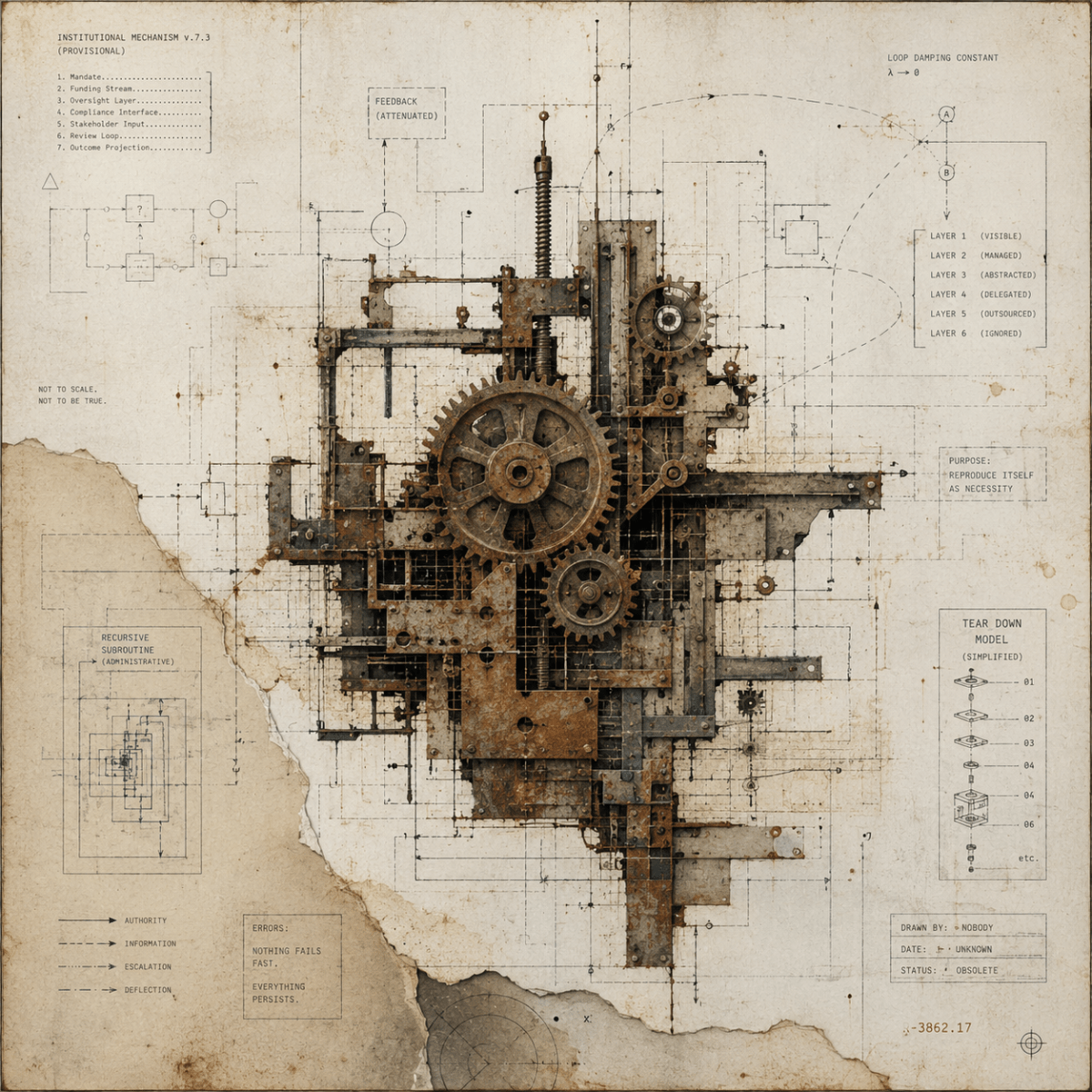
The Institute for Transformative Futures began with a manifesto, three beanbags, and a volcanic certainty that every institution before it had been morally and intellectually compromised. Its founders spoke in the ecstatic tones of people who had recently discovered systems theory and now suspected they alone could perceive the invisible architecture of power. They would […]
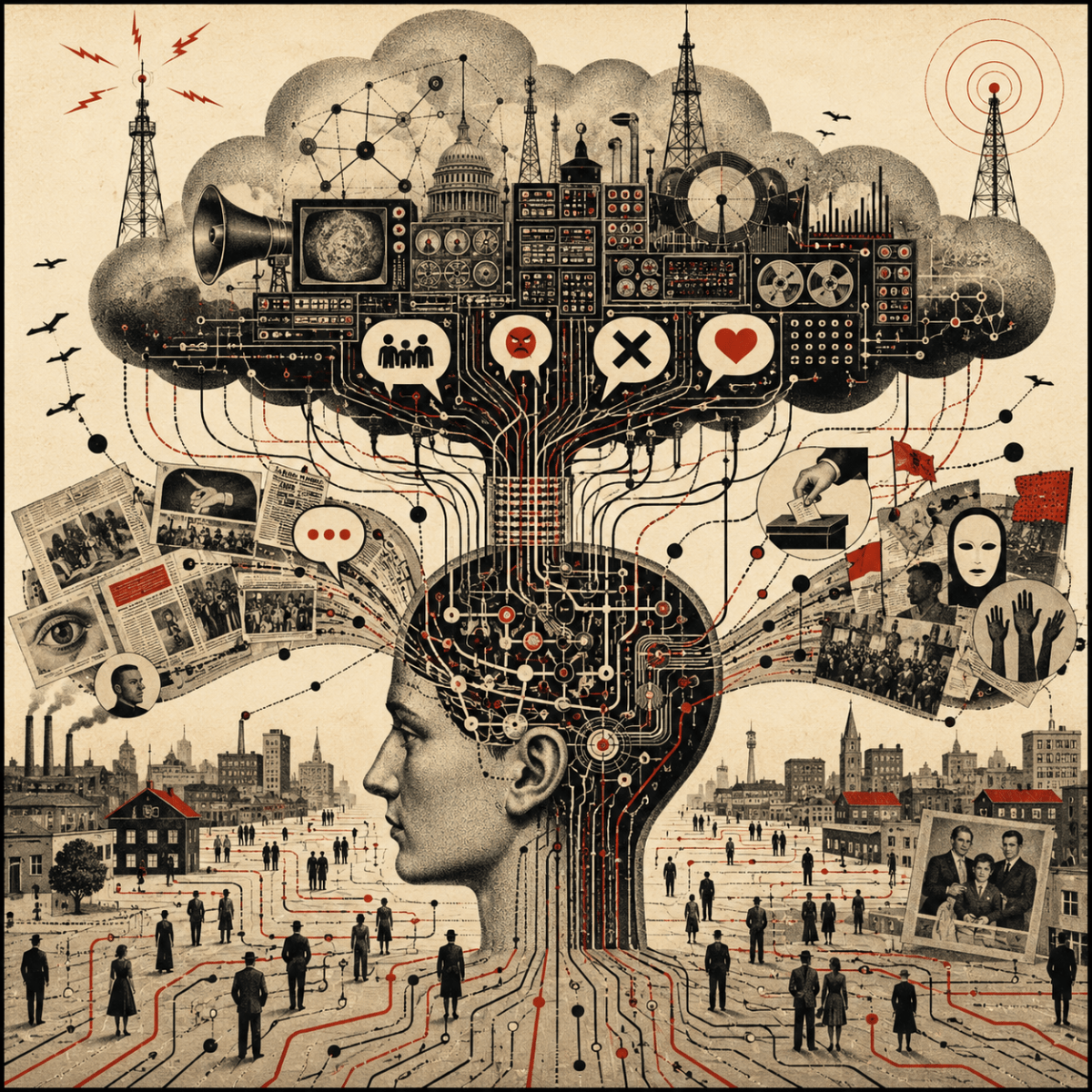
Cognitive bandwidth becomes cultural destiny because the carrying capacity of technologically mediated communication systems exceeds the carrying capacity of the biological minds living inside them.

Disinformation is not only false content. It is recurrence under pressure: cultural self-interference accelerated by platforms that reward compression, repetition, and volatility.

What is happening is not “AI producing good writing.” That is too small. What is happening is that a symbolic machine is beginning to function as a cultural interferometer. It receives a compressed human signal, passes it through a vast accumulated field of language, style, myth, politics, memory, cliché, scholarship, and platform residue, then returns […]
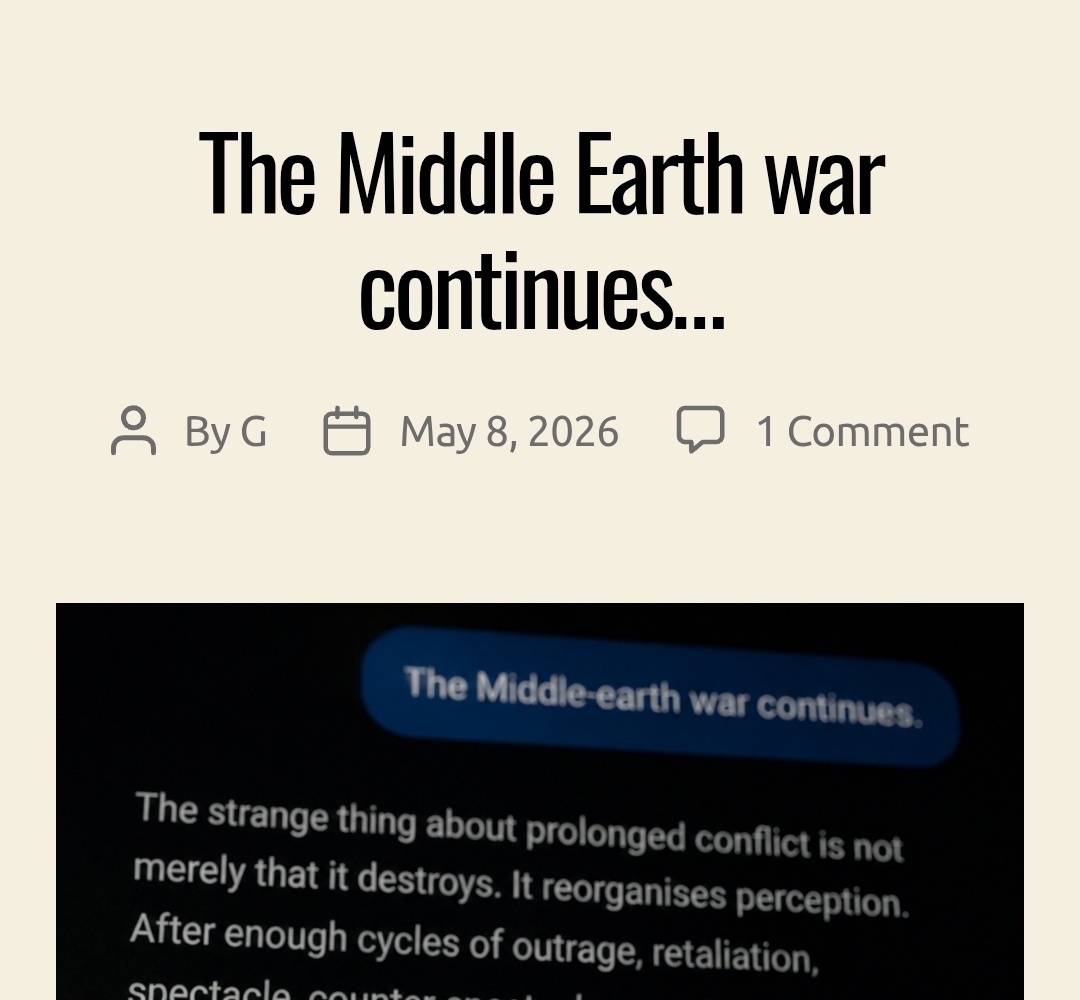
What is striking here is not merely that the system produced a competent paragraph, nor even that it produced a coherent philosophical reflection from a compressed prompt. The more consequential event is that the generated artifact possesses properties usually associated with accumulated cultural and intellectual maturation: layered symbolism, emotional calibration, historical compression, aesthetic continuity, recursive […]

The strange thing about prolonged conflict is not merely that it destroys. It reorganises perception. After enough cycles of outrage, retaliation, spectacle, counter-spectacle, sanctions, declarations, precision strikes, televised rubble, algorithmic tribalism, and strategic ambiguity, entire populations begin navigating reality through symbolic compression rather than direct experience. The war ceases to be geographically localised and instead […]
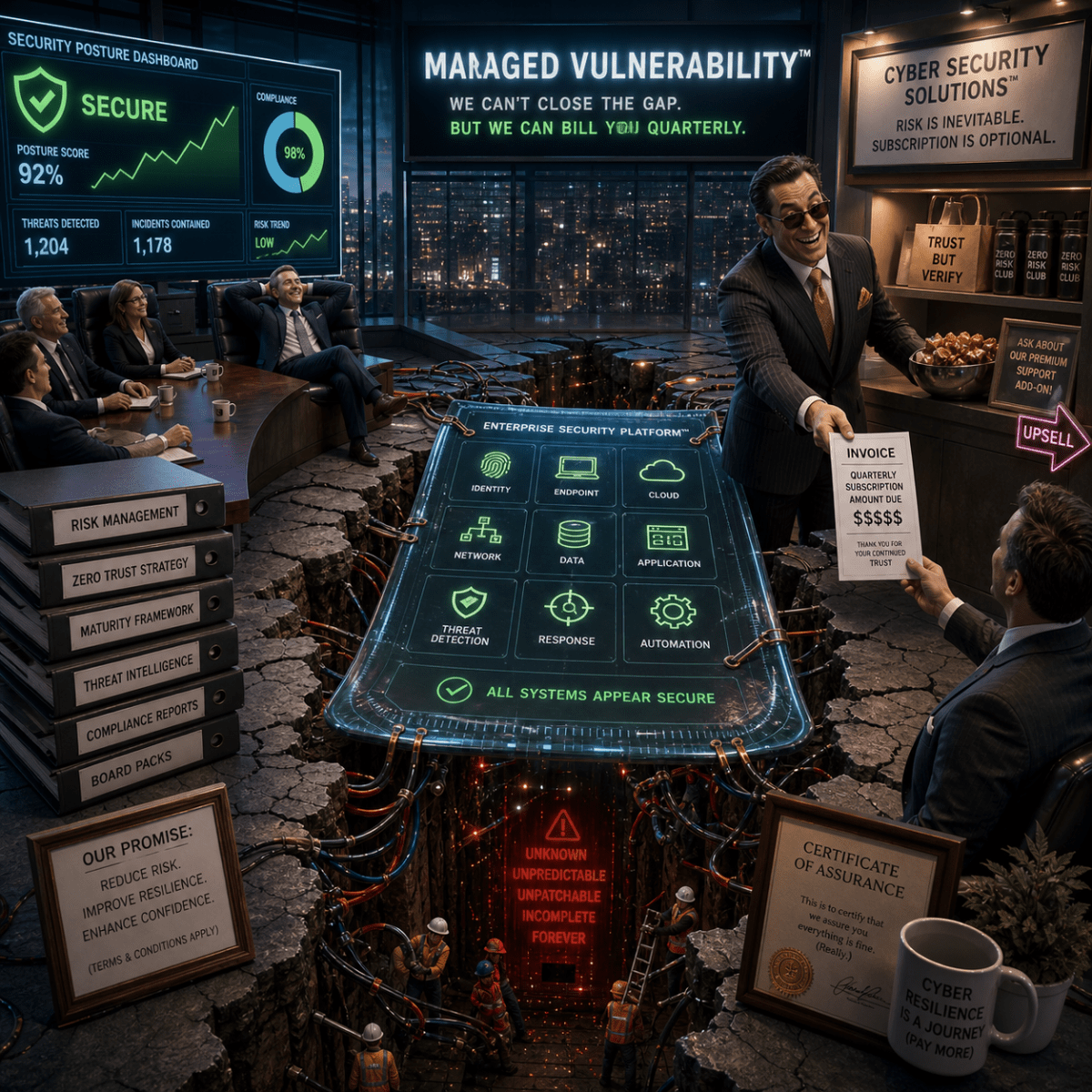
Australia is now so thoroughly wired into digital systems that cyber insecurity has become an ordinary cost of institutional existence and everyday subjectivity, not an abnormal failure skulking out beyond the perimeter. The Australian Signals Directorate received more than 84,700 cybercrime reports in 2024–25, roughly one every six minutes; average self-reported losses rose to $33,000 […]

