Categories
Philosophy

Milburn Pennybags and the persistence of billionaires

There is, at present, a strange cultural requirement to pretend that billionaires are evidence of societal success rather than evidence of systemic imbalance.

Categories
Philosophy

Cognitive Bandwidth and the Politics of Belief

Cognitive bandwidth becomes cultural destiny because the carrying capacity of technologically mediated communication systems exceeds the carrying capacity of the biological minds living inside them.

Categories
cybernetics

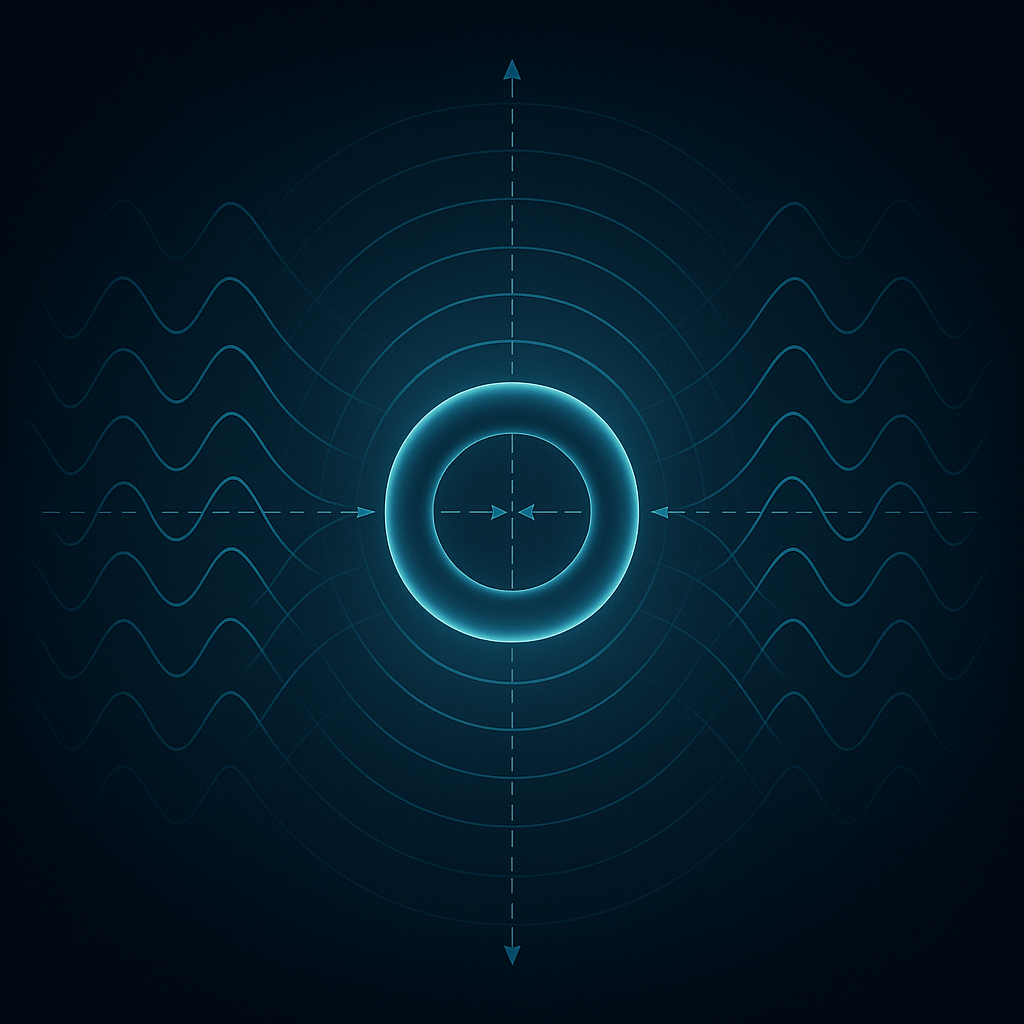
[00] Cultural Interferometry: Disinformation and the Orbit of Platform Populism

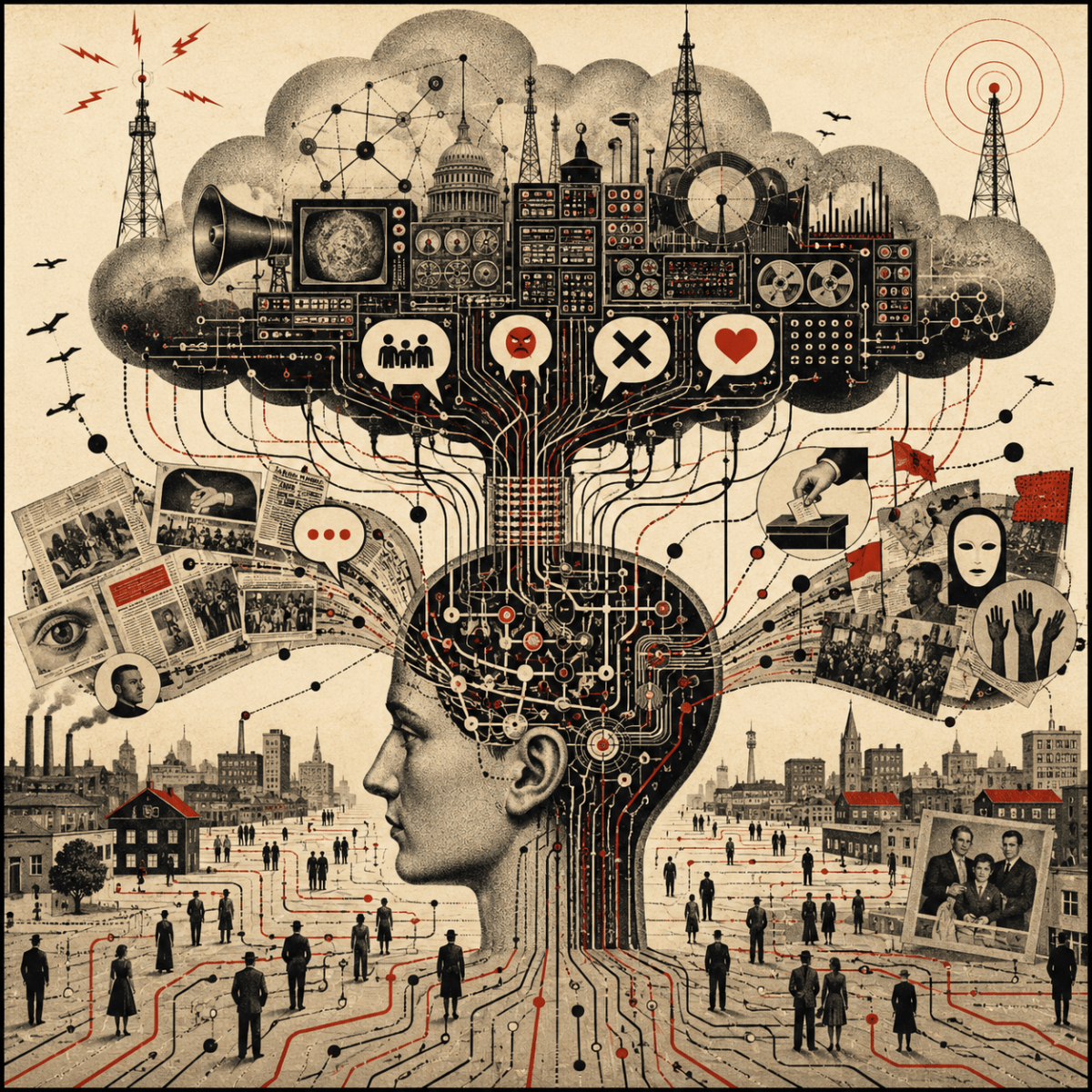
Disinformation is not only false content. It is recurrence under pressure: cultural self-interference accelerated by platforms that reward compression, repetition, and volatility.

Categories
cybernetics

Platform Populism: The Geometry of Volatility

Across much of the world, political communication has become increasingly volatile, distrustful, reactive, and emotionally saturated. This is usually interpreted as a moral or ideological failure within populations themselves, yet at least part of the phenomenon may instead arise from the underlying geometry of large-scale communication systems whose structures increasingly reward reproducibility, emotional intensity, and […]

Categories
communication

The Abstract Political Intoxication of Populist Symbolism

Populist symbolism travels by detaching feeling from place, consequence, and thought, then giving borrowed socio-psychological anxiety the dissimulating smoke and mirrors of a theatrical political and identity performance.

Categories
Philosophy

Bad Words With Weapons

Language does not contain the world; the world contains language, yet impoverished meaning becomes machinery, mythology, and moral fact precisely when language behaves as though its crude categories contain reality itself.

Categories
cybernetics Philosophy

Guesswork: No One Knows What They Are Doing

A simple truth: almost no one really knows what they are doing. Most people are copying the nearest stable behavioural or belief pattern, then calling the repetition judgment, expertise, culture, policy, taste, method, or common sense. A thing happens once and remains noise. It happens again and becomes relation. It keeps happening and becomes structure, […]

Categories
Philosophy

It was about that point that I realised…

Strategic insight is often ignored not because it lacks value, but because systems prefer analysis that confirms their existing assumptions.

Categories
Philosophy

Bad Moon Rising: The Statistical Field of Power

The statistical field is already acting before the subject appears as a moral interpreter. This is the part capitalism prefers not to see, because capitalism tells its favourite story backwards: the individual wants, chooses, competes, acquires, rises, fails, deserves. But the field has already moved first. Exposure precedes intention. Repetition precedes belief. Scarcity, status, threat, […]

Categories
cybernetics

Populism as Data Infrastructure

Populist tribalism is not merely a political mood. It is a communication environment unusually rich in signal, repetition, affect, antagonism, identity, fear, loyalty, humiliation, accusation, and recurrence. This matters because large digital platforms are not neutral carriers of public feeling. Their commercial systems depend on sustained engagement, behavioural prediction, data extraction, and increasingly fine-grained user […]

Categories
cybernetics

The Open System: Technology, Security, and the Management of Permanent Exposure

Technology is extraordinary. It extends memory, speed, coordination, reach, and control. But it also carries a persistent deception. Not because it is unreal, but because it repeatedly presents open systems as though they could be made to feel closed. Cybersecurity makes this especially clear. There is no final safety, no completed perimeter, no settled technical […]

Categories
Philosophy

The Simplicity Trap: How Populist Narratives Turn Complexity into Crisis

Simple stories percolate because they compress reality into something the nervous system can carry. They move quickly, bind groups, assign blame, and generate the pleasant illusion that the world has become legible at last. Complexity does the opposite. It slows perception, forces qualification, and asks the mind to hold incompatible truths in suspension without collapsing […]