Just my perspective.
Your mileage may vary.
Just my perspective.
Your mileage may vary.
There is no final closure. No permanent certainty. No government that fixes everything forever. There are only systems that adapt well and systems that adapt badly.
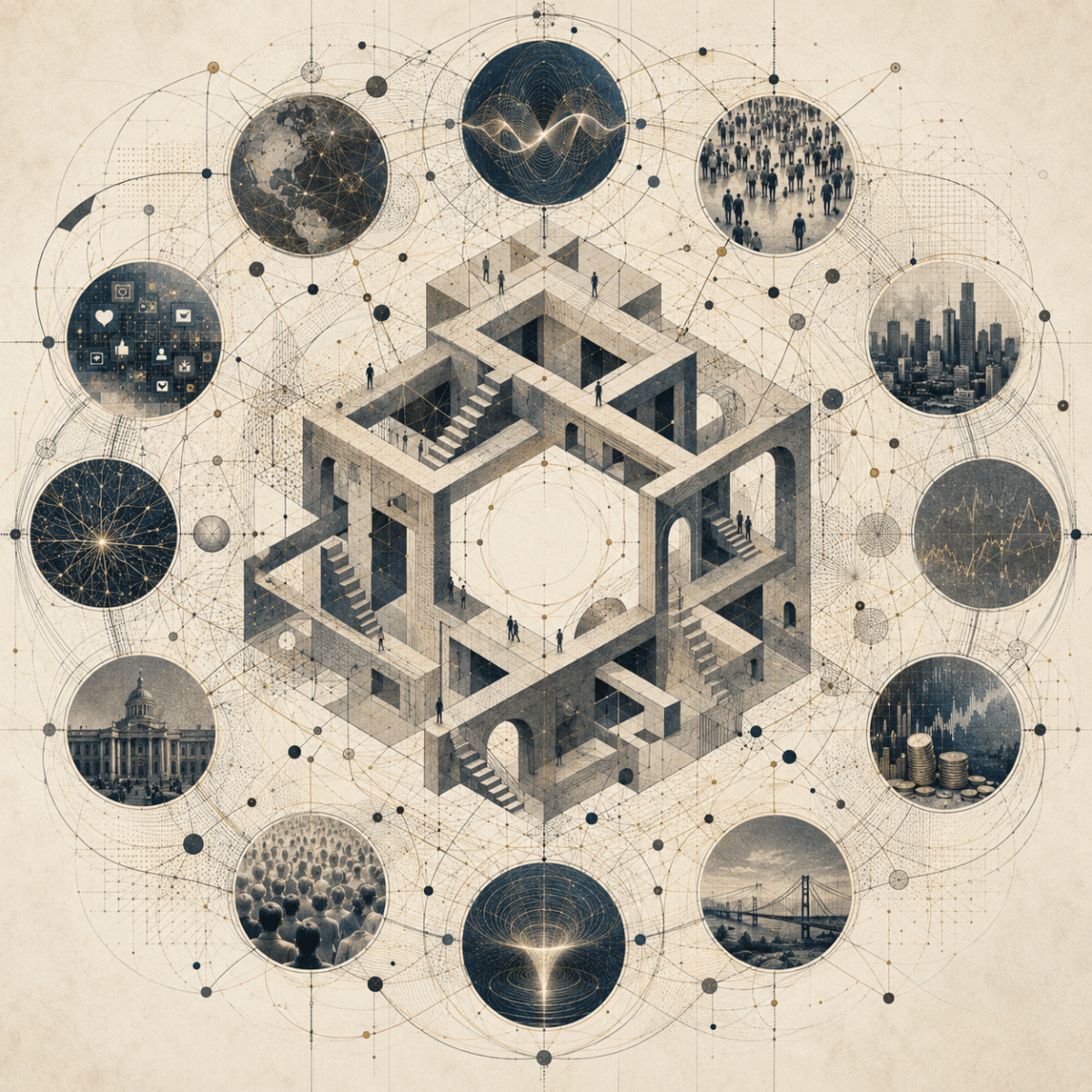
The task is not to create perfect agreement, but to maintain enough shared coherence that a society can continue solving problems without tearing itself apart.

Populists tell you they’re going to smash the system for your benefit. Funny how it still always seems to end with the rich getting richer, the government getting worse, and everyone else paying for the repairs.

Australia’s political speed-dating with One Nation suggests that what has happened in the USA is not an exception, it is a franchised political method.

Populism turns complex national problems into kindergarten theatre, then sells the applause as policy.

One Nation raised millions for political theatre while a Queensland hospice had to beg for palliative care funding. This is clearly ridiculous but is also hardly an isolated incident of misplaced priorities and dodgy reasoning in sociopolitical systems.

A society overwhelmed by complexity eventually stops seeking explanations and starts seeking certainty; that is when political movements such as One Nation cease to be anomalies and become warnings.

Peace is not the absence of conflict but the difficult art of sustaining difference without collapse.

Technology at scale preferentially industrialises the parts of human nature that are easiest to measure, repeat, monetise, automate, and weaponise. Those parts are rarely our best ones.

Having watched the world’s most powerful nation fall backwards into the plumbing of populist discontent, Australia now seems oddly determined to follow.

Malakacene: the long historical moment in which technologically mediated societies stopped selecting primarily for competence, wisdom, restraint, and institutional responsibility, and instead became increasingly vulnerable to the rapid propagation of spectacle, grievance, aggression, narcissism, and performative certainty masquerading as leadership.

