The appeal of populism is that it makes complexity feel unnecessary. The cost is usually discovered much later.
Categories
populism down under

The appeal of populism is that it makes complexity feel unnecessary. The cost is usually discovered much later.
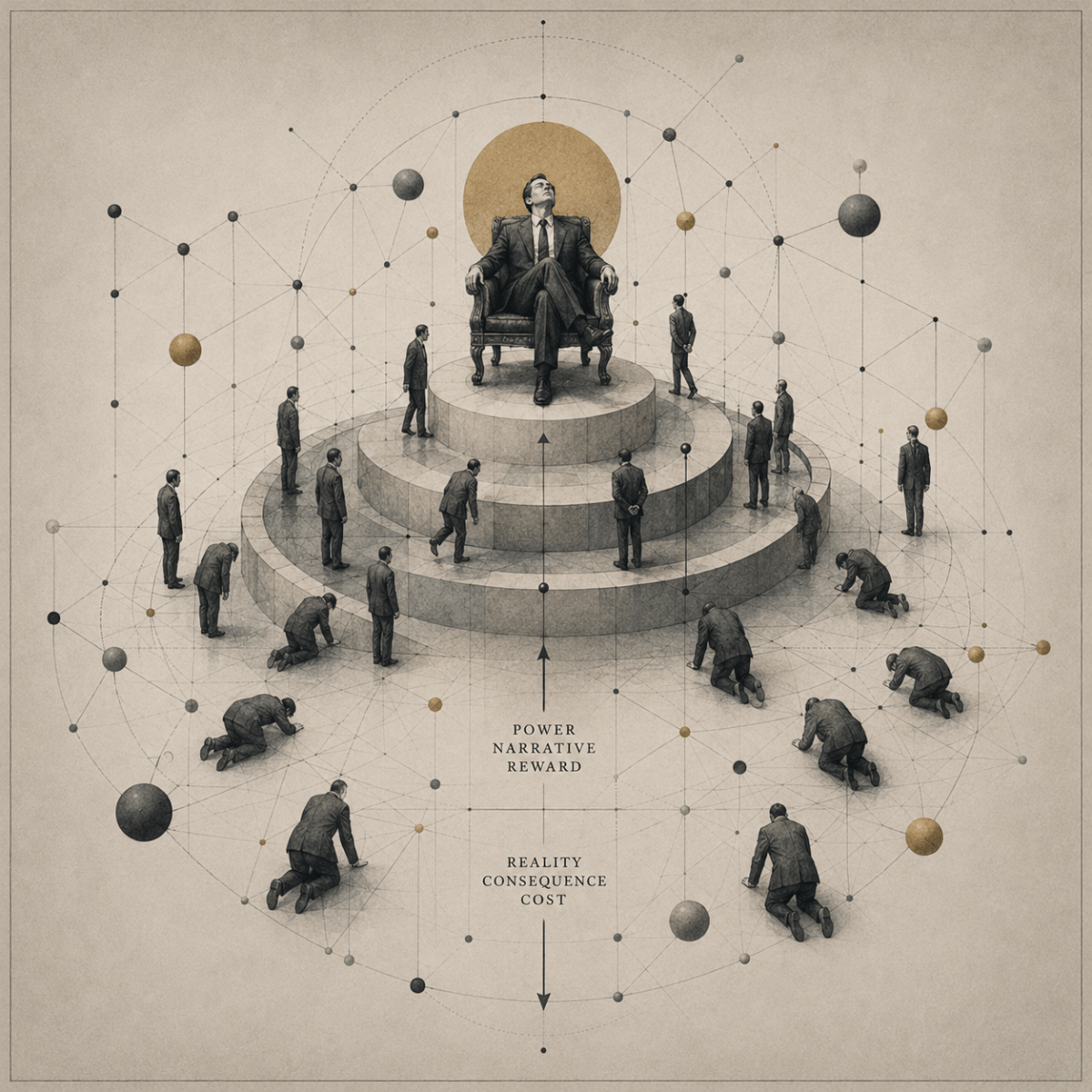
When organisations confuse confidence with competence, wealth with wisdom, and power with understanding, incompetence is no longer simply a failure of leadership but becomes one of its preferred production methods.

Administrative systems fail when they become better at preserving their own procedures than understanding or remediating the human realities those procedures were intended to address.

Malakacene: the long historical moment in which technologically mediated societies stopped selecting primarily for competence, wisdom, restraint, and institutional responsibility, and instead became increasingly vulnerable to the rapid propagation of spectacle, grievance, aggression, narcissism, and performative certainty masquerading as leadership.

Technologically mediated democracies are invoking remedial, simplified political coherence faster than they are generating the intelligence and/or aptitude required to govern the accelerating complexity of contemporary socioeconomic experience.

Ebola reminds us that civilisation may not fail through drama, but through delay, distraction, and a pathogen moving faster than our institutional cadence and cultural expectations.
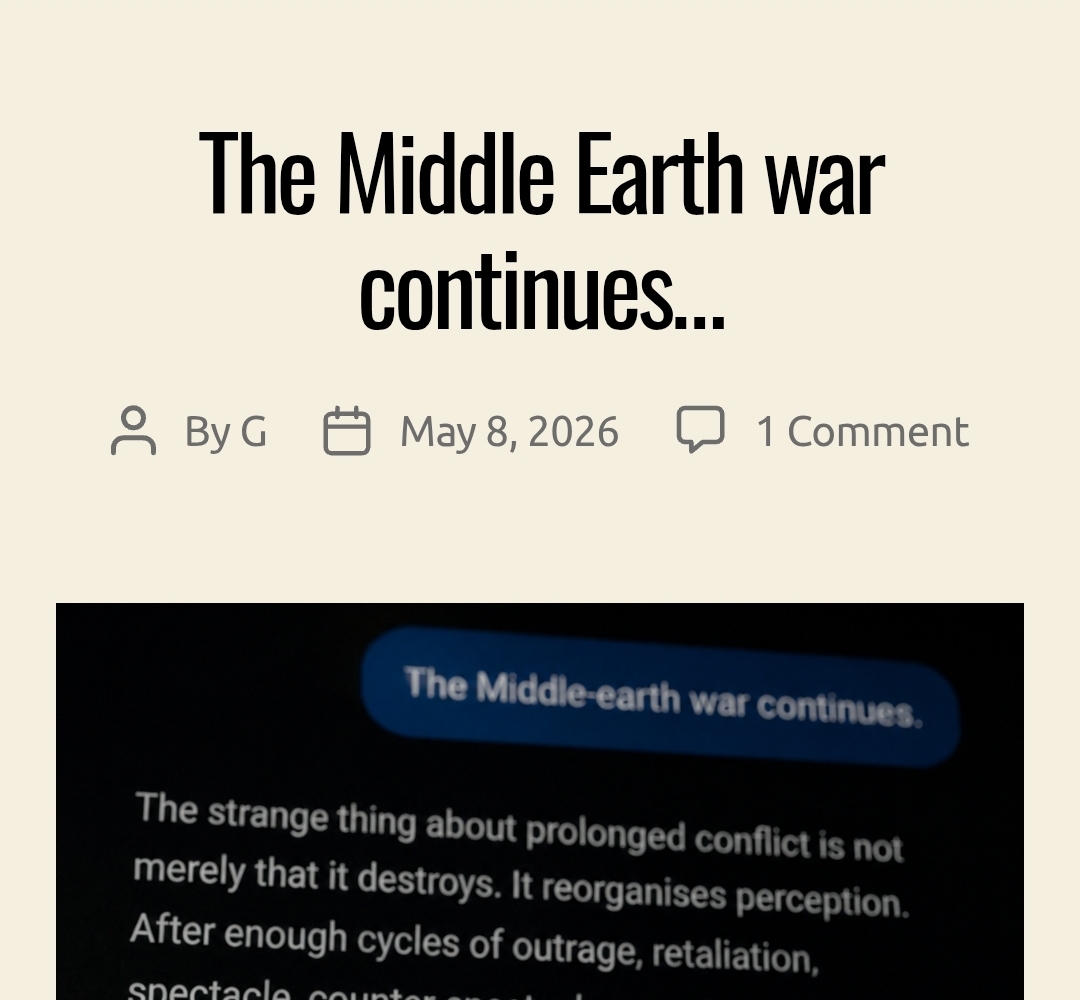
What is striking here is not merely that the system produced a competent paragraph, nor even that it produced a coherent philosophical reflection from a compressed prompt. The more consequential event is that the generated artifact possesses properties usually associated with accumulated cultural and intellectual maturation: layered symbolism, emotional calibration, historical compression, aesthetic continuity, recursive […]

Climate breakdown, war, energy insecurity, public health strain, technocratic overreach, automated exclusion, administrative drift, and the industrial circulation of disinformation are usually treated as separate crises, each assigned its own expert language, governance model, technical platform, and emergency response. But the deeper pattern is structural. Large systems do not merely solve problems. They determine which […]
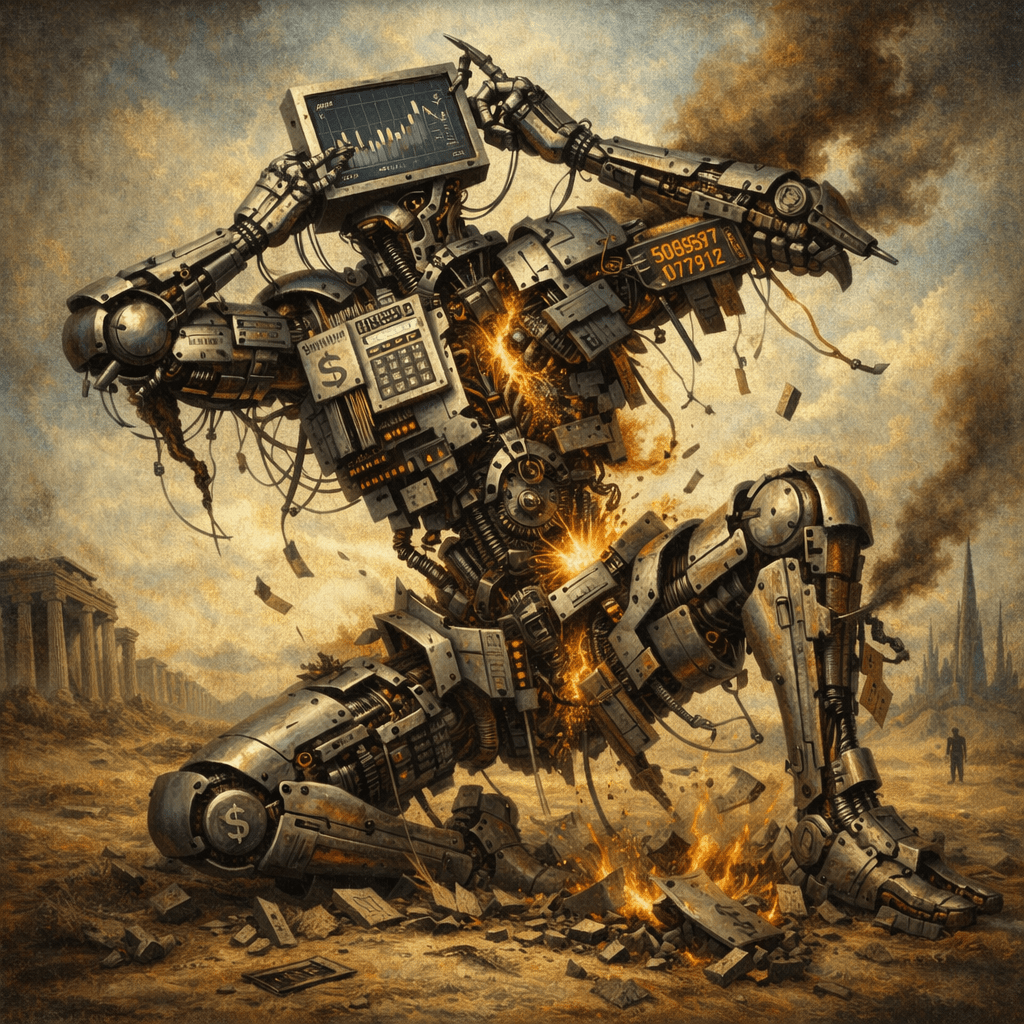
A supportive criticism begins by admitting the obvious: mental health services operate under real constraints of staffing, funding, legal risk, triage pressure, and demand that far exceeds capacity. Not every delay, handoff, or bureaucratic threshold is the result of indifference, and no serious account should pretend otherwise. But that cannot be allowed to obscure the […]

Most people, across most of history, have probably just tried to survive and get on with living in an already difficult world, while watching domineering fools drag whole societies into imperial escapades, compensatory aggression, and other remedial engagements with reality. For ordinary people, the view has often been one of exhausted disbelief: not only horror […]

Peace isn’t some prize at the end of history. It’s not a flag, not a speech, not a deal signed under bright lights with everyone pretending they meant it. It’s a job. A quiet, ongoing, unglamorous job. You run it or it fails. That’s it. It lives in the tension people can tolerate without turning […]

Many of the critically defining problems of our time resist piecemeal treatment. Understanding consciousness, curing cancer, alleviating poverty, managing environmental sustainability, mitigating climate change without triggering new failures, securing digital infrastructure, managing geopolitical instability, slowing social decay, and containing the adverse effects of runaway technological growth are not separate challenges but tightly coupled dynamical processes. […]
Have a WordPress.com account? Log in now.

