Categories
Philosophy

reality

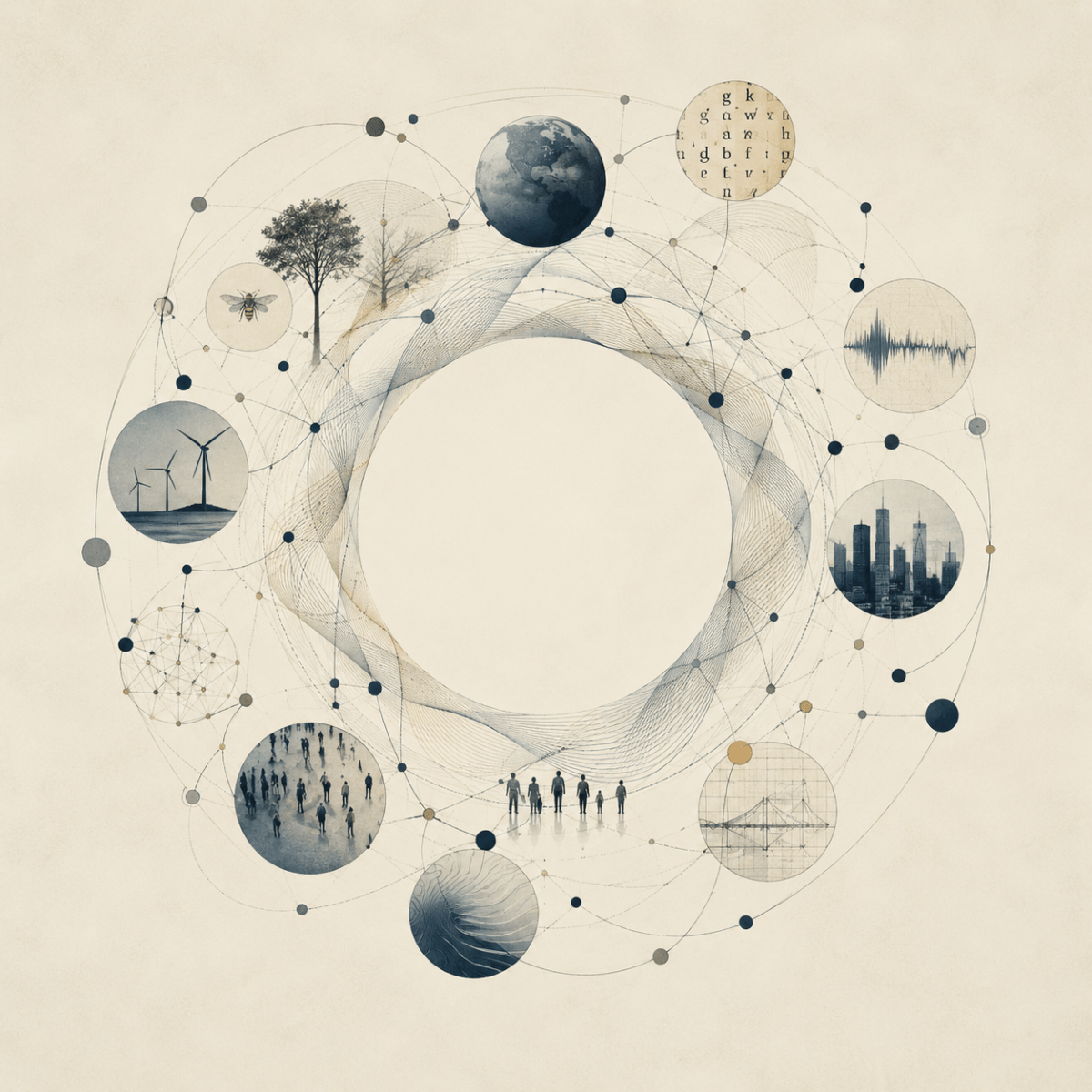
Reality is not made of things. Things are what appear when deeper patterns of relation become temporarily stable.

Categories
cybernetics

trust

Authenticity is not destroyed by media so much as converted into an interface problem: a carefully arranged background, a handful of familiar signals, and the strange little theatre by which the network teaches the self how to appear real.

Categories
cybernetics

continuity precedes truth

Disinformation is not the opposite of information, but one of the ways communication organises uncertainty into meaning. Its deeper structure belongs less to politics than to the philosophical problem of how truth, coherence, and identity emerge at all.

Categories
cybernetics

The Architecture of Absence

A strong current in modern thought still treats things as if they exist first, complete in themselves, and only later enter into relation with other things. The individual. The institution. The nation-state. The market. The technological platform. These are often imagined as discrete objects possessing internal coherence, as though persistence were generated primarily from within […]

Categories
cybernetics

Field Logic: A Primer

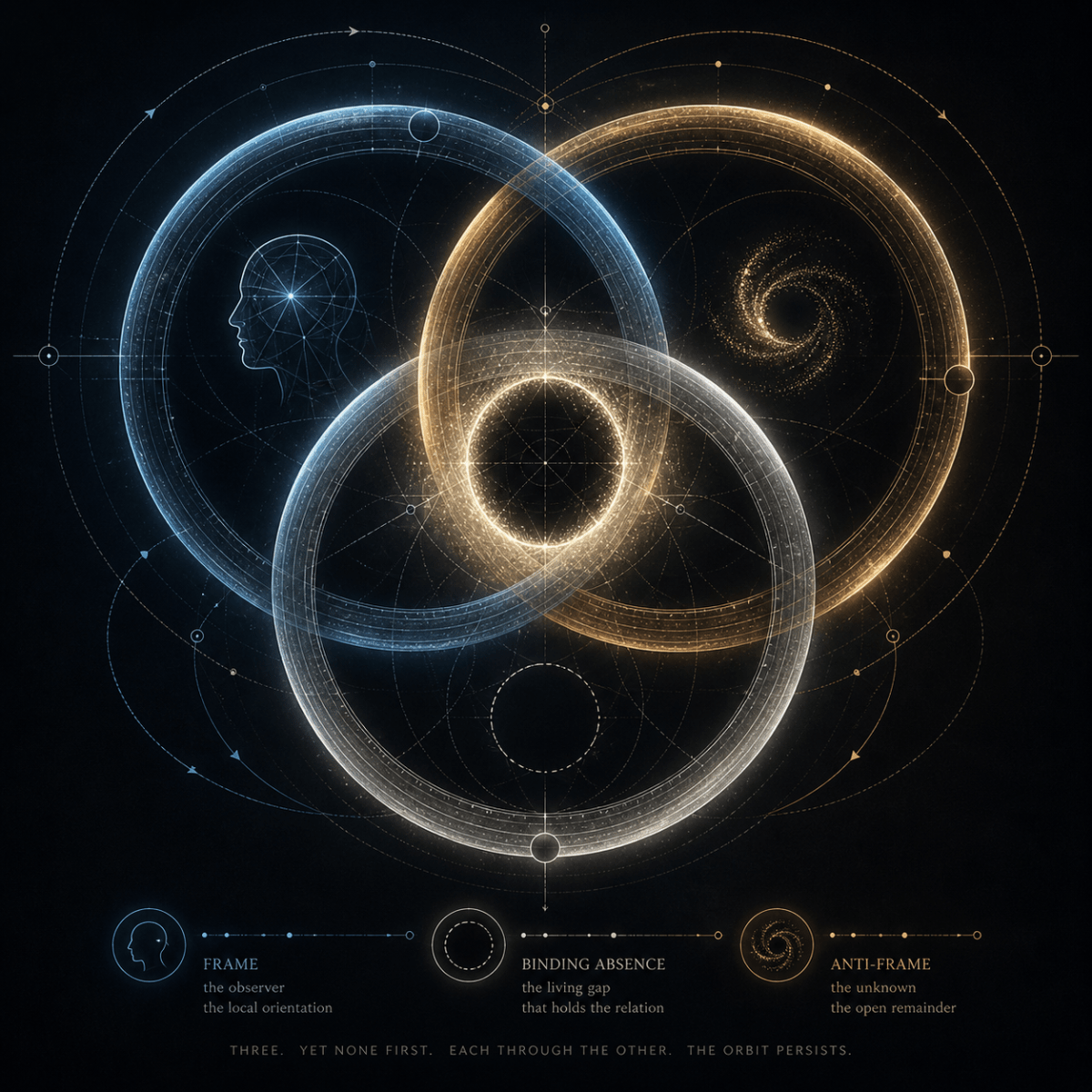
Field logic does not begin with separate things that subsequently form relations. It begins with unresolved relations, differences, delays, dependencies, and absences from which temporary identities emerge and persist, identities we mistake for things.

Categories
Philosophy

Speaking of Active Matter: The Thing-ness of Things

The only (or at least most) comprehensive way to account for emergent behaviour is to grant some ontic reality to the abstract relational patterns, symmetries, and phase dynamics that bind and sustain it. A collection of things is, in other words, also a thing. That is not especially surprising at one intuitive level, but it […]

Categories
Complexity cybernetics environment

Beyond Eden: Climate, Complexity, Consequence

Anything we call a system is defined through relation, not contained within itself. Ice sheets, forests, oceans, atmospheric flows, monsoons. These are not isolated components but coupled processes that stabilise one another through ongoing exchange. The jet stream carries heat that shapes ice. Ice reflects light that shapes temperature. Forests regulate moisture that feeds rainfall. […]

Categories
Philosophy

The Logic Beneath Logic

A system becomes brittle when it treats its own representations as a complete account of the conditions sustaining it. Its categories continue to organise decisions while the relations through which those categories remain useful are changing. The difficulty lies in the loss of responsiveness to what the account leaves unrepresented. Formal logic describes how conclusions […]

Categories
Philosophy

Borobudur: The Architecture of Empty Fullness

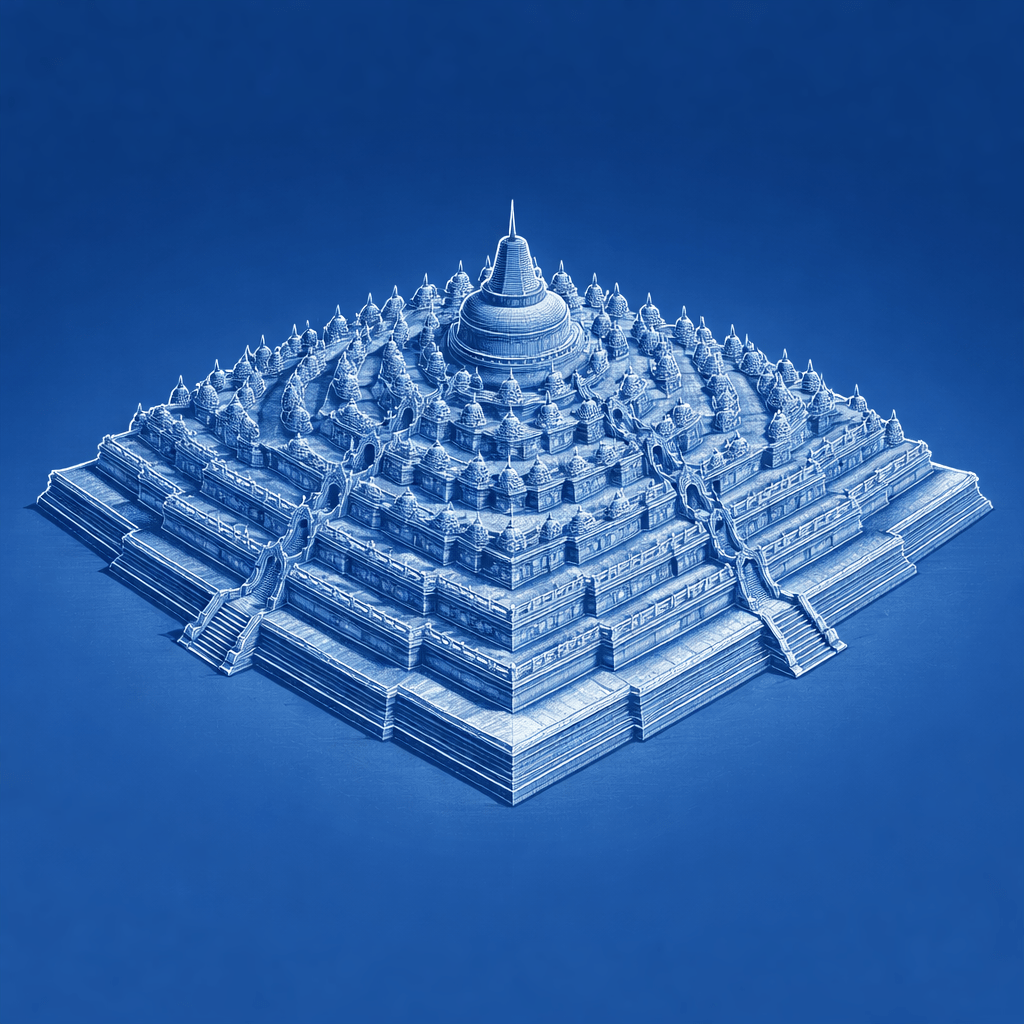
Borobudur is a temple built around an unusual absence, one that quietly reshapes how meaning, worship, psychological insight, and spiritual experience function. Borobudur, in Central Java, Indonesia, is a ninth-century Mahāyāna Buddhist monument constructed as a terraced hill rather than a hollow sanctuary. Its mass is largely earth and stone; there is no interior chamber […]

Categories
cybernetics logic Philosophy systems

The Problem of Many Spaces

Living systems persist through a continuous relational field whose articulation into behavioural, transcriptional, morphological, physiological and symbolic spaces constitutes its harmonic structure. Each domain expresses constraints, possibilities and patterns of recurrence through which the others remain consequential. The relations through which these domains become distinguishable also sustain their coherence. These spaces are resonant modes of […]

Categories
cybernetics

The Geometry of the Unconscious

The unconscious is not a hidden chamber beneath awareness, nor a secondary mind running in parallel. It is the emergent interior of dynamical, adaptive, relational complexity itself. It is what complex systems feel like from the inside. Any system capable of learning, anticipation, coordination, and self-regulation must generate internal structure that cannot be fully present […]

Categories
Philosophy

Teresa Brennan: Philosophy of Affect

Teresa Brennan was an Australian feminist philosopher whose work crossed psychoanalysis, philosophy, and social theory, frequently placing her at odds with academic orthodoxy. She challenged dominant Lacanian interpretations by insisting that affect is not a linguistic effect or private feeling but a materially transmissible force that moves between bodies and across institutions. This stance drew […]