Categories
cybernetics

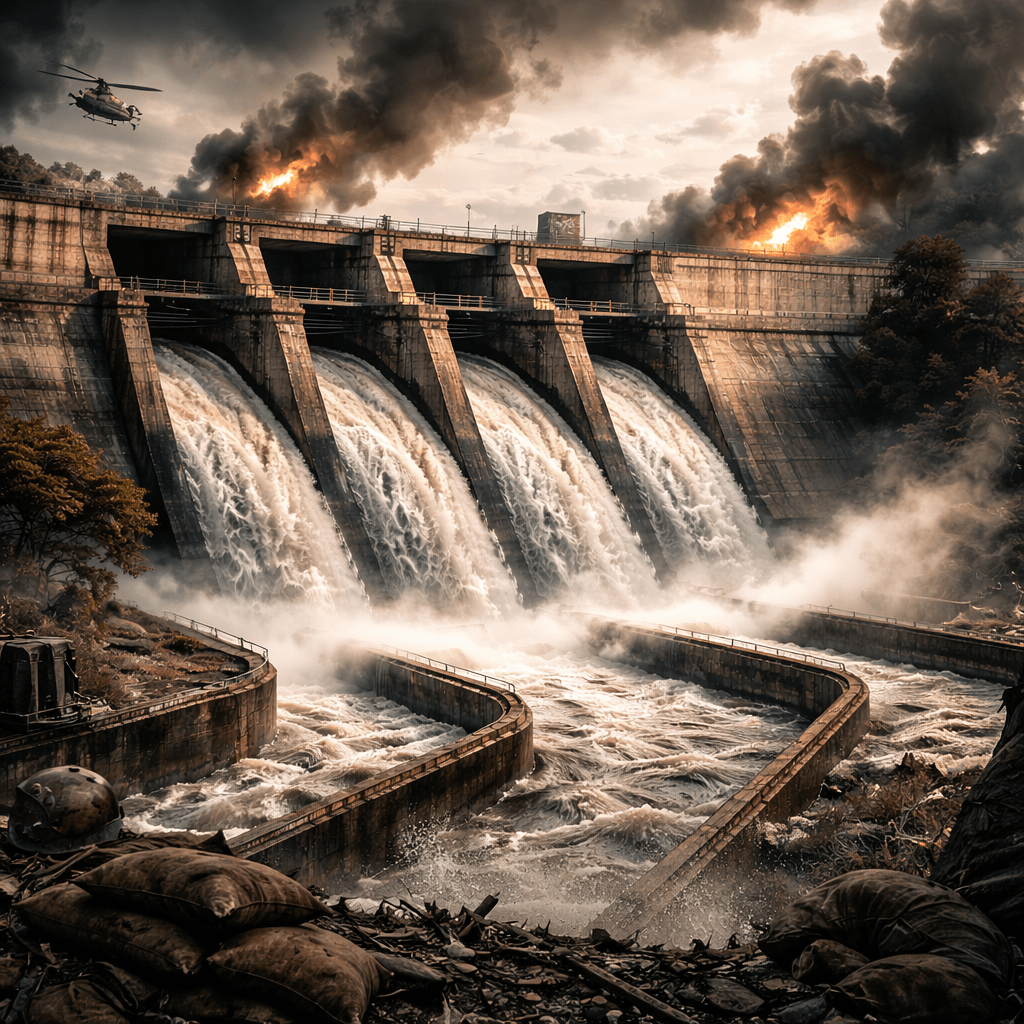
Vortex of War: The Structure of Escalation

The war now unfolding across the Middle East is currently being framed as a confrontation between Israel, the United States and Iran, yet that description captures only the most visible participants and misses the structure of what is actually happening, because the conflict already stretches across a regional field of interaction in which proxy forces, […]


Categories
cybernetics

Signal as Delay: Information Propagation Dynamics

The present turbulence in politics, economics, and public life often looks like a collision of personalities or ideologies, yet a quieter transformation has been unfolding beneath those visible disputes. Human communication has expanded far beyond the scale of the individuals who participate in it, stretching through satellites, fibre networks, cloud infrastructure, and algorithmic systems until […]

Categories
cybernetics

Dissent: Another War

Resistance to war is easy to respect and hard to execute, because the same communicative channels that allow objection also convert that objection into a commercially and strategically manageable signal. A manageable signal is one whose form, timing, and intensity are already accounted for by the systems that receive it. It can be measured, narrated, […]

Categories
communication

Arguing a Point: the Cost of Partisan Differential

Contemporary political partisanship is commonly perceived as noise, conflict, or moral failure, rather than as a structural dynamic. Within that same environment, some actors benefit from it because the system rewards the conversion of difference into attention, status, or power, creating incentives for intensification. Structurally, partisanship functions less as a disagreement to be resolved than […]

Categories
cybernetics

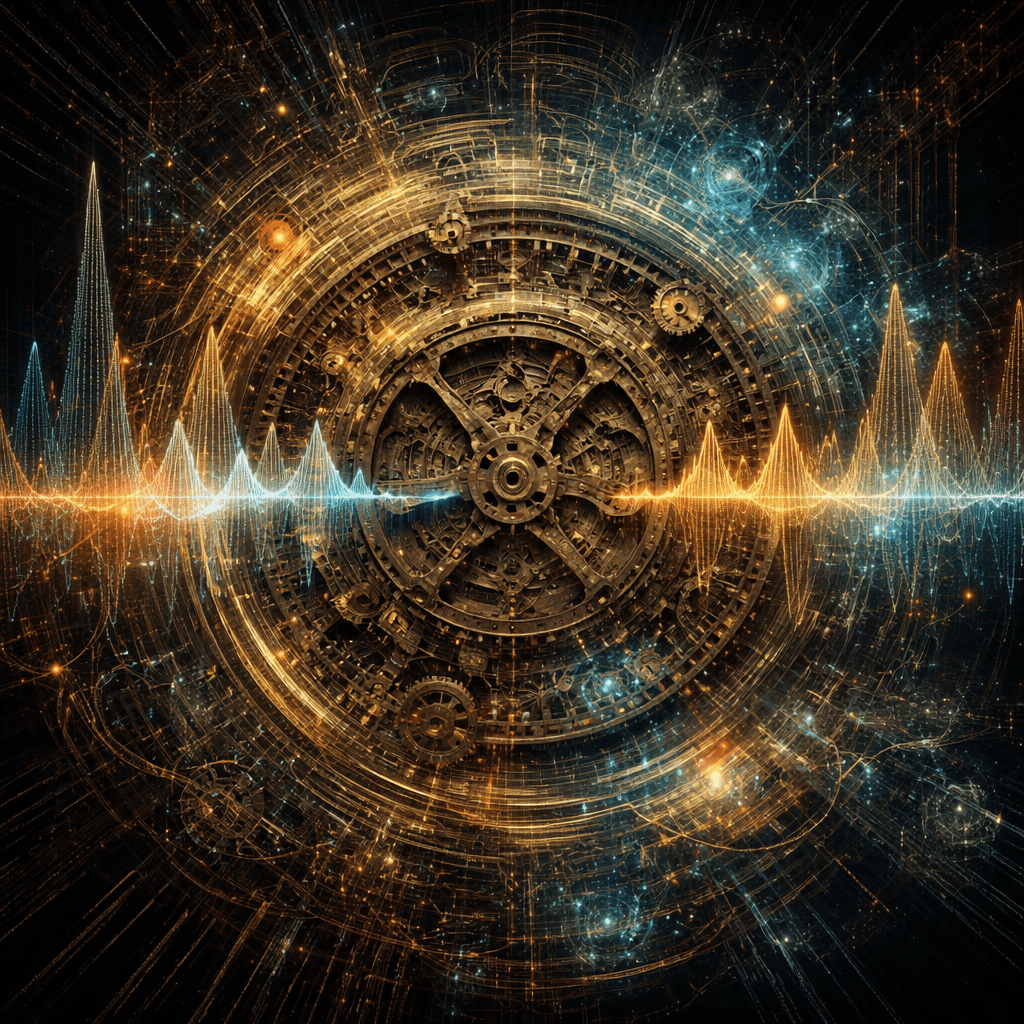
Wiener–Khinchin theorem

The Wiener–Khinchin theorem describes a quiet inevitability: when a system repeats itself, even imperfectly, that repetition condenses into structure. Time leaves a trace. Signals that return, echo, or correlate with their own past do not merely accumulate; they reorganise into a spectrum, a distribution of emphasis and weight. What looks like flux from within time […]

Categories
Philosophy

Loaded Dice

The simple and uncomfortable truth of urban life is that it functions as a kind of brightly lit direct-to-consumer clearance warehouse with lifestyle amenities. Marginalisation and exclusion are not side effects; they are throughput. Value is not attached to who you are, how you feel, or what you believe except insofar as these can be […]

Categories
Philosophy

The Logic Beneath Logic

Systems tend to fail not because they reach the wrong conclusions, but because they quietly mistake their own representations for reality and lose sensitivity to what those representations cannot contain. Classical logic describes relations between stable propositions, and it does so well. What it does not describe are the conditions that allow those propositions to […]

Categories
politics

Populism: Flirting with Disaster

Populism gains traction by pointing at real pressures: housing stress, cost-of-living anxiety, cultural dislocation, institutional distance, a sense that no one is steering. These are not imagined problems. They are the very real conditions that make people receptive to blunt answers and strong voices. The tragedy is that the tools populism offers to address these […]

Categories
Philosophy

Big Problems Don’t Fit in Small Boxes

Many of the critically defining problems of our time resist piecemeal treatment. Understanding consciousness, curing cancer, alleviating poverty, managing environmental sustainability, mitigating climate change without triggering new failures, securing digital infrastructure, managing geopolitical instability, slowing social decay, and containing the adverse effects of runaway technological growth are not separate challenges but tightly coupled dynamical processes. […]

Categories
Philosophy

Atlas, Debugged

I no longer believe the world can be healed by better arguments, smarter policies, cleaner data, or more sophisticated machines. These things mostly just turn the volume up on whatever is already broken. The deeper condition is non-closure: the simple fact that complex systems do not stabilise by resolving tension, but by holding it in […]

Categories
Philosophy

self

The self never settles because the world never settles. Your body changes. Neural chemistry fluctuates. Memory edits itself. Relationships move. Context rearranges. Words drift. Culture turns. New facts arrive, old certainties decay, and the feedback never stops. So the self is not rewritten because it is faulty, but because it is embedded in conditions that […]

Categories
politics

Australian Democracy: One Country, Many Ways

Australia works because it stays balanced. Its democracy is not built on simple agreement, but on the disciplined interaction between different ways of seeing the world. Labor and Liberal are not just rival teams. Together, they form the smallest political structure capable of holding a complex society together. Two sides generate debate, correction, and restraint. […]