How veterans’ services and the NDIS reveal the displacement of human need by billing, commercial expansion and institutional self-preservation.

How veterans’ services and the NDIS reveal the displacement of human need by billing, commercial expansion and institutional self-preservation.

The scale of the consequences has changed while the competitive selection tests for authority remain embarrassingly small.

We do not simply hear songs, speech and culture. Their repetition teaches us how to hear what comes next, while every new encounter quietly changes the pattern that taught us.

Communication systems can make an interpretation familiar before it has been examined, significant before it has been understood, and consequential before anyone establishes whether it is true.

A civilisation increasingly governed by visibility mistakes popularity for substance.

A spider’s book lungs pack an immense surface for exchange into a tiny space. Across lungs, brains, cells and information, the same principle recurs: internal structure multiplies what a finite system can do.

Why Deception Is Irreducible in Communication

Language, like all communication systems, holds together not despite displacement, delay and uncertainty, but because of them.

Crime and punishment are coupled systems that reproduce the epistemic distinction, differential diffusion and binding distance through which social order defines itself.

A rigged game constrains probabilities; it does not determine every outcome.

We have constructed a civilisation in which recognising existential risk has become another reason to continue producing it.
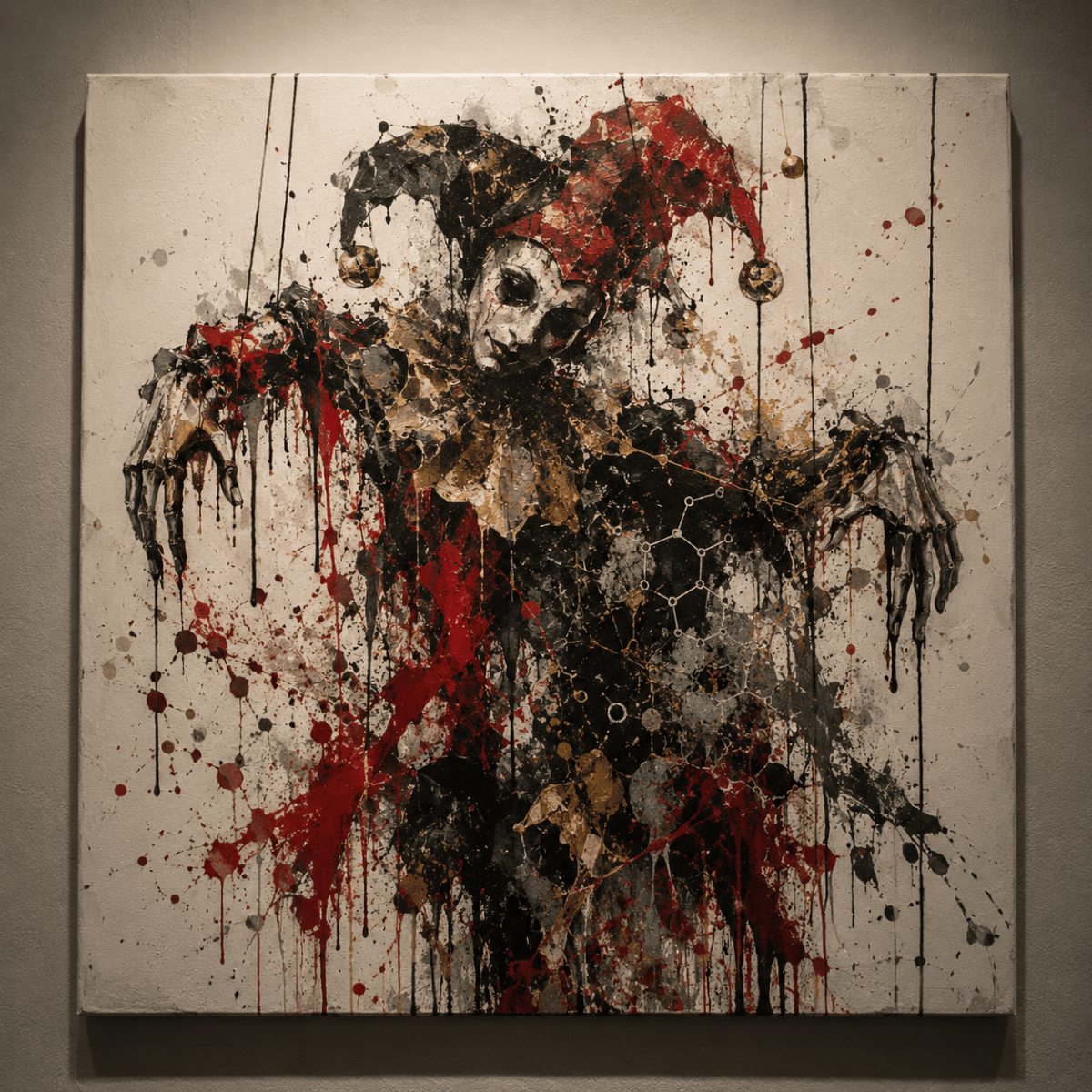
This is the triumphal stagnancy of technological overreach: extraordinary technical acceleration coupled to an increasingly repetitive behavioural repertoire.
Have a WordPress.com account? Log in now.

