The most important pattern in modern society is the one almost nobody is looking for.
Categories
the same problem

The most important pattern in modern society is the one almost nobody is looking for.

Modern political systems often reward symbolic fluency over systems literacy. The result is a governing class skilled at hierarchy, performance, and institutional ritual, but poorly equipped to understand the complex, recursive problems it claims to manage.

There is no final closure. No permanent certainty. No government that fixes everything forever. There are only systems that adapt well and systems that adapt badly.
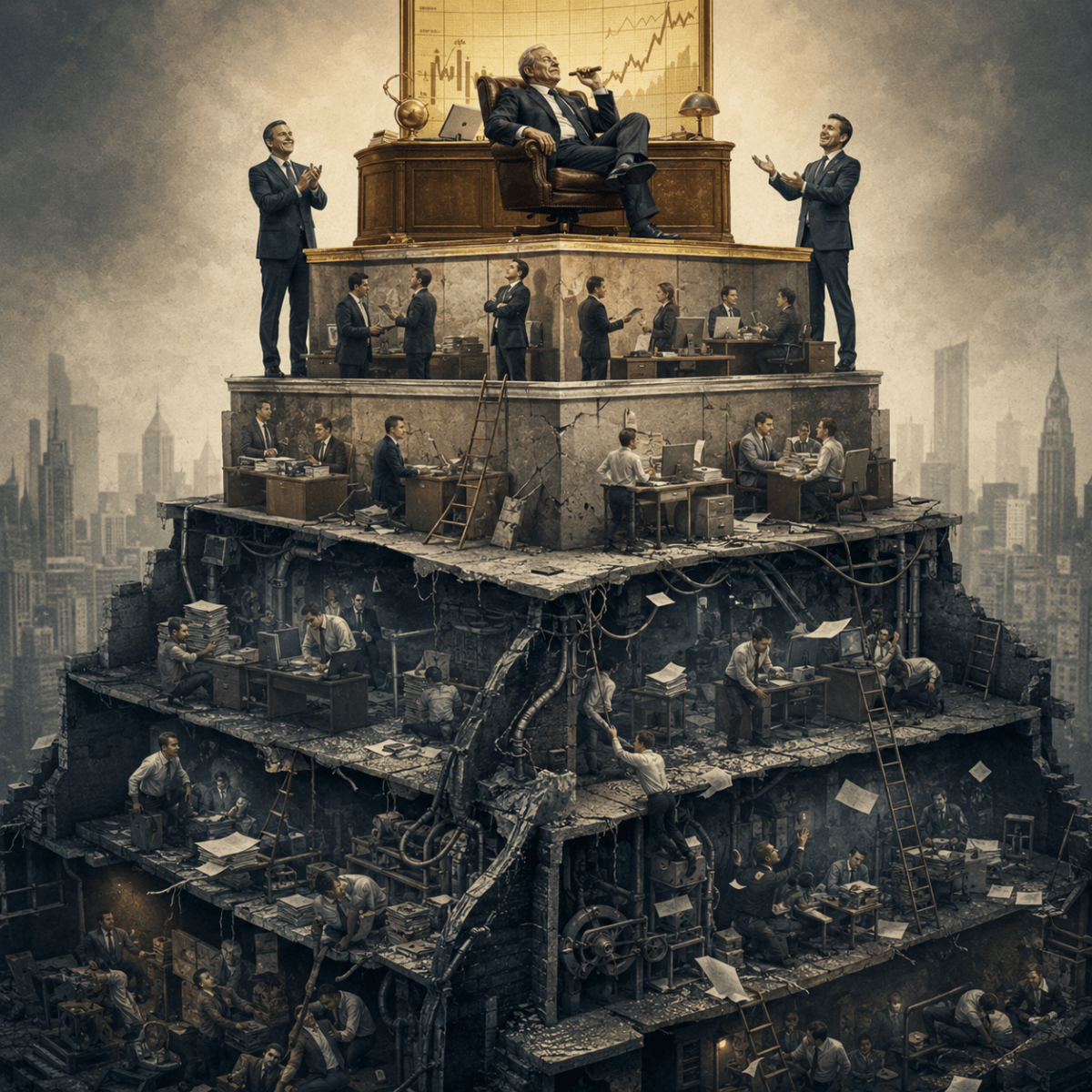
Administrative systems fail when they become better at preserving their own procedures than understanding or remediating the human realities those procedures were intended to address.
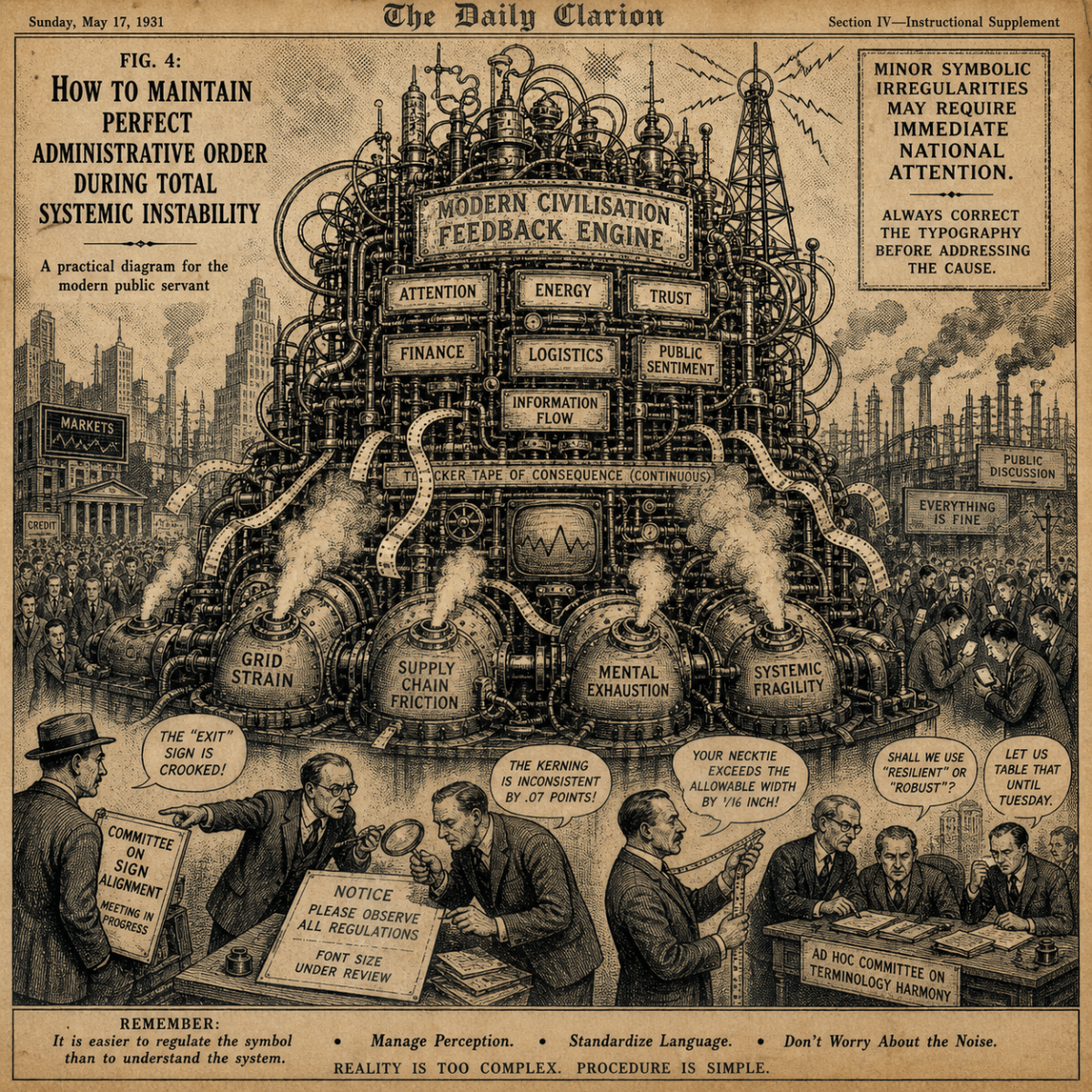
We have entered an era in which the second-order complexity of ubiquitous information and energy feedback systems has become the new centre of gravity. Not industry alone. Not territory alone. Not even ideology in the older twentieth-century sense. The decisive terrain is now the recursive infrastructure through which signals circulate, stabilise, amplify, and reorganise behaviour […]

What is missing precedes the language with which we attempt to describe its consequences.

Strategic insight is often ignored not because it lacks value, but because systems prefer analysis that confirms their existing assumptions.

Technology is extraordinary. It extends memory, speed, coordination, reach, and control. But it also carries a persistent deception. Not because it is unreal, but because it repeatedly presents open systems as though they could be made to feel closed. Cybersecurity makes this especially clear. There is no final safety, no completed perimeter, no settled technical […]

Climate breakdown, war, energy insecurity, public health strain, technocratic overreach, automated exclusion, administrative drift, and the industrial circulation of disinformation are usually treated as separate crises, each assigned its own expert language, governance model, technical platform, and emergency response. But the deeper pattern is structural. Large systems do not merely solve problems. They determine which […]

Socio-political order does not arise because disorder has been removed, nor because conflict has been resolved. Large human systems endure by carrying tension and strain they cannot resolve: unequal interests, delayed consequences, institutional blind spots, competing stories, partial knowledge, uneven power, and the constant need to adapt. What looks like stability is usually a local […]

In complex social, economic, and political systems, the decisive lever is not simply force, information, or speed, but time. More precisely, it is the management of uneven arrivals, delayed consequences, limited capacity, and the order in which pressures move through the field. No complex system can process everything at once. Once demands begin arriving too […]

Contemporary political partisanship is commonly perceived as noise, conflict, or moral failure, rather than as a structural dynamic. Within that same environment, some actors benefit from it because the system rewards the conversion of difference into attention, status, or power, creating incentives for intensification. Structurally, partisanship functions less as a disagreement to be resolved than […]
Have a WordPress.com account? Log in now.

