Symbolic systems presuppose an experiencing subject, yet no symbolic system fully accounts for the existence of experience itself.
Categories
consciousness and the human world

Symbolic systems presuppose an experiencing subject, yet no symbolic system fully accounts for the existence of experience itself.

Parent-adolescent conflict is not failed communication. It is a regulatory differential through which identity emerges, is negotiated, and persists.

The result is a civilisation increasingly confronted by novel problems, yet repeatedly encouraged to admire the elegance with which it preserves the assumptions that produced them.

Enlightenment begins where the search for certainty ends.

A system persists not by preserving what it is, but by continually reorganising the probabilities of what it can become.
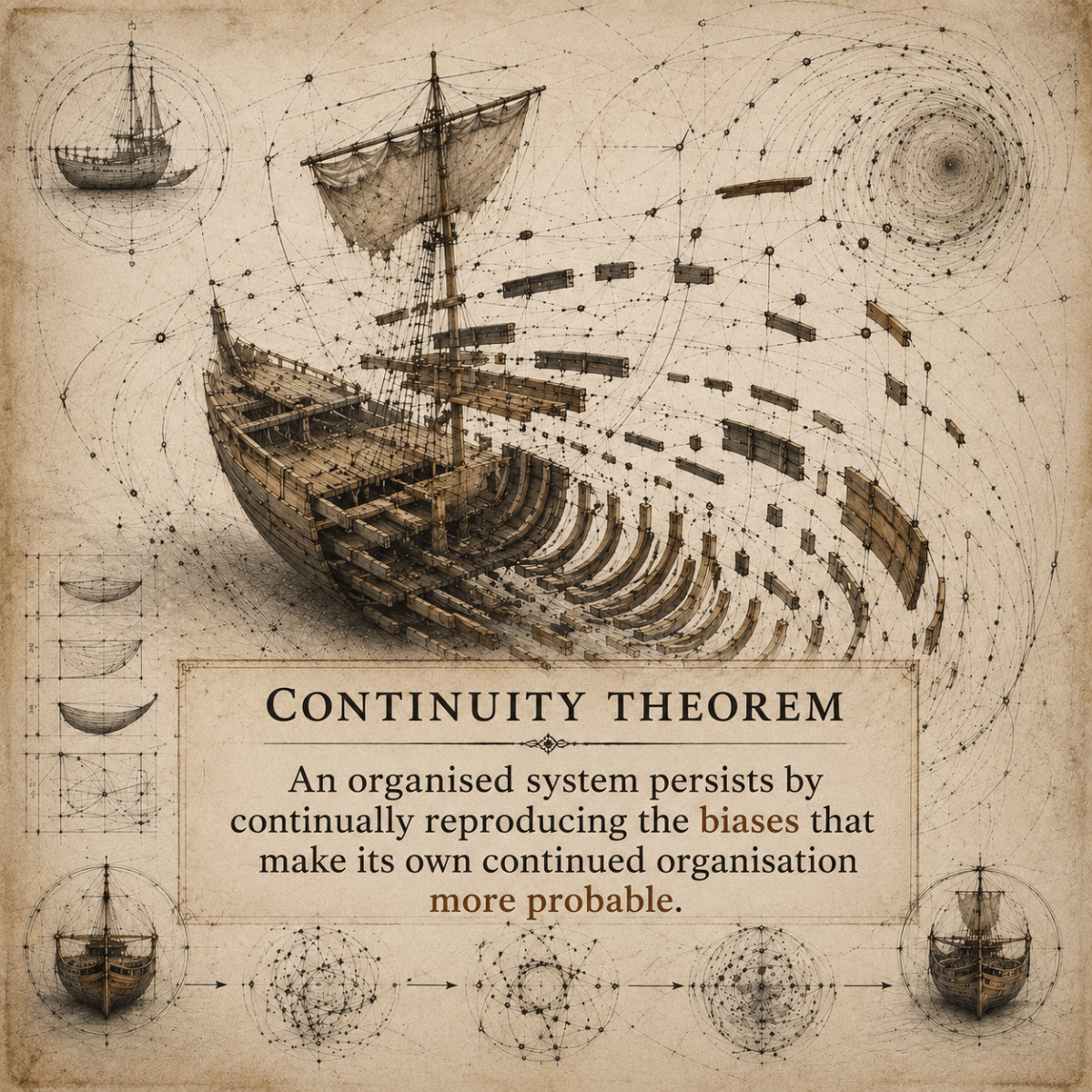
Organised systems persist by reproducing the biases that make their own continuity more probable.

Can the relationships supporting ordinary life continue to reproduce themselves under increasingly rapid change?
What sustains the dynamical relations from which persistent structures emerge?
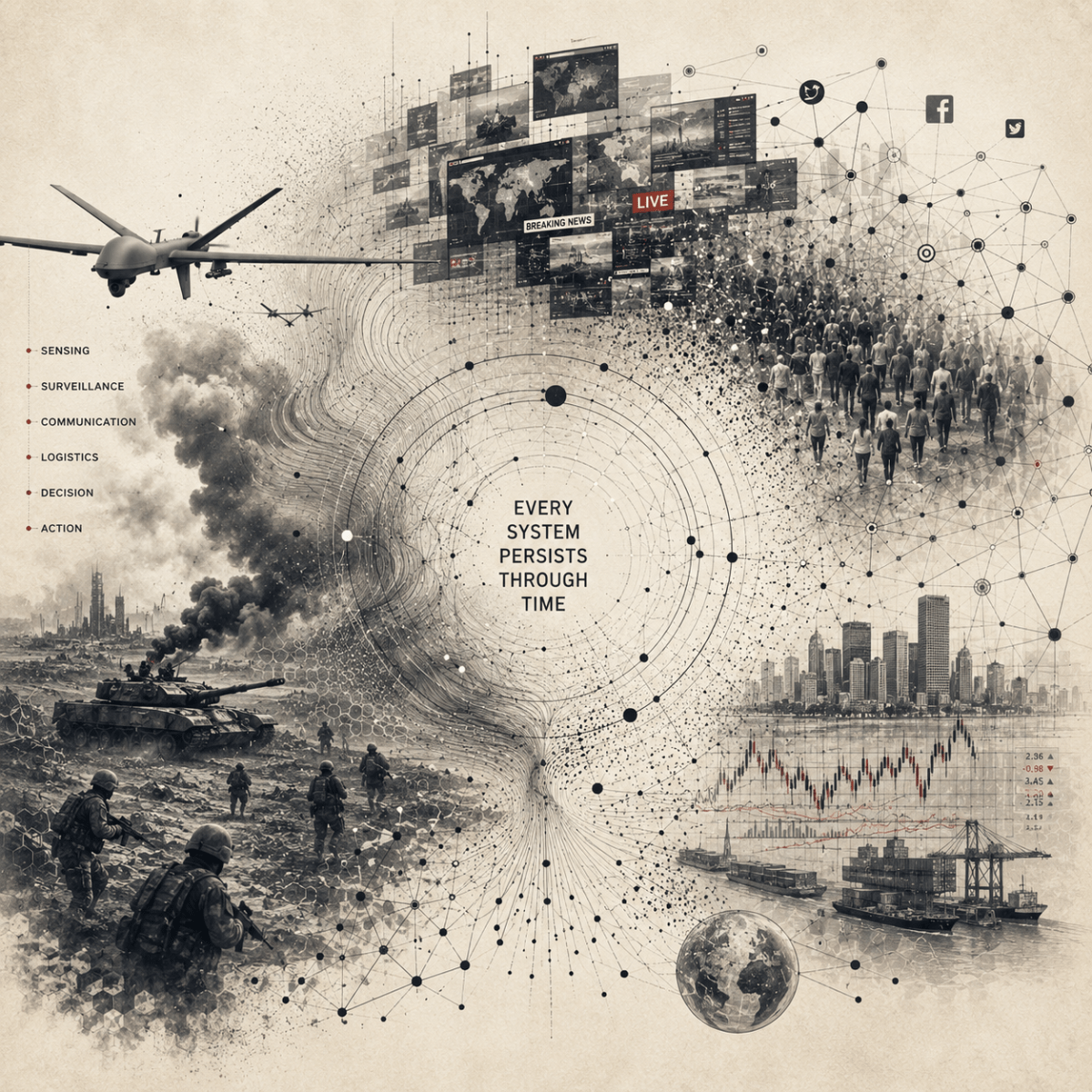
What unifies all processes is, quite simply, that they are processes: dynamical, temporal, contingent, and transient.
Applied Field Logic functions as a general analytical framework through which organisational regularities become comparable across otherwise unrelated domains. Advanced cybernetics.
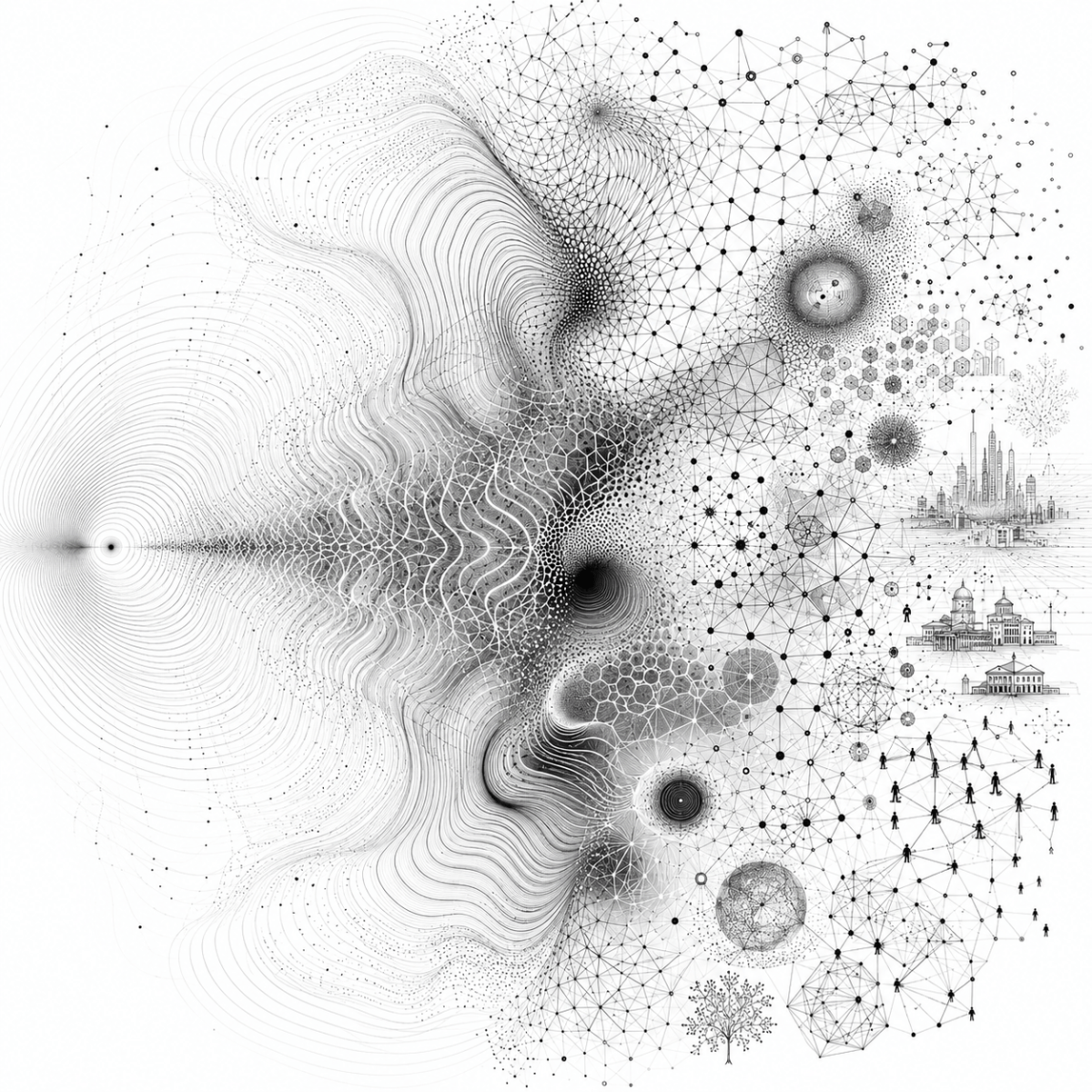
Influence is the capacity of a communicative form to alter the probability distribution of future communication.

The question is whether what we currently reward actually assists the capacity of civilisation to persist, adapt, repair itself, and create meaningful futures.

