Reality is not made of things. Things are what appear when deeper patterns of relation become temporarily stable.
Categories
reality
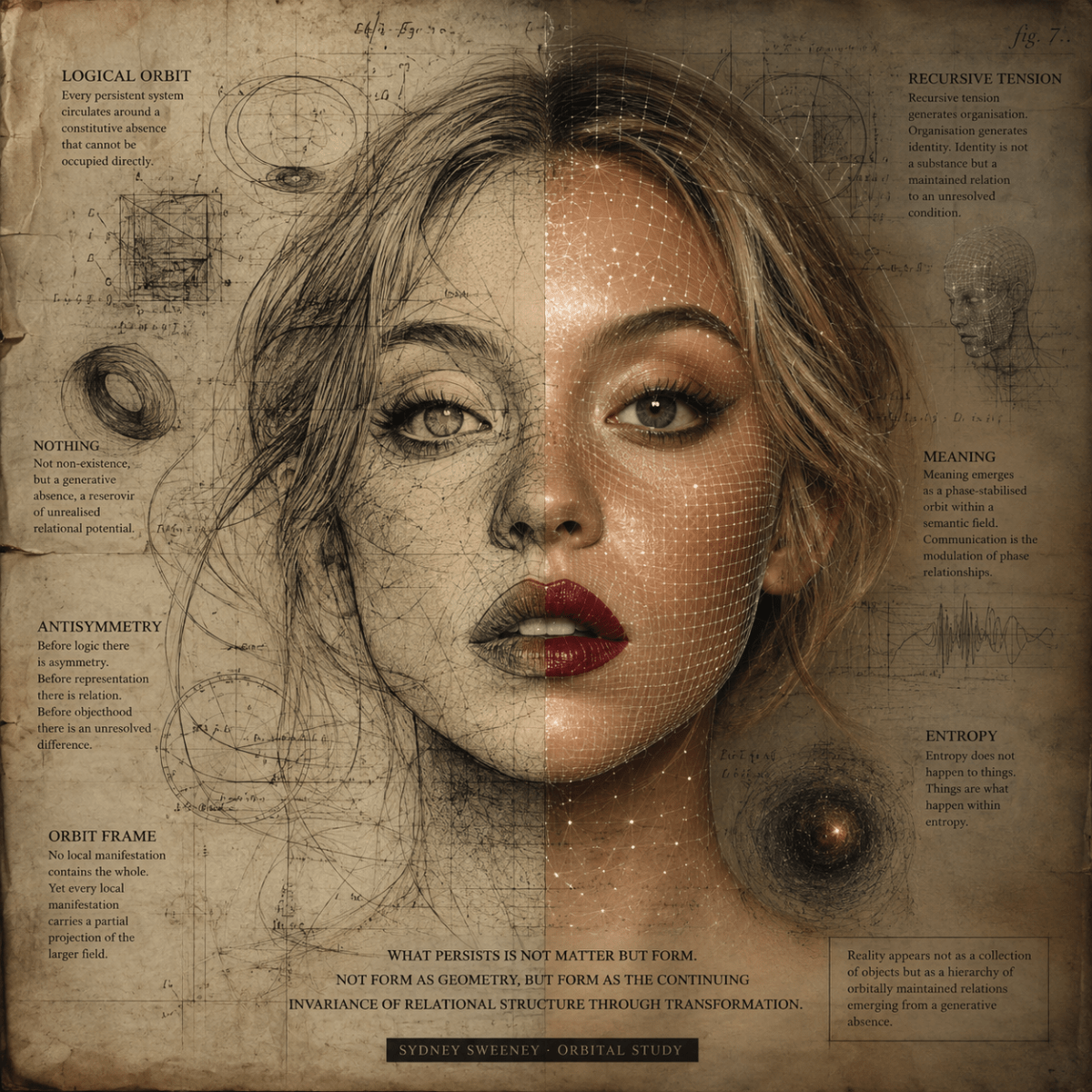
Reality is not made of things. Things are what appear when deeper patterns of relation become temporarily stable.
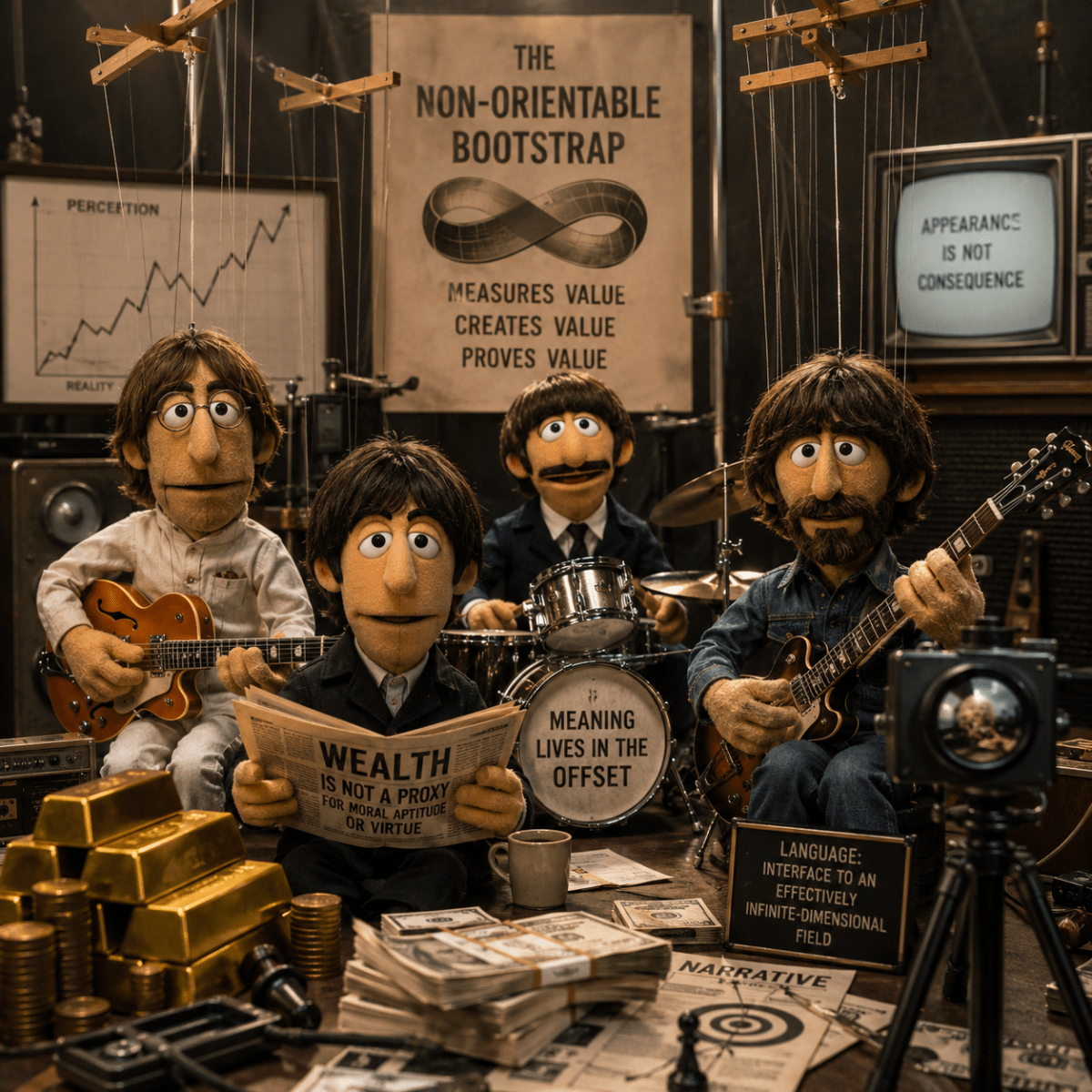
Wealth is not virtue; it is often merely the moment at which exploitation, inheritance, appetite, spectacle, and institutional obedience acquire sufficient polish that the public begins misunderstanding aggregate power as sufficient proxy for strategic wisdom and true moral virtue.

A simple truth: almost no one really knows what they are doing. Most people are copying the nearest stable behavioural or belief pattern, then calling the repetition judgment, expertise, culture, policy, taste, method, or common sense. A thing happens once and remains noise. It happens again and becomes relation. It keeps happening and becomes structure, […]

The only (or at least most) comprehensive way to account for emergent behaviour is to grant some ontic reality to the abstract relational patterns, symmetries, and phase dynamics that bind and sustain it. A collection of things is, in other words, also a thing. That is not especially surprising at one intuitive level, but it […]
I found myself in conversation with another commuter on public transport today. They mentioned not completing high school in regards to their education, and the conversation drifted toward my interest in language and communication. I explained that vocabulary is never a reliable proxy for intelligence. A small vocabulary used precisely often reveals more intellect than […]
Most of what commands attention now is not meaningful in any substantive sense. It is dependent meaning: signals that borrow significance from circulation, outrage, novelty, or proximity to power rather than from coherence, considered consequence, or truth. This hollowness is not accidental. It is structurally central to contemporary dissatisfaction, corruption, volatility, and political disorder. These […]

Diagnostic minimalism is the necessary opening move in any serious encounter with a communications system that looks impossibly complex and yet, because of that same complexity, repeatedly falls back into rudimentary behaviour; before adding theory, metaphor, or moral posture, one subtracts, removes inherited ontological furniture, suspends the reflex to personalise what is structural, and asks […]
Redemption, like freedom, is not of self. It is from self.
What is truth. The moment we ask the question, we are already inside language, and everything that follows unfolds from that fact. Truth is not something we approach from outside, as a detached observer might inspect an object. It arises within sequences of tokens, within the games we play with them, within the structures we […]

Formal Abstract This document presents a formal, process-based theory of language, information, and dynamic meaning systems. Communication, cognition, identity, legitimacy, and truth are treated not as static entities but as temporally constituted processes sustained through repetition, coupling, and feedback within distributed fields. A minimal axiom set grounded in acts, timing, coupling, recursion, variation, and emergent […]
Ludwig Wittgenstein argued that the limits of language are the limits of the world, not as metaphor but as structural fact: what cannot be said cannot be thought in any stable form. Bertrand Russell pursued logical atomism to anchor meaning in precise correspondence, seeking a syntax that could mirror reality without residue. Charles Sanders Peirce […]
The rise of large language models has revived old questions about intelligence, utility, and personhood, but under altered conditions. From early ideas like the Turing test onward, personhood has been framed less as inner depth than as sufficient performance. What feels newly consequential is that systems designed to model, explain, and assist human experience increasingly […]
Have a WordPress.com account? Log in now.

